How much do kitchen cabinets cost? In 2026, the answer can range from a few thousand dollars for a smaller kitchen with stock cabinets to tens of thousands for a large kitchen with semi-custom or fully custom cabinetry. Current national pricing data places installed kitchen cabinets at roughly $100 to $1,200 per linear foot depending on cabinet type, materials, design, and installation complexity.
The wide range exists because two kitchens of the same size can use completely different cabinet specifications. Stock cabinets in standard sizes cost far less than fully custom cabinetry built for a specific layout. Door style, cabinet box material, drawers, organizers, crown molding, hardware, demolition, delivery, and professional installation can all change the final price.
This guide explains the average cost of kitchen cabinets, the cost of new kitchen cabinets by type, cabinet installation cost, custom cabinet pricing, estimated costs for a 12×12 kitchen, and the factors that can increase or reduce your budget.
Average Cost of Kitchen Cabinets
The average cost of kitchen cabinets depends heavily on whether pricing includes only the cabinet boxes or also includes professional installation. In our showroom, installed cabinetry generally lands between roughly $100 and $1,200 per linear foot, with a typical 10×10 kitchen most often falling between about $4,000 and $13,000, though the full possible range is much wider once you factor in custom work and premium materials.
On the ground, we see the same broad reality: a homeowner tackling a DIY stock-cabinet refresh can sometimes get in around $5,000, while a fully custom kitchen with professional installation can exceed $40,000. That is why we tell every customer that a single “average” is far less useful than understanding your cabinet type, kitchen size, and exactly what is included in the quote.
| Cabinet Type | Typical Installed Cost per Linear Foot |
| Stock cabinets | $100–$300 |
| Semi-custom cabinets | $150–$650 |
| Custom cabinets | $500–$1,200 |
These figures are national estimates rather than fixed local prices. Your actual cabinet cost can be higher or lower depending on brand, materials, layout, accessories, labor rates, and installation requirements.
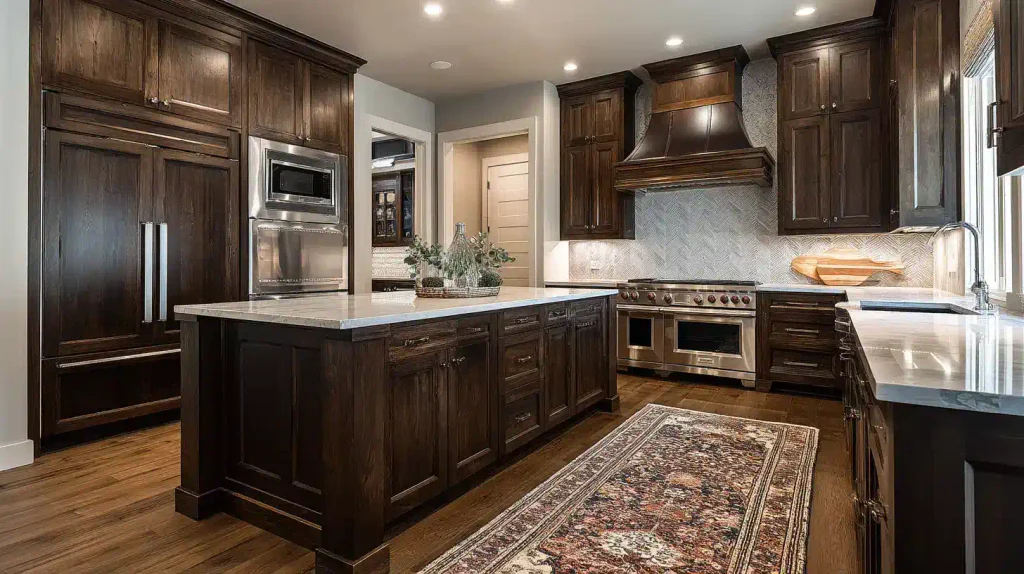
How Much Do New Kitchen Cabinets Cost?
The cost of new kitchen cabinets depends first on the type of cabinetry you choose. Stock cabinets are manufactured in standard sizes and configurations, semi-custom cabinets provide more flexibility in sizes and finishes, and custom cabinetry is built specifically for the kitchen. Moving from one category to another can significantly increase both material and installation costs.
When comparing cabinet quotes, make sure you know whether the price includes only cabinets or the complete installed project. Delivery, fillers, trim, hardware, demolition, installation, and specialty storage may appear as separate charges. A cabinet quote that looks inexpensive at first can increase substantially once these necessary items are added.
Stock Kitchen Cabinets
Stock cabinets are generally the lowest-cost new cabinet option because they are produced in standard sizes, door styles, and finishes. In our experience, stock cabinetry typically runs about $50 to $100 per linear foot for cabinets alone, and around $100 to $300 per linear foot once installed.
Stock cabinets can work well when your kitchen layout fits standard dimensions and you do not need extensive customization. They are also useful for homeowners who want to control costs while still replacing the entire cabinet system.
Semi-Custom Kitchen Cabinets
Semi-custom cabinetry sits between stock and fully custom cabinets. These collections typically offer more door styles, finishes, sizing options, storage accessories, and modifications while still being based on a manufacturer’s standard cabinet system.
Current national estimates put semi-custom installed cabinets at roughly $150 to $650 per linear foot. The large range reflects differences in materials, brand, door style, accessories, and the amount of customization included in the order.
Custom Kitchen Cabinets
Custom cabinets are designed and built specifically for the kitchen rather than selected from fixed standard sizes. This allows greater flexibility for unusual layouts, specialty storage, unique finishes, ceiling-height cabinetry, furniture-style details, and spaces where precise dimensions are important.
Custom cabinetry is also the most expensive category. Installed custom cabinets typically fall between $500 and $1,200 per linear foot, though complex premium projects can exceed that range without much trouble.
Cost of New Kitchen Cabinets by Linear Foot
Linear-foot pricing is commonly used to create early cabinet budget estimates because it provides a simple way to compare cabinet categories. However, it should be treated as a planning tool rather than an exact quotation. Two kitchens with the same cabinet length may have very different costs if one uses mostly simple doors and shelves while the other includes drawer bases, tall pantry cabinets, specialty corners, and decorative panels.
The most useful approach is to estimate your available cabinet run, identify the cabinet category you are considering, and then request a detailed design and quote. Current national installed pricing ranges from roughly $100 per linear foot for basic stock cabinetry to $1,200 per linear foot for high-end custom cabinets.
What Does “Per Linear Foot” Mean?
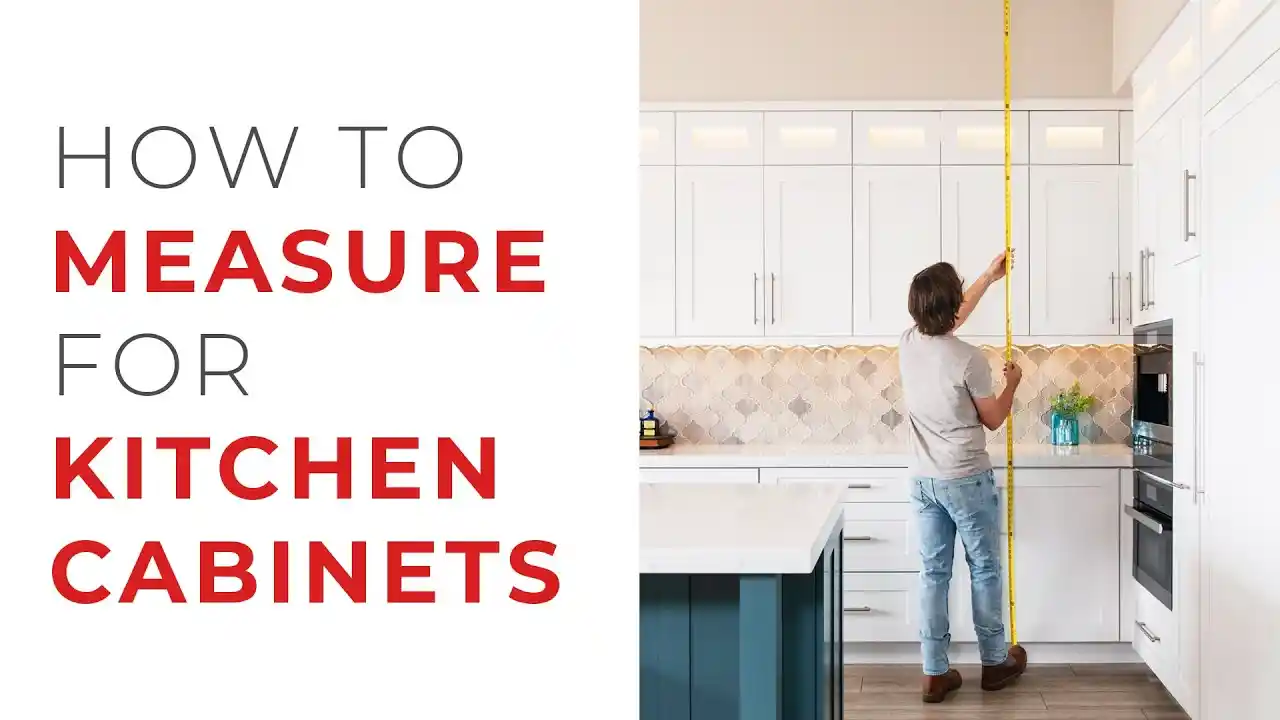
A linear foot measures the length of a cabinet run rather than the square footage of the kitchen. For example, a 10-foot wall that receives cabinetry represents approximately 10 linear feet of cabinet run. In real kitchen estimates, however, windows, doors, refrigerators, ranges, corners, and other openings reduce the amount of usable cabinet space. Knowing how to measure kitchen cabinets and the walls around them gives you a more realistic linear-foot figure.
This is why two kitchens that are both 12×12 feet can still have different cabinet costs. One layout may have substantially more cabinetry, an island, or additional pantry storage.
How Much Do Cabinets Cost for a 12×12 Kitchen?
Cabinets for a 12×12 kitchen can vary dramatically because the room dimensions do not tell you exactly how many cabinets are required. In our project history, cabinets for a standard 12×12 kitchen typically run anywhere from about $2,500 to $29,000 depending on cabinet type and materials. Layout and cabinet selection are the biggest drivers of the final total, not the room size on its own.
A 12×12 kitchen is 144 square feet, but cabinet pricing depends more on usable cabinet runs than floor area. A simple L-shaped kitchen without an island can cost much less than a 12×12 kitchen with cabinets on three walls, a large island, tall pantry cabinets, crown molding, and multiple drawer bases.
Stock Cabinets for a 12×12 Kitchen
Stock cabinetry generally falls toward the lower end of the 12×12 kitchen cost range. A straightforward layout using standard cabinet sizes and simple finishes can keep both product and installation costs under better control.
The final amount still depends on the number of wall and base cabinets, corner solutions, pantry cabinets, hardware, and installation. A 12×12 kitchen with an island will usually require more cabinetry than the same-sized room with a simple L-shaped layout.
Semi-Custom Cabinets for a 12×12 Kitchen
Semi-custom cabinets can increase the budget because they provide more flexibility in dimensions, door styles, finishes, storage solutions, and modifications. A recent dealer pricing example places a typical 12×12 kitchen at roughly $4,000 to $16,000 for cabinets alone and approximately $6,000 to $20,000 with installation, although local quotes can vary significantly.
Semi-custom is often attractive when homeowners want more design flexibility than stock cabinetry provides without moving to fully custom construction.
Custom Cabinets for a 12×12 Kitchen
A custom 12×12 kitchen can reach the upper end of national cabinet pricing because every cabinet may be built to specific dimensions and specifications. Detailed finishes, unusual layouts, custom storage, furniture-style ends, integrated appliances, and premium materials can push the cost higher.
Rather than budgeting by room size alone, request a cabinet plan showing every base, wall, tall, corner, and island cabinet. That provides a much more accurate foundation for pricing.
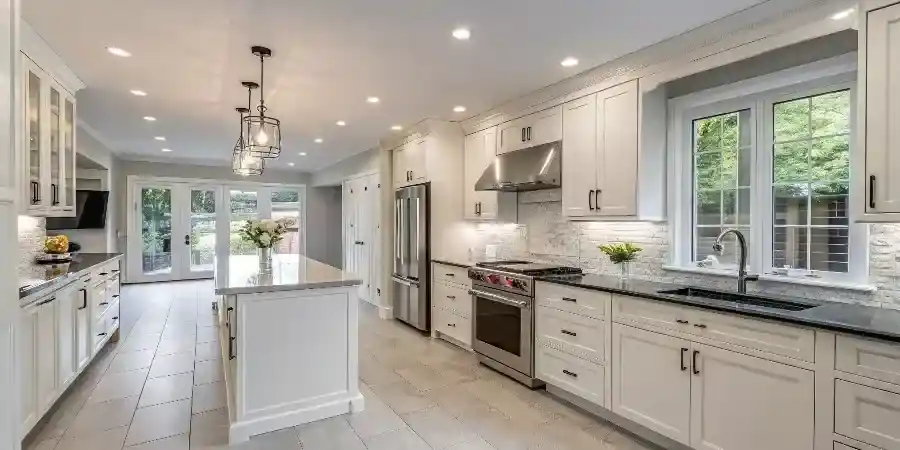
How Much Do Custom Kitchen Cabinets Cost?
Custom kitchen cabinets generally cost more because they involve greater design flexibility, material choice, manufacturing time, and installation complexity. From the projects we build, custom cabinetry typically comes in at around $500 to $1,200 per linear foot, with average full-project costs commonly landing around $7,000 to $8,000 for smaller custom jobs, though larger or premium kitchens can go well beyond that.
The price of custom cabinets is influenced by more than the word “custom.” A simple custom Shaker cabinet system can cost far less than an elaborate design using inset doors, premium wood, custom stains, decorative molding, specialty storage, integrated lighting, and furniture-style panels. Always compare the actual specifications rather than comparing labels alone.
What Makes Custom Cabinets More Expensive?
Custom cabinets may require additional design work, unique cabinet dimensions, specialty materials, custom door construction, hand-applied finishes, or more detailed installation. Complex corners and unusual ceiling heights can also require cabinetry that cannot be ordered from a standard catalog.
The advantage is greater control over how the kitchen uses available space. Custom cabinets may be especially useful in irregular rooms where standard sizes would leave large fillers or wasted storage areas.
Cabinet Installation Cost
Cabinet installation cost is separate from the cabinet product itself in many estimates, which is why we recommend homeowners verify what each quote includes. Professional cabinet installation in this market generally ranges from roughly $1,900 to $10,800, with most projects averaging in the neighborhood of $6,000 depending on scope.
Installation cost changes with the number of cabinets, cabinet weight, room conditions, trim requirements, wall irregularities, and the complexity of the layout. A simple straight run of standard cabinets is generally easier to install than a kitchen with tall cabinets, islands, crown molding, complex fillers, finished panels, appliance surrounds, and uneven walls or floors.
What Does Cabinet Installation Usually Include?
Basic cabinet installation generally includes positioning, leveling, shimming, fastening, joining adjacent cabinets, and making final door or drawer adjustments. The exact scope varies between installers, so ask whether the quote also includes cabinet assembly, handles, fillers, toe kicks, panels, crown molding, or removal of existing cabinets.
Do not assume that countertops, plumbing, electrical work, backsplash installation, or appliance installation are part of a cabinet installation quote unless they are listed specifically. If quartz is on your list, our quartz countertop price guide explains the countertop side of the budget. For natural stone, our guide to granite countertops cost covers slab, fabrication, and installation pricing.
What Can Increase Kitchen Cabinet Installation Cost?
Installation costs usually increase when the project requires additional labor or precise fitting. Tall cabinets, difficult corners, ceiling-height cabinetry, crown molding, decorative end panels, cabinet modifications, complex islands, and older walls that are not level or square can all add time.
Removal and disposal of old cabinets, drywall repairs, appliance relocation, and other site preparation can also increase the total project price. In our own installs, the two variables that move the labor number the most are the total cabinet count and whether we are pulling out and hauling away old cabinetry before we start.
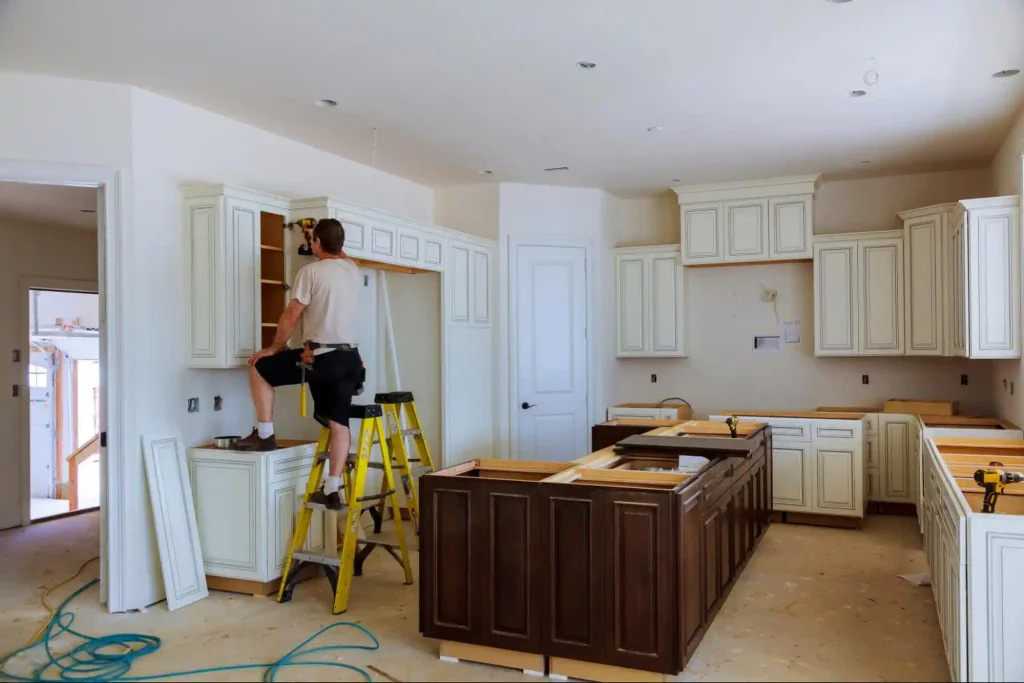
Kitchen Cabinet Installation Cost vs. Cabinet Cost
Cabinet product cost and installation cost should be treated as separate budget categories even when a contractor combines them into one quote. The cabinet price covers the boxes, doors, drawers, finish, and included components, while installation covers the labor needed to place, level, connect, secure, and adjust the cabinetry.
This distinction matters when comparing estimates. One company may provide a low cabinet price but list installation, trim, and delivery separately, while another may provide an installed package price. Ask for an itemized estimate whenever possible so you can compare equivalent products and services.
What Affects the Cost of Kitchen Cabinets?
The cost of kitchen cabinets is shaped by a combination of size, construction, materials, design, and installation. Cabinet type is one of the biggest factors, but it is not the only one. A kitchen filled with drawers, pantry cabinets, organizers, decorative panels, and ceiling-height wall cabinets can cost more than a larger but simpler cabinet layout.
Understanding the main price drivers can help you decide where to spend more and where to simplify the design. This is usually more effective than selecting the least expensive cabinet collection and then adding many costly upgrades.
Cabinet Box Material
Cabinet boxes may use particleboard, MDF components, plywood, or combinations of materials depending on the manufacturer and product line. Construction quality, thickness, joinery, and finish can all affect the price.
Material should be evaluated together with the overall cabinet construction rather than judged by one component alone. Ask the supplier what is used for cabinet sides, backs, shelves, drawer boxes, and doors.
Cabinet Door Style
Door style affects both appearance and cost. Simple slab or standard Shaker doors may be less expensive than more complicated raised-panel, inset, or highly detailed doors.
Painted finishes can also have different pricing from stains or laminates depending on the cabinet brand and material.
Number of Drawers
Drawer cabinets often cost more than basic door-and-shelf cabinets because they require drawer boxes, slides, and additional hardware. A kitchen with many deep drawers can therefore cost more than one with similar dimensions but more standard base cabinets.
However, drawers may also improve everyday storage and accessibility, so the decision should consider function as well as price.
Tall and Pantry Cabinets
Tall pantry cabinets use more material and can increase the cabinet budget quickly. Their height can also make installation more demanding, particularly in kitchens with low ceilings or limited maneuvering space.
Use tall cabinets where they provide meaningful storage rather than adding them simply because they are available.
Corner Cabinets
Lazy Susans, blind-corner cabinets, corner drawers, and other specialty corner solutions generally cost more than simple straight cabinet boxes. They can still be worthwhile when they make otherwise difficult space easier to use.
Your kitchen designer can help determine whether a specialized corner solution or a simpler layout provides better value.
Cabinet Finish
Paint, stain, laminate, thermofoil, acrylic, wood veneer, and other finishes can all affect cabinet pricing. Even within the same door style, one finish may cost more because of the material or manufacturing process.
Compare finish durability, appearance, maintenance, and cost together rather than making the decision based on price alone.
Hardware and Storage Accessories
Handles, knobs, soft-close systems, pull-out trash cabinets, spice organizers, tray dividers, roll-out shelves, and drawer organizers can add convenience but also increase the cabinet order.
Prioritize accessories you will use regularly. You do not need every available organizer to create a functional kitchen.
Crown Molding and Decorative Trim
Crown molding, light rail, finished panels, decorative legs, appliance panels, and furniture-style details can significantly change the final appearance of the kitchen. They also add product and labor costs.
These items should be included in the cabinet budget from the beginning rather than treated as last-minute additions.
Does Kitchen Size Determine Cabinet Cost?
Kitchen size influences cabinet cost, but it does not determine the price by itself. A large kitchen with limited cabinetry can cost less than a smaller kitchen filled with custom storage, an island, tall pantry cabinets, and premium finishes. Cabinet count and linear footage are usually better early cost indicators than floor area alone.
Layout also matters. A straight kitchen run generally requires fewer fillers and corners than an L-shaped or U-shaped kitchen. Islands add cabinets on top of the perimeter layout, which can increase both product and installation costs even when the room itself is not especially large.
Stock Vs Semi-Custom Vs Custom Cabinets: Which Costs Less?
Stock cabinets typically have the lowest purchase price because they are manufactured in standard sizes with limited modifications. Semi-custom cabinetry costs more but provides additional flexibility in dimensions, finishes, accessories, and design. Fully custom cabinets generally cost the most because they are built around the specific kitchen and project requirements.
The least expensive option is not automatically the best value for every kitchen. Stock cabinetry may require larger fillers in an irregular room, while semi-custom sizes may create better storage. Compare the finished design, construction, warranty, and installed cost instead of focusing only on the starting cabinet price.
| Cabinet Type | Best For | Cost Level |
| Stock | Standard layouts and tighter budgets | Lowest |
| Semi-custom | More finishes, sizing flexibility, and upgrades | Mid-range |
| Custom | Unique layouts and maximum design flexibility | Highest |
Are RTA Cabinets Less Expensive?
Ready-to-assemble cabinets can reduce upfront costs because the cabinet boxes are shipped flat and assembled later. This can lower manufacturing, storage, or shipping expenses depending on the supplier. They are often considered by homeowners who want new cabinetry while keeping the project closer to the stock-cabinet budget range.
However, compare total costs rather than product price alone. If you pay someone to assemble every cabinet before installation, some of the initial savings may be reduced. Construction quality also varies significantly between RTA brands, so review materials, joinery, hardware, warranty, and assembly method before buying.
How Much Can You Save by Installing Cabinets Yourself?
DIY installation can remove part of the professional installation cost, but it does not eliminate the cost of the cabinets, delivery, tools, shims, fasteners, trim, or potential corrections. A DIY stock-cabinet project may start around $5,000, while professionally installed custom projects can exceed $40,000, showing how cabinet type and labor combine to create very different totals.
Cabinet installation requires accurate measuring, leveling, locating studs, joining boxes, fitting fillers, and safely lifting upper cabinets. DIY may make sense for experienced homeowners with a straightforward layout, while complex kitchens or expensive cabinetry often justify professional installation.
New Cabinets Vs Refacing: Which Costs Less?
Refacing keeps the existing cabinet boxes while replacing or covering visible exterior surfaces such as doors and drawer fronts. It can be useful when the current cabinet layout works well and the boxes remain structurally sound. Complete cabinet replacement makes more sense when the layout, storage, cabinet construction, or cabinet condition needs substantial improvement.
Refacing is not always the inexpensive alternative people expect. Professional cabinet resurfacing generally runs between roughly $4,500 and $10,600 depending on the kitchen and materials. In many cases, once you total up refacing costs, replacement with new cabinets, especially good stock or entry-level semi-custom, is only slightly more, and you get new boxes and warranty coverage. Compare an actual refacing estimate with the cost of replacement before deciding.
How to Budget for New Kitchen Cabinets
A realistic cabinet budget should include more than the cabinet boxes. Start with the planned cabinet layout, then account for trim, fillers, panels, hardware, delivery, removal of old cabinetry, installation, and any necessary modifications. Leaving these items out can make an early cabinet estimate look much lower than the actual completed project cost.
Set priorities before choosing upgrades. If cabinet construction and storage matter most, you may prefer to spend more on those areas and simplify decorative trim. If appearance is the priority, a standard cabinet box with an upgraded finish or door style may provide the look you want without requiring fully custom cabinetry.
Separate Must-Haves from Upgrades
List the features that directly affect how you use the kitchen, such as drawer bases, pantry storage, trash pull-outs, or a Lazy Susan. Then create a second list for decorative upgrades such as elaborate crown molding or furniture-style panels.
This makes it easier to adjust the quote without sacrificing the core functionality of the kitchen.
Keep the Layout Simple When Possible
Moving cabinets, appliances, plumbing, and electrical connections can increase the overall remodeling budget. If the existing kitchen layout already works, replacing cabinetry within a similar footprint may help control costs.
However, do not preserve a poor layout only to save money if it will leave the kitchen difficult to use for years.
Compare Complete Quotes
When comparing cabinet companies, review exactly what each estimate includes. One quote may include delivery and installation while another may list them separately.
Compare cabinet construction, quantity, door style, finish, accessories, trim, warranty, delivery, and installation so that the numbers represent the same scope of work.
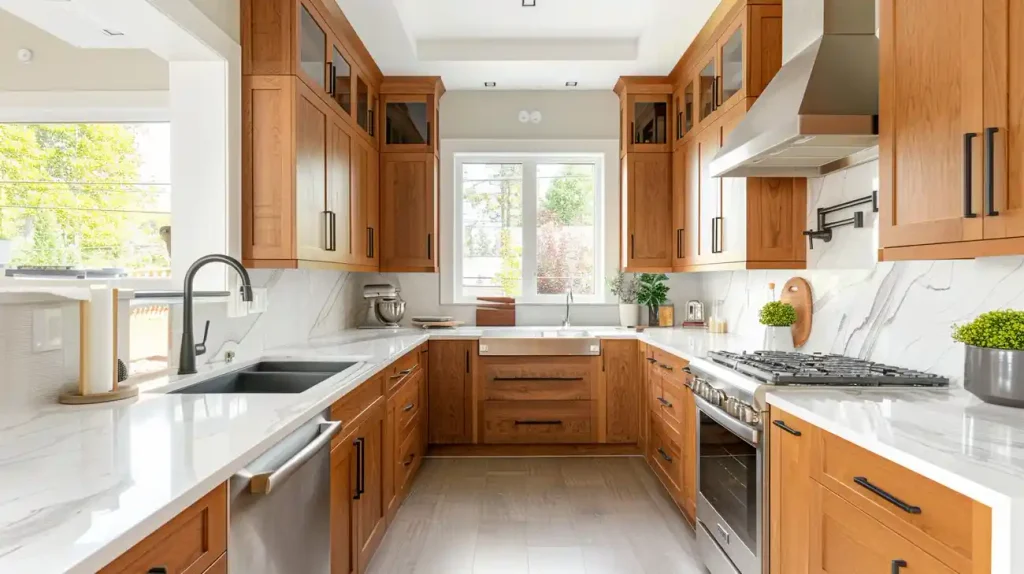
How to Get an Accurate Kitchen Cabinet Estimate
The most accurate cabinet estimate starts with precise measurements and a complete design. Measure walls, windows, doors, ceiling height, appliances, and utilities, then determine which base, wall, pantry, corner, and island cabinets will be used. A cabinet designer can convert those measurements into a layout and product list that can be priced more accurately than a simple room-size estimate.
A 3D design or detailed cabinet plan also makes it easier to see what is driving the budget. If the quote is too high, you can identify expensive accessories, specialty cabinets, decorative trim, or layout choices and adjust them intentionally instead of reducing quality across the entire kitchen.
What We See in the Columbus Market
Working with homeowners across the Columbus, Ohio metro every week, we see cabinet pricing shift with a handful of local variables that national ranges never capture. Older Central Ohio homes often have out-of-square walls, uneven floors, and ceiling heights that force filler pieces or custom modifications, and that quietly adds hours to any installation. Newer builds in the Dublin, Powell, and New Albany corridors tend to accept stock and semi-custom systems cleanly, which keeps installed costs closer to the lower end of the ranges above.
The other pattern we see is that homeowners underestimate accessory and trim costs. Soft-close drawer conversions, pull-out trash cabinets, crown molding, decorative end panels, and finished appliance panels can add 10 to 20 percent to a cabinet order on their own. We always itemize these separately in our quotes so you can see exactly what each upgrade is costing you, rather than burying them inside a single “cabinets and installation” number.
Plan Your Kitchen Cabinet Budget
The cost of kitchen cabinets can range widely, but understanding the pricing structure makes budgeting much easier. Start by choosing between stock, semi-custom, and custom cabinetry, then consider cabinet count, construction, door style, finish, storage features, trim, delivery, and installation. For a meaningful comparison, always determine whether each estimate represents cabinets only or a fully installed project.
If you are planning new kitchen cabinets in Columbus, Ohio, Columbus Cabinets City can help you compare cabinet types, layouts, finishes, storage options, and installation requirements before you commit to a budget. A detailed design and itemized estimate will give you a much more useful answer than relying only on a national average or the square footage of your kitchen.
Frequently Asked Questions About Kitchen Cabinet Cost
Kitchen cabinets can range from about $100 to $1,200 per linear foot installed depending on whether you choose stock, semi-custom, or custom cabinetry. A typical 10×10 kitchen often falls around $4,000 to $13,000, although both lower and higher totals are possible depending on materials, layout, and upgrades.
There is no single useful average because cabinet projects vary widely. In our experience, stock cabinets typically run about $100 to $300 per linear foot installed, semi-custom about $150 to $650, and custom around $500 to $1,200. These ranges are more useful for early budgeting than one national average.
Cabinetry for a standard 12×12 kitchen typically runs from about $2,500 to $29,000 depending on cabinet type and material. The actual amount depends on usable cabinet footage, layout, island size, pantry cabinets, accessories, and whether the estimate includes installation.
Custom cabinets are commonly estimated at roughly $500 to $1,200 per linear foot installed. From the projects we build, a typical custom cabinet job averages around $7,000 to $8,000, though large or highly detailed custom kitchens can cost considerably more.
Professional cabinet installation generally runs from approximately $1,900 to $10,800, with an average near $6,000. The final labor cost depends on cabinet count, layout, trim, removal work, wall conditions, and installation complexity.
Not always. Some companies quote cabinets and installation together, while others price product, delivery, assembly, and labor separately. Ask whether the estimate includes cabinet installation, fillers, panels, toe kicks, molding, hardware installation, demolition, and disposal before comparing quotes.
Yes. Stock cabinets use standard sizes and a limited selection of finishes and configurations, which generally makes them the least expensive category. Custom cabinets are built around the specific project and typically cost substantially more because of their greater design flexibility and manufacturing requirements.
Refacing may cost less when the existing cabinet boxes are in good condition and the layout does not need to change, but it is not automatically inexpensive. Professional resurfacing typically runs from approximately $4,500 to $10,600, so homeowners should compare a real refacing estimate with the cost of new cabinets before deciding.
Major cost drivers include custom construction, premium materials, painted or specialty finishes, drawers, pantry cabinets, organizers, decorative panels, crown molding, specialty corner cabinets, complex layouts, and professional installation. The number of cabinets and amount of customization usually affect the budget more than room square footage alone.
Choose standard sizes where possible, simplify decorative trim, limit specialty cabinets, keep the existing layout when it works, and prioritize storage upgrades you will actually use. Stock or semi-custom cabinetry can provide significant savings compared with fully custom construction while still offering many style and finish options.