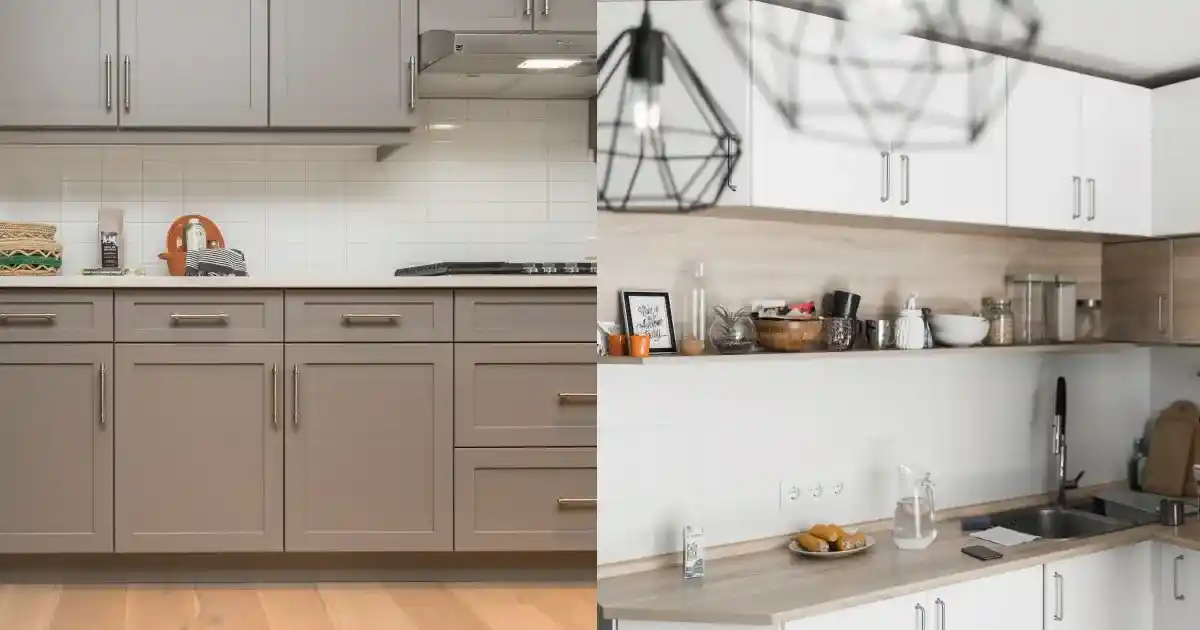
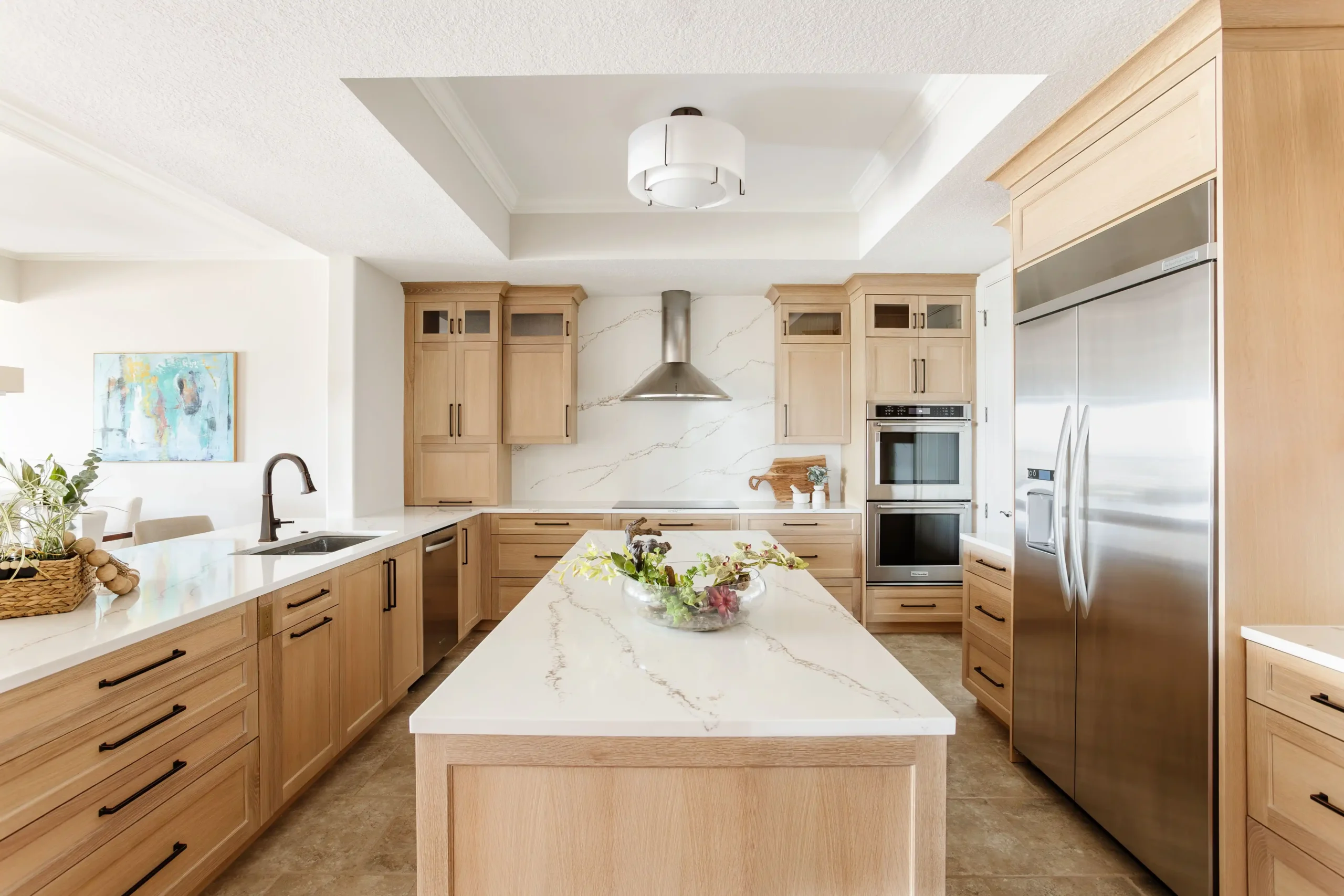
Wood cabinets with white countertops create one of the most balanced kitchen combinations because the two finishes bring very different qualities into the same space. Wood adds warmth, grain, depth, and natural character, while a white countertop keeps the kitchen feeling bright, clean, and visually open. This combination can work with light oak, maple, walnut, cherry, darker stained wood, and many other cabinet finishes.
At Columbus Cabinets City, we recommend choosing the cabinet and countertop as one coordinated design rather than selecting them separately. The undertone of the wood, the shade of white, countertop veining, backsplash, flooring, hardware, and lighting all affect the final result. A countertop that looks perfect in isolation can still feel too cool, too creamy, or too busy once it is placed next to the actual cabinet finish. If you are drawn to this palette, our collection of wood tone kitchen cabinets is a good place to compare finishes.
This guide explains how to pair wood cabinets with white countertops, including light wood cabinets with white countertops, dark wood cabinets with white countertops, natural wood cabinetry, countertop materials, backsplash ideas, hardware, flooring, islands, kitchen styles, and the most common mistakes to avoid.
Why Wood Cabinets with White Countertops Work So Well
Wood cabinets and white countertops work well together because they create natural contrast without making the kitchen feel harsh. The wood introduces warmth and movement, while the white surface provides a cleaner visual break between cabinet runs. This balance can make the room feel brighter and more organized, especially when the cabinetry has noticeable grain or a deeper color. The same balance applies when the scheme is reversed, as covered in our guide to popular countertops with white cabinets.
The amount of contrast can also be adjusted depending on the wood tone. Light wood with white countertops creates a softer and more relaxed look, while dark wood creates stronger definition and a more dramatic result. Mid-tone natural wood sits between those two directions and can work especially well in transitional kitchens.
Start with the Undertone of the Wood Cabinets
The first thing we look at when pairing white countertops with wood cabinets is the undertone of the wood. Wood is rarely just brown. It may lean yellow, red, orange, beige, gray, taupe, or neutral, and those undertones influence which white countertop will look most natural beside it.
At Columbus Cabinets City, we recommend placing countertop samples directly against the cabinet door in the actual room whenever possible. Natural light and artificial lighting can both change how the materials appear. A white that looks neutral in a showroom may look cooler or creamier once it is next to a specific wood finish.
Warm Wood Cabinets
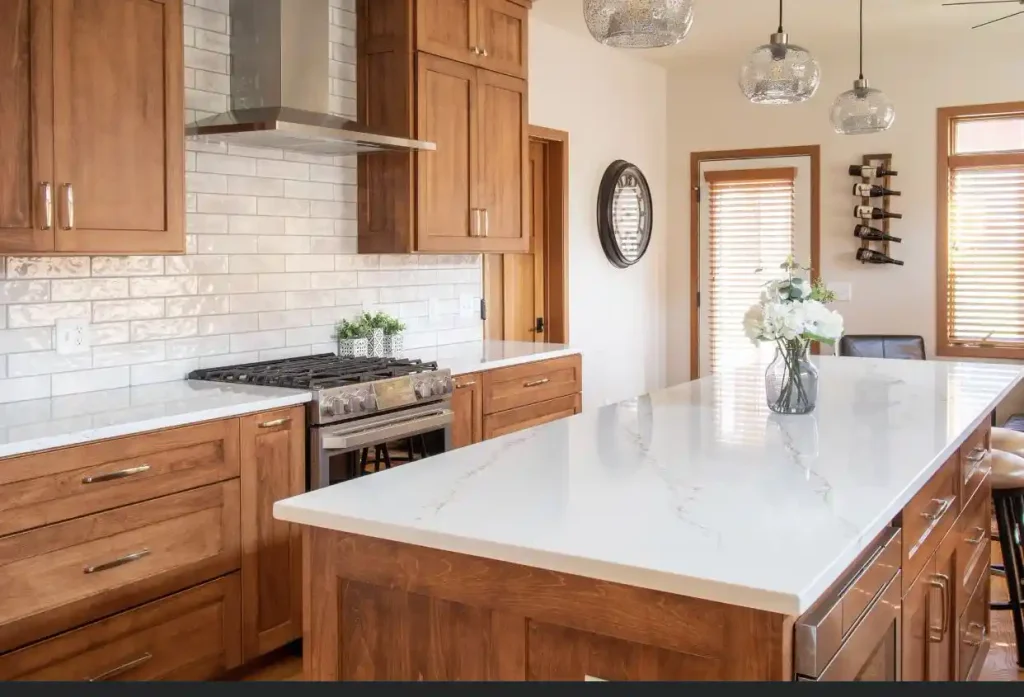
Warm wood cabinets often contain golden, honey, amber, orange, or reddish undertones. Maple, cherry, alder, honey oak, and many traditional stains fall into this general category. These cabinets usually pair well with warm white countertops that include cream, beige, taupe, gold, or soft brown movement.
A very cool or blue-white countertop can sometimes make warm wood look more yellow or orange than expected. When we want the design to feel connected and comfortable, we usually look for a softer white surface that complements the natural warmth rather than fighting against it.
Neutral Wood Cabinets
Neutral wood cabinets sit between strongly warm and cool finishes, which makes them especially flexible. Natural white oak is a good example because it can work with crisp white quartz, soft white stone, gray-veined surfaces, or countertops with light beige movement depending on the stain and finish.
This type of cabinetry gives homeowners more freedom with surrounding materials. At Columbus Cabinets City, we often use neutral wood as a bridge between warm and cool finishes because it can coordinate well with stainless steel appliances, black hardware, brass accents, and a wide range of backsplash colors.
Cool or Gray-Toned Wood Cabinets
Cool wood finishes may include gray, taupe, mushroom, or cooler brown undertones. These cabinets often work well with clean white countertops containing subtle gray movement, especially in kitchens that also use brushed nickel, stainless steel, black accents, or cooler wall colors.
The main goal is avoiding a visible undertone conflict. A creamy countertop next to a distinctly gray wood can make both surfaces look slightly disconnected. In these kitchens, a cleaner white or soft gray-veined countertop often creates a more natural transition.
Light Wood Cabinets with White Countertops
Light wood cabinets with white countertops create one of the brightest and most open versions of this combination. White oak, maple, birch, ash, and other pale wood finishes introduce texture without adding too much visual weight. The white countertop keeps the room clean and reflective, which can be especially useful in smaller kitchens or spaces with limited natural light. For the opposite approach, see our ideas for dark countertops with light cabinets.
This combination does not have to feel overly modern or Scandinavian. The same light wood and white countertop pairing can work in contemporary, transitional, farmhouse, coastal, or organic modern kitchens depending on the cabinet door style, backsplash, flooring, hardware, and lighting.
White Oak Cabinets with White Countertops
White oak cabinets with white countertops create a soft, natural look that feels current without becoming overly trendy. The visible grain gives the cabinetry character, while the white surface keeps the overall palette light and controlled. Rift-sawn or straighter grain patterns can feel more modern, while more noticeable grain variation can support a transitional or natural look. You can explore more ways to use white oak kitchen cabinets in our dedicated guide.
At Columbus Cabinets City, we usually compare both clean white and lightly veined surfaces with white oak. Gray veining can create a cooler contemporary effect, while beige or gold movement can make the kitchen feel warmer and more organic.
Maple Cabinets with White Countertops
Maple cabinets usually have a smoother grain and can carry soft cream, yellow, or warm beige undertones. White countertops can brighten maple significantly, especially when the existing kitchen feels too brown or visually heavy. The pairing can make the cabinetry feel more updated without removing the natural wood character.
We generally avoid an extremely icy white if the maple has strong yellow warmth. A soft white quartz, warm marble-look surface, or white stone with restrained beige or gray movement often creates a smoother connection and keeps the cabinets from looking unexpectedly yellow.
Birch or Ash Cabinets with White Countertops
Birch and ash can create a light, relaxed wood look that works especially well with white countertops in simple modern, Scandinavian-inspired, and casual transitional kitchens. Their grain provides enough natural variation to keep the room from feeling flat while the white countertop prevents the palette from becoming too busy.
Because these woods can vary in undertone, we recommend comparing the actual cabinet finish rather than making decisions based only on the species name. A pale neutral finish may work beautifully with crisp white, while a warmer stain may benefit from a softer white countertop.
Dark Wood Cabinets with White Countertops
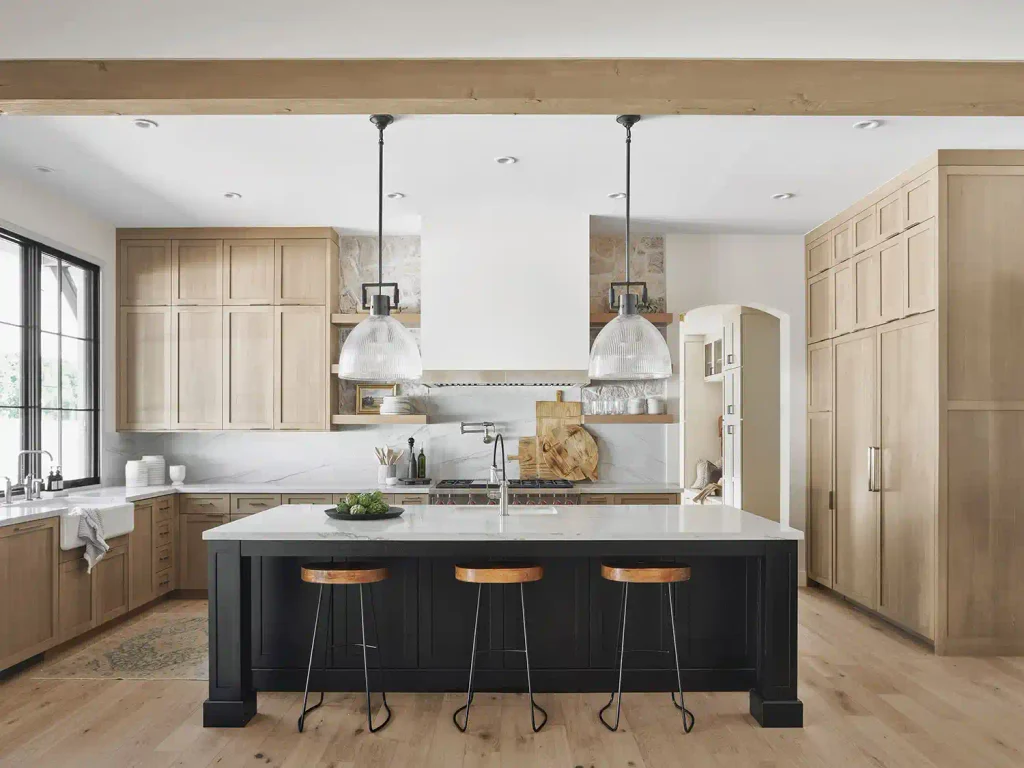
Dark wood cabinets with white countertops create much stronger contrast and can make a kitchen feel more dramatic. Walnut, espresso-stained oak, dark cherry, and deep brown finishes bring visual weight, while the white countertop breaks up the darkness and keeps the kitchen from feeling too heavy. Rich brown kitchen cabinets in walnut, espresso, or chocolate stains benefit most from this contrast.
At Columbus Cabinets City, we usually pay closer attention to lighting when working with dark cabinetry. Dark cabinets absorb more visual light, so lighter countertops, backsplash, wall colors, and good task lighting help keep the room balanced. This is especially important in smaller kitchens where several dark surfaces can quickly make the space feel closed in.
Walnut Cabinets with White Countertops
Walnut cabinets bring rich brown tones, natural variation, and subtle movement into a kitchen. White countertops create a strong but elegant contrast that highlights the wood rather than competing with it. The result can feel contemporary, warm, and refined at the same time.
A simple white quartz can make walnut look more modern, while a white surface with warm veining can create a softer and more luxurious appearance. Brass hardware can reinforce the warmth, while black or brushed nickel hardware can move the overall design in a cleaner, more contemporary direction.
Dark-Stained Oak Cabinets with White Countertops
Dark-stained oak still shows visible grain even when the cabinet color becomes deep brown or espresso. Pairing it with a white countertop can bring more definition to the kitchen and prevent the cabinetry from reading as one continuous dark block.
When the oak grain is already strong, we generally keep the countertop pattern relatively controlled. A simple white quartz or quieter white stone allows the wood to remain the main visual feature. Adding heavy veining, patterned backsplash, and busy flooring at the same time can make the kitchen feel unnecessarily crowded.
Cherry Cabinets with White Countertops
Cherry cabinets often contain red, amber, or reddish-brown undertones that can deepen over time. White countertops can make cherry feel brighter and more current, but the countertop undertone needs careful attention because a very cool white can make the red or orange character of the wood appear stronger.
We usually look for a softer white with beige, taupe, or restrained gray movement. This gives the room contrast without making the cabinetry feel disconnected. Warm backsplash materials and flooring can then help connect the countertop and cabinet tones more naturally.
Natural Wood Cabinets with White Countertops
Natural wood cabinets with white countertops emphasize the contrast between an organic material and a clean surface. Instead of hiding the grain under opaque paint, the wood remains visible and becomes one of the main decorative elements in the kitchen. The white countertop then acts as a visual pause between those grain patterns and the surrounding finishes.
This combination can work with white oak, maple, walnut, ash, hickory, and many other woods. The more movement and character the cabinets have, the more carefully we usually control pattern in the countertop and backsplash so the room does not become visually overloaded.
Best White Countertops for Wood Cabinets
White countertops are available in several materials, and each creates a different relationship with wood cabinetry. Quartz offers consistent pattern options and easier predictability, while granite, quartzite, and marble provide natural variation from slab to slab. The right choice depends on appearance, maintenance expectations, budget, and the overall kitchen design. It also helps to know typical quartz countertops cost ranges before comparing slabs.
At Columbus Cabinets City, we recommend narrowing down the material first and then comparing specific whites against the cabinet sample. A countertop labeled “white” may actually lean cream, gray, beige, or cool blue depending on the design, so the name alone is not enough to make a confident choice.
White Quartz with Wood Cabinets
White quartz is one of the easiest materials to coordinate with wood cabinetry because it is available in nearly solid whites, soft stone-inspired patterns, and dramatic marble-look designs. A quieter white quartz lets strong wood grain remain the main feature, while subtle veining can add movement to a large island or long perimeter run. Our quartz countertops collection includes several white options that pair well with natural wood.
Quartz is also helpful when consistency matters. The pattern is usually more predictable than natural stone, which can make it easier to coordinate multiple countertop sections. For light wood, both clean white and lightly veined quartz can work well. With dark wood, a brighter white often creates stronger contrast.
White Granite with Wood Cabinets
White granite usually includes more than one color. Gray, black, beige, brown, or mineral flecks may appear throughout the slab, and those secondary colors can help connect the countertop to the cabinets, backsplash, flooring, or hardware. You can compare white and light-colored stones in our granite countertops collection.
We recommend viewing full slabs whenever possible because granite can vary significantly from one section to another. If the wood cabinetry already has strong grain, a quieter granite often creates better balance. More dramatic granite can work well when the cabinets and backsplash are relatively simple.
White Quartzite with Wood Cabinets
White quartzite can introduce natural movement while still keeping the kitchen bright. Depending on the slab, it may contain gray, beige, taupe, gold, green, or darker veining. This variation can work beautifully with natural wood because both materials bring organic character into the design.
When the quartzite has strong movement, we usually simplify the cabinet door style, backsplash, and hardware so the room maintains a clear visual hierarchy. The countertop can become the feature while the wood provides warmth and structure.
White Marble with Wood Cabinets
White marble and wood cabinetry create a classic combination because both materials bring natural variation into the kitchen. Wood softens the cool elegance of marble, while marble keeps the overall design bright and refined. Gray-veined marble can work especially well with neutral oak, while warmer marble with beige or gold movement can complement richer woods. Browse our marble countertops to see how different veining works against wood grain.
Marble requires different care expectations than quartz, so the decision should consider both appearance and everyday use. We also recommend viewing the actual slab because vein density and background color can vary considerably.
Pure White vs Veined White Countertops
A pure or nearly solid white countertop creates a cleaner, more minimal contrast against wood cabinets. This is especially effective when the cabinetry already has strong grain, knots, or color variation. The simple countertop gives the eye a place to rest and keeps the wood as the main decorative element.
Veined white countertops introduce more movement and can make an island or long countertop run more visually interesting. Gray veining creates a cooler effect, while beige, taupe, or gold movement can build a warmer relationship with the wood. The best choice depends on how much pattern already exists in the cabinetry and flooring.
Warm White vs Cool White Countertops with Wood Cabinets
Warm white countertops contain cream, ivory, beige, taupe, or subtle gold undertones. They often work naturally with honey oak, maple, walnut, cherry, and other cabinets that contain visible warmth. These softer whites create contrast without making the transition between cabinet and countertop feel too sharp. Our guide on how to choose the right kitchen countertop color walks through undertones in more detail.
Cool whites appear cleaner, brighter, or slightly gray. They can work especially well with white oak, ash, gray-stained wood, and contemporary cabinet finishes. At Columbus Cabinets City, we prefer to judge the exact samples together because lighting can make a surface look warmer or cooler once it is installed.
Best Backsplash for Wood Cabinets with White Countertops
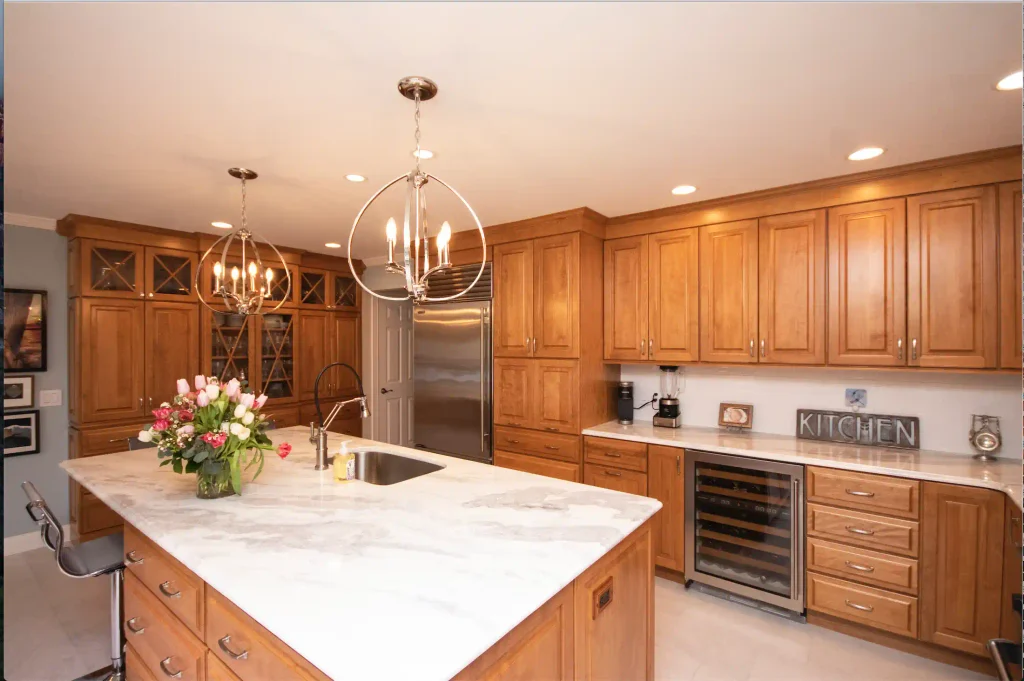
The backsplash should connect the wood and countertop rather than introduce another unrelated design direction. Because wood cabinets already provide grain and the countertop may contain veining, a relatively simple backsplash often creates the best balance. White subway tile, warm off-white tile, greige, beige, muted green, and marble-look surfaces can all work depending on the cabinet undertone. Browse our kitchen backsplash tile options to find a tone that bridges the wood and the countertop.
We also use the backsplash to control how warm or cool the room feels. A creamy handmade tile can soften crisp white quartz beside warm oak, while a clean white backsplash can reinforce the bright appearance of neutral or light wood cabinetry.
White Subway Tile
White subway tile remains a reliable choice because it supports the countertop without competing with the cabinet grain. The grout color can change the overall effect considerably. Low-contrast grout keeps the wall calm, while darker grout makes the tile pattern much more visible.
For warm wood cabinets, we often prefer a softer white rather than an extremely cool tile. With neutral or cooler wood, a crisper white can work naturally. Slightly textured or handmade tile can also add interest without introducing a strong pattern.
Marble or Marble-Look Backsplash
A marble or marble-look backsplash can coordinate well with a white veined countertop, but we usually control the amount of movement carefully. If the countertop already has strong veining, a second unrelated pattern on the wall can make the room feel too busy.
A quieter marble-look backsplash can provide softness and detail without competing with the wood. In many kitchens, keeping the backsplash more subtle allows the countertop and cabinetry to remain the main features.
Warm Greige or Beige Backsplash
Warm greige, beige, putty, and other soft neutrals can create a smooth transition between white countertops and warm wood cabinets. These colors work especially well when the kitchen also includes wood flooring, brass hardware, cream walls, or other warm finishes.
We usually choose a backsplash that is lighter than the cabinet tone rather than trying to match the wood exactly. That separation helps the wall remain visible while still tying the materials together.
Soft Green Backsplash
Muted sage, olive-gray, and other soft greens can complement natural wood because the combination feels organic and grounded. White countertops keep the kitchen from becoming too earthy and provide a clean break between the cabinetry and colored backsplash.
When the cabinet grain is strong, we usually keep the green relatively muted. The goal is to add character without creating competition between the cabinet, countertop, and wall surfaces.
Best Hardware for Wood Cabinets with White Countertops
Hardware can shift the entire style of a wood-and-white kitchen. Brass and champagne bronze emphasize warmth, matte black creates stronger contrast, and brushed nickel can connect naturally with stainless steel appliances and cooler countertop veining.
At Columbus Cabinets City, we recommend comparing hardware directly against the cabinet sample. The same finish can look very different on pale oak, warm maple, or dark walnut. Scale also matters, especially on wide drawers and tall pantry doors where very small hardware may look visually weak.
Brass and Champagne Bronze Hardware
Warm metal hardware works especially well with natural wood because it reinforces golden and brown undertones without introducing a completely new color family. It can also soften a bright white countertop and make the overall room feel warmer.
Brass works particularly well in transitional, organic modern, and updated traditional kitchens. It does not need to match every metal in the room exactly, but repeating the finish in lighting or faucet details can help the design feel intentional.
Matte Black Hardware
Black hardware creates stronger definition against light and medium wood cabinetry and can connect naturally with black windows, fixtures, appliances, or lighting. It is especially effective when the white countertop is simple and the kitchen needs more contrast.
On very dark wood cabinets, black hardware may visually disappear. If the goal is to highlight the pulls and knobs, a lighter metal finish may provide better separation.
Brushed Nickel Hardware
Brushed nickel provides a quieter, more neutral appearance and works with both light and dark wood. It can be especially useful when the kitchen includes stainless steel appliances or white countertops with gray movement.
Because nickel draws less attention than black or brass, it works well when the cabinets and countertops already provide enough visual interest. It helps the hardware support the design rather than becoming a separate focal point.
Best Flooring with Wood Cabinets and White Countertops
Flooring should support the cabinetry without creating an accidental near-match. When both cabinets and flooring are wood, we usually recommend enough difference in tone, grain, or value to make the combination look intentional. Trying to match two unrelated wood products exactly can often result in a finish that looks almost right but not fully coordinated. If your floors lean gray, our guide on what color cabinets with gray floors look best can help.
Tile, stone-look porcelain, and other non-wood surfaces can make the decision easier because they remove the need to coordinate two different wood grains. Light flooring keeps the room open, while darker flooring can help ground pale cabinets and white countertops.
Wood Flooring
Wood flooring can work beautifully with wood cabinets when the tones relate but are not identical. Light oak cabinetry can sit above a somewhat darker floor, while dark walnut cabinets can benefit from a lighter wood floor that keeps the kitchen from becoming too heavy.
Undertones matter as much as lightness. A red-toned floor next to strongly yellow-toned cabinets may feel more disconnected than two woods that differ in depth but share a similar warmth.
Light Tile Flooring
Light beige, cream, greige, and pale stone-look tile can create a clean foundation under wood cabinets and white countertops. This is especially useful when the cabinetry already has a strong grain pattern and you want to avoid adding another wood surface.
A slightly warmer tile can also help connect crisp white countertops with honey or walnut cabinetry, making the transition between materials feel softer.
Wood Cabinets with White Countertops in Small Kitchens
Wood cabinets can work well in a small kitchen, especially when the countertop and surrounding finishes help maintain brightness. Light wood cabinets with white countertops are particularly effective because both surfaces keep visual weight relatively low and make the room feel more open.
Dark wood cabinetry can also work in a compact kitchen when white countertops, a light backsplash, brighter wall colors, and good lighting create enough contrast. We usually avoid combining dark wood with dark countertops, dark backsplash, and dark flooring in the same small room unless a deliberately moody look is the goal.
Wood Cabinets with White Countertops for a Kitchen Island
A wood island with a white countertop can become a natural focal point, even when the perimeter cabinetry is painted. This gives homeowners a way to introduce wood grain without using it across the entire kitchen. Keeping the same white countertop on the island and perimeter can then connect the two cabinet finishes. Choosing the right kitchen island cabinets early also makes it easier to plan the countertop size and overhang.
In an all-wood kitchen, the island can match the perimeter for continuity or use a contrasting wood tone for more depth. If two different woods are used, we recommend making the difference clear rather than choosing two finishes that look almost the same.
Best Kitchen Styles for Wood Cabinets and White Countertops
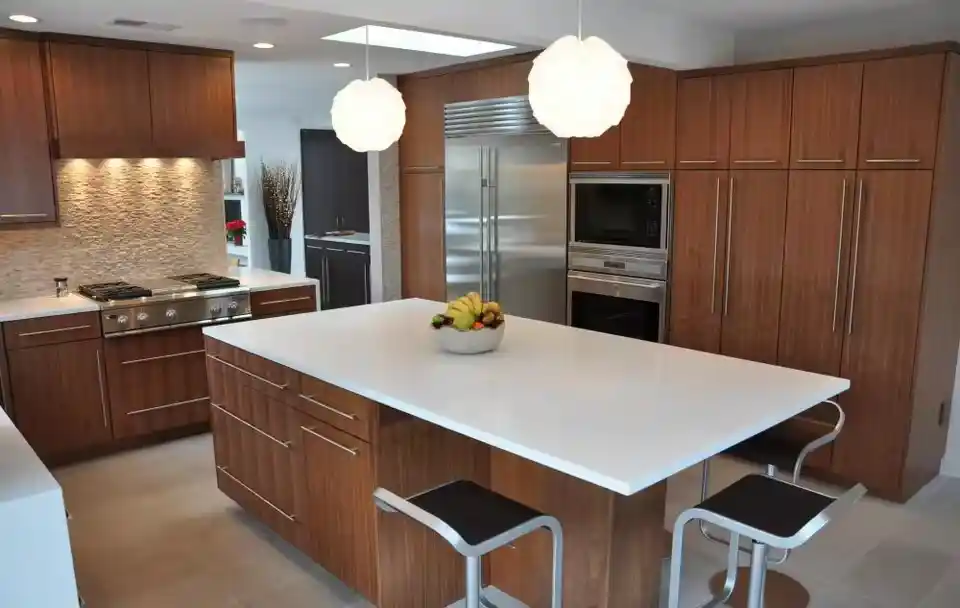
Wood cabinets and white countertops work across several kitchen styles because the cabinet door, hardware, backsplash, flooring, and countertop movement can change the overall character significantly. Flat-panel oak with simple white quartz can feel modern, while Shaker wood cabinetry with warm white stone and brass hardware can feel more transitional. Our guide on how to choose the right kitchen cabinet style covers each look in more detail.
Instead of asking whether the combination belongs to one design style, we recommend deciding on the overall direction first and then selecting each finish to support that look.
Modern Kitchens
Modern kitchens often use flat-panel or simple full-overlay wood cabinets with a clean white quartz or restrained veined countertop. Narrow reveals, simple hardware, minimal backsplash patterns, and uncluttered lighting allow the wood grain to become the main decorative feature. For more inspiration, browse these modern kitchen cabinet ideas.
Light oak creates a softer modern look, while dark walnut with white countertops creates much stronger architectural contrast. Both can work well when the surrounding finishes remain controlled.
Transitional Kitchens
Transitional kitchens can pair Shaker style cabinets in natural wood with white quartz, granite, quartzite, or marble-look surfaces. The natural wood prevents the room from feeling too formal, while the white countertop keeps the design fresh and bright.
Hardware and backsplash can shift the look in either direction. Brass and warmer tile create a softer feel, while nickel and gray-veined surfaces make the kitchen look slightly more contemporary.
Farmhouse Kitchens
Natural oak, maple, hickory, and other visible-grain wood cabinets can work well in farmhouse kitchens with white countertops, apron-front sinks, simple hardware, and textured backsplash tile. The combination feels warm and approachable without requiring heavy distressing or overly rustic details.
We usually recommend limiting the number of heavily patterned surfaces. Natural wood already contributes substantial texture, so a simpler countertop and backsplash often create a more balanced result.
Scandinavian and Organic Modern Kitchens
Light wood kitchen cabinets with white countertops are especially well suited to Scandinavian and organic modern designs because the palette combines natural texture with a bright, restrained background. Pale oak, ash, birch, and similar finishes keep the room warm without making it visually heavy.
Simple doors, minimal hardware, soft neutral walls, natural fabrics, and subtle stone movement can complete the look. The most important principle is restraint rather than filling the room with several different woods and decorative patterns.
Should the Island Match the Wood Cabinets?
The island does not have to match the perimeter cabinetry. Using the same wood throughout creates continuity, while a painted island can introduce contrast without changing the countertop material. Another popular approach is to use wood only on the island and painted cabinets around the perimeter.
At Columbus Cabinets City, we usually look for one strong connection between the two areas. Repeating the same countertop, hardware family, backsplash, or wood accent elsewhere can help the design feel coordinated even when the cabinet colors are different.
How to Keep Wood Cabinets and White Countertops from Looking Dated
Wood cabinets do not automatically make a kitchen look dated. Problems usually come from a combination of older stain colors, heavily decorative doors, busy countertops, patterned backsplash, and dated hardware all being used together. A cleaner door style, simpler white countertop, restrained backsplash, and updated hardware can make natural wood feel much more current.
We recommend creating a clear visual hierarchy. If the wood grain is strong, let it be one of the main patterns in the kitchen and keep the countertop or backsplash calmer. This keeps the space from feeling visually cluttered.
Common Mistakes with Wood Cabinets and White Countertops
The most common mistake is selecting a white countertop without checking its undertone against the cabinet finish. Another is allowing too many patterns to compete. Strong wood grain, dramatic veining, patterned backsplash, busy flooring, and several metal finishes can all be attractive individually but overwhelming when combined.
At Columbus Cabinets City, we recommend deciding which surface should lead the design. Once that is clear, the other finishes can support it. Sampling the cabinet, countertop, backsplash, hardware, and flooring together before ordering is one of the best ways to catch conflicts early.
Choosing a White That Is Too Cool
A very cool white countertop can exaggerate yellow, orange, or red undertones in warm cabinetry. That does not mean warm wood can never work with a crisp white surface, but the contrast should look intentional.
For strongly warm cabinets, we usually test softer whites and surfaces with warm veining before choosing an extremely cool background. This helps the countertop and cabinetry feel connected rather than visually separate.
Using Too Much Pattern
Natural wood already provides movement, even when the grain is subtle. Adding heavily veined countertops, patterned tile, decorative flooring, and highly detailed doors can make the kitchen feel crowded.
We usually allow one or two materials to carry the strongest pattern. If the cabinets have pronounced grain, a quieter white countertop often creates a better result and gives the kitchen a cleaner overall composition.
Trying to Match Wood Flooring Exactly
Cabinets and wood flooring do not need to match exactly. In fact, trying to create an almost-perfect match can make small differences more noticeable and make the room feel less intentional.
We usually prefer the floor to be clearly lighter, darker, or different in grain while maintaining a compatible undertone. This creates a layered design instead of making the floor look like an unsuccessful extension of the cabinets.
Ignoring Kitchen Lighting
Lighting can significantly change how both wood and white surfaces appear. A countertop that looks neutral under showroom lighting may look creamier or cooler in the actual kitchen, while wood can appear much warmer under lower-temperature bulbs.
We recommend viewing samples in the room during both daytime and evening. This gives a more realistic idea of how the finishes will work together throughout the day.
Design Your Wood and White Kitchen as One Complete Palette
Wood cabinets with white countertops work because each material brings balance to the other. Wood adds warmth, grain, and natural character, while the white countertop keeps the kitchen bright and creates a clean visual break between cabinet runs. Light wood produces a softer, more open appearance, while dark wood creates stronger contrast and a more dramatic result.
At Columbus Cabinets City, we recommend planning the cabinet finish, countertop, backsplash, flooring, hardware, and lighting as one complete palette. When these materials are selected together, it becomes much easier to control undertones, pattern, contrast, and overall balance and create a kitchen that feels intentional from every angle. When you are ready, request a free design and quote and we will help you pair the right wood finish with the right white countertop.
Frequently Asked Questions About Wood Cabinets with White Countertops
Yes. Wood cabinets with white countertops create a balanced combination because the wood adds warmth and natural texture while the white surface keeps the kitchen bright and visually open. Light wood creates a softer look, while dark wood produces stronger contrast.
White quartz, granite, quartzite, and marble can all work well with wood cabinets. The best choice depends on the wood undertone. Warm woods usually pair well with softer whites and warm veining, while neutral or cooler woods can support crisper whites and gray veining.
Yes. Dark wood cabinets with white countertops create strong contrast and help keep rich cabinetry from feeling too heavy. Walnut, espresso, dark oak, and cherry all pair well with white surfaces, especially when the backsplash and lighting remain relatively bright.
White countertops are one of the best options for light wood cabinets because they preserve a bright, open appearance while allowing the natural grain to remain visible. White quartz is especially versatile, while white granite, quartzite, and marble can add more natural movement.
Yes. Natural wood cabinets with white countertops work especially well because the materials balance each other. The wood brings warmth and variation, while the countertop adds brightness and contrast. White oak, maple, walnut, ash, and hickory can all work with the right shade of white.
Good options include white subway tile, warm off-white tile, greige, beige, marble-look surfaces, and muted green. If the countertop already has strong veining, we usually recommend a quieter backsplash so the kitchen does not become too busy.
Brass and champagne bronze add warmth, matte black creates stronger contrast, and brushed nickel gives the kitchen a cleaner, more neutral look. The best choice depends on the wood tone, countertop veining, appliances, and overall kitchen style.
Yes. Light wood kitchen cabinets with white countertops are a strong choice for small kitchens because both surfaces help the room feel brighter and less visually heavy. The natural grain also adds warmth so the space does not feel too stark or sterile.
Wood, porcelain, tile, and stone-look flooring can all work. If you choose wood flooring, it is usually better to create intentional contrast rather than trying to match the cabinets exactly. A slightly lighter or darker floor often looks more natural and layered.
Both can work. Gray veining usually suits neutral or cooler wood finishes such as white oak or gray-stained cabinetry, while gold, beige, or taupe veining often complements warmer woods such as maple, cherry, walnut, and honey oak.
Not usually. Wood naturally adds warmth, so white countertops rarely feel overly cold when the undertones are coordinated properly. If a crisp white feels too sharp, choose a softer white with beige, taupe, or subtle warm veining.
Yes. The combination remains popular because it uses a simple contrast between natural wood and a light countertop rather than relying on one highly specific trend. The look can be adapted to modern, transitional, farmhouse, Scandinavian, and organic-style kitchens.
There is no single best wood color. Light oak creates a soft and airy look, walnut creates stronger contrast, maple feels warm and understated, and darker stained wood produces a more dramatic kitchen. The right choice depends on the amount of contrast and warmth you want.