Dark countertops with light cabinets create a strong contrast that can give a kitchen more depth and definition. Light cabinetry keeps the room bright, while a darker countertop adds visual weight and creates a clear focal point. This combination works with many countertop materials, including granite, quartz, quartzite, and other natural or engineered surfaces.
The contrast does not have to mean black countertops and white cabinets. Charcoal, deep gray, espresso, dark brown, and other rich tones can create different looks. The right choice depends on your cabinet color, lighting, backsplash, flooring, and the amount of contrast you want.
If you are choosing a countertop for an actual remodeling project, color is only part of the decision. You also need to consider the material, slab pattern, finish, edge profile, maintenance, countertop size, and how the surface will look under your kitchen’s lighting.
Why Dark Countertops Work With Light Cabinets
Dark countertops and light cabinets naturally create visual separation. Instead of having the cabinets and countertop blend into one large light area, the darker surface defines the work area and gives the cabinetry a clear boundary.
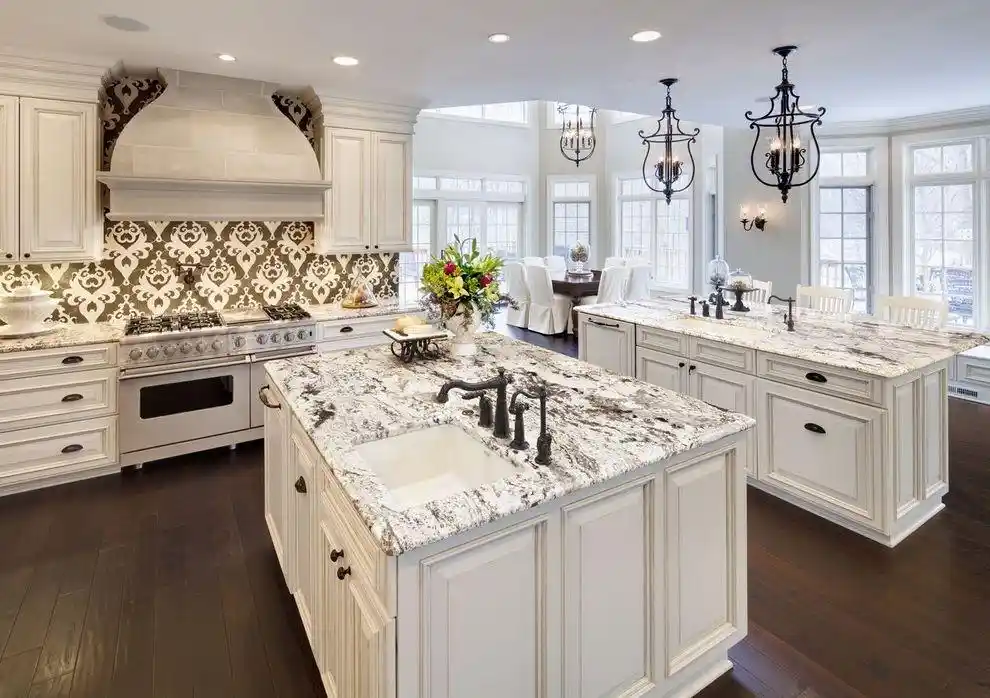
This contrast can be especially effective on a kitchen island. A dark island countertop can become a focal point without requiring a completely different cabinet color. At the same time, the light cabinetry helps balance the visual weight of the darker surface and keeps the overall kitchen from feeling too heavy.
Light Cabinets Keep the Kitchen Bright
White, cream, ivory, light gray, and pale wood cabinets can reflect more light and make the room feel open. This becomes particularly useful when they are paired with a darker countertop because the cabinetry provides brightness around the heavier surface.
The effect depends on the cabinet color and the amount of natural light in the room. A bright white kitchen will create more contrast with a dark countertop than a kitchen with warm beige or light gray cabinets.
Dark Countertops Add Definition
A dark countertop can visually anchor the lower portion of a kitchen. It creates a strong horizontal element that separates the cabinets from the backsplash and walls.
This can make a simple kitchen feel more intentional without adding additional decorative materials. The countertop itself becomes part of the room’s visual structure.
What Dark Countertop Colors Work Best With Light Cabinets?
The best dark countertop color depends on the undertone of the cabinets and the atmosphere you want to create. Black gives you the strongest contrast, charcoal and dark gray create a softer modern effect, and dark brown introduces more warmth.
You should also look beyond the countertop’s dominant color. Natural stone and patterned quartz may contain cream, gray, brown, white, or gold details that can help connect the surface to the rest of the kitchen. These secondary colors are often more useful than the basic color name when choosing a backsplash or hardware.
Black Countertops
Black countertops create the clearest contrast against light cabinetry. They can make white or pale cabinets appear even brighter and give the kitchen a crisp, defined appearance.
A solid black surface creates a more uniform look, while black granite or quartz with subtle movement can add texture. If you choose a heavily patterned black stone, keep the surrounding finishes relatively simple so the countertop does not compete with the backsplash or flooring.
Dark Gray and Charcoal Countertops
Dark gray and charcoal provide contrast without the same visual intensity as pure black. They can work particularly well with white, light gray, dove gray, and greige cabinets.
These shades are also useful when you want to connect the countertop with stainless steel appliances, gray flooring, or cool-toned hardware. A warmer charcoal can instead work with cream cabinets and natural wood accents.
Dark Brown Countertops
Dark brown countertops create a warmer, more traditional appearance. They can work especially well with cream, ivory, beige, and warm white cabinets.
If your kitchen already has wood flooring or other warm natural materials, brown stone can create a cohesive palette. Check the countertop’s secondary colors before choosing the backsplash, because some brown materials lean strongly toward gold, red, orange, or gray.
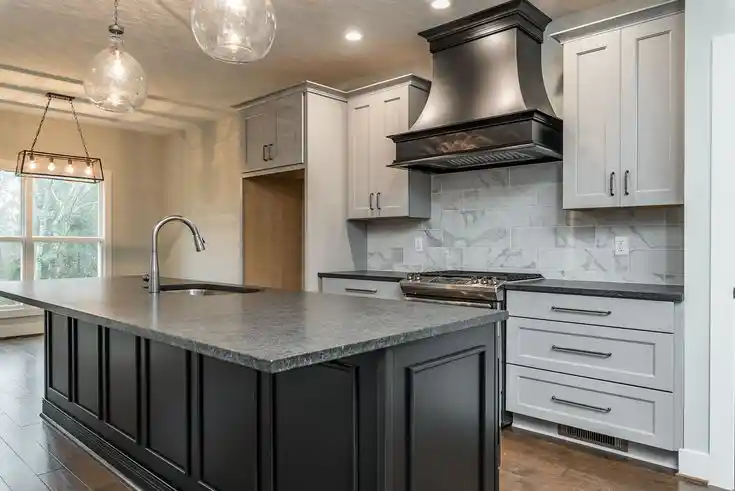
Dark Granite Countertops With Light Cabinets
Dark granite countertops with light cabinets can create a particularly rich combination because granite brings natural variation to the dark surface. A slab may contain black, charcoal, cream, white, brown, gold, or gray mineral details that help connect the countertop to other parts of the kitchen.
When shopping for granite, do not make your final decision from a small sample alone. The pattern can change significantly across a full slab. This is especially important if you are covering a large island where broad areas of the stone will be visible.
What to Look for in a Dark Granite Slab
Start by identifying the dominant background color, then look at the secondary colors and movement. Ask whether the slab is mostly uniform or whether it contains strong veins, clusters, or contrasting mineral patterns.
Next, compare those colors with your cabinet sample, backsplash, flooring, and hardware. A granite slab can look excellent by itself but feel disconnected when placed beside a cabinet with a competing undertone.
For a large island, also consider where the most noticeable parts of the pattern will fall after fabrication. Your fabricator can help you understand how the slab may be laid out and where seams or cutouts will occur.
Dove Gray and Light Gray Cabinets With Dark Countertops
Dove gray and light gray cabinetry can soften the contrast created by a dark countertop. Instead of the sharp difference between bright white and black, gray cabinets create a layered palette that can feel more relaxed and sophisticated.
The undertone of the gray matters. Cool gray cabinets can pair naturally with charcoal, black, and blue-gray countertops, while warmer greige cabinets may work better with dark brown or warm charcoal. Always compare the actual cabinet finish with the countertop before ordering.
Dark Countertops With Dove Gray Cabinets
Dove gray cabinets can create a refined combination with charcoal or dark gray countertops. The contrast remains visible without becoming overly dramatic. A countertop with subtle lighter movement can work particularly well because it introduces variation while connecting the darker surface with the lighter cabinets.
Dark Countertops With Light Gray Cabinets
Light gray cabinets give you flexibility because they can work with both warm and cool countertop colors. A charcoal surface can create a contemporary appearance, while a dark brown countertop can make the same cabinets feel warmer and more traditional.
If your cabinets have a noticeable blue undertone, be careful with strongly warm brown countertops. The contrast between the undertones may become more noticeable once the materials are installed.
How to Choose a Dark Countertop for Light Cabinets
Choosing the right countertop should involve more than comparing colors. Before purchasing, consider the actual material, slab pattern, finish, maintenance, thickness, edge profile, and how much countertop you need.
Start with your cabinet sample and narrow the countertop choices to two or three materials. Then compare those options with your backsplash and flooring. If you are selecting natural stone, view the complete slab whenever possible. If you are considering quartz, inspect a large sample or full slab because veining and pattern scale can look different across a larger surface.
Compare the Actual Materials
Bring a cabinet door, paint sample, flooring sample, or backsplash sample when viewing countertop materials. This gives you a much more reliable comparison than looking at each material separately. For natural stone, inspect the full slab and ask how the fabricator expects to position it. For patterned quartz, consider how the veining will appear across the island and perimeter countertops.
Check the Undertones
Do not judge a countertop only by whether it looks black, gray, or brown. Look for the colors underneath that dominant shade. A dark countertop with blue-gray movement may work beautifully with cool white or gray cabinets but feel disconnected from warm cream cabinetry. A dark brown surface with beige and gold details may work naturally with warm whites and wood flooring.
Look at the Countertop Under Your Lighting
Lighting can change the appearance of dark materials. Daylight may reveal gray or brown details that disappear under artificial lighting, while warm bulbs can make brown and warm charcoal surfaces appear richer. View your samples in both natural and artificial light if possible. This is particularly important when the countertop and cabinets have subtle undertones.
What Countertop Finish Should You Choose?
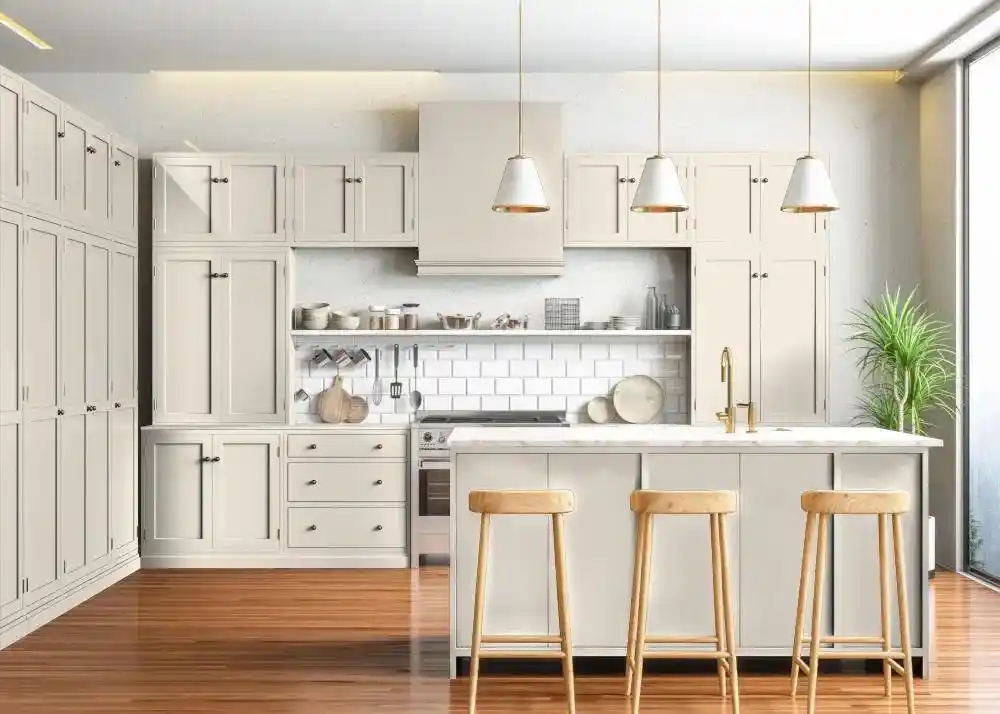
The finish can change how a dark countertop looks and how noticeable everyday marks are. A polished surface reflects more light and can make the material appear richer, while a honed or matte finish creates a softer appearance.
Your choice should depend on both appearance and daily use. Dark polished surfaces can show fingerprints, water spots, and dust more clearly, while a textured or honed finish may provide a more understated appearance. Ask the fabricator or manufacturer about the maintenance requirements for the exact material and finish you are considering rather than assuming all dark countertops require the same care.
What Countertop Edge Works With Dark Countertops?
The edge profile should support the style of both the countertop and cabinetry. A simple eased or beveled edge can keep a dramatic dark surface looking clean and contemporary, while a rounded or decorative edge can work with a more traditional kitchen.
If your granite or quartz has strong movement, a simple edge can help prevent the countertop from becoming visually overloaded. If the surface is relatively quiet, a more detailed profile can add character. For an island, look at the edge from the seating area and from across the room. The exposed edge may be much more noticeable there than along a wall countertop.
How to Balance a Dark Kitchen Countertop With Light Cabinets
A dark kitchen countertop with light cabinets does not need to be matched with dark flooring, backsplash, and hardware. In fact, using too many dark surfaces can make the room feel heavier than intended. Instead, allow the countertop to provide the main dark element and repeat its color selectively. A black faucet, cabinet pulls, light fixtures, or bar stools can connect with a black countertop without making every surface dark.
Choose a Supporting Backsplash
The backsplash is one of the most important transition areas because it sits directly between the countertop and cabinets. A light neutral backsplash can maintain the brightness of the cabinetry while allowing the dark countertop to stand out. If the countertop has strong veins or movement, choose a quieter backsplash. If the countertop is mostly solid, you have more freedom to introduce texture or subtle pattern.
Coordinate the Flooring
Light flooring can keep the kitchen feeling open and make the dark countertop more prominent. Medium-tone flooring can create a warmer, more grounded appearance. If both the flooring and countertop are dark, make sure the cabinets, walls, and lighting provide enough brightness to balance the room.
What Cabinet Colors Work With Dark Countertops?
Dark countertops can work with more than white cabinets. Light gray, dove gray, cream, light wood, and selected blue cabinet colors can all create attractive combinations. The important factor is the relationship between the cabinet undertone and the countertop. Light cabinets generally create the strongest contrast, while gray and wood tones produce a more layered and natural effect.
Light Wood Cabinets
Light wood cabinets with dark countertops can create a warm, balanced kitchen. The wood introduces natural grain and texture, while the dark countertop provides a clear contrast. The wood’s undertone matters. Honey and golden woods often work naturally with warm dark brown or charcoal surfaces, while neutral or gray-toned wood can work with cooler gray and black countertops.
Cream and Ivory Cabinets
Cream and ivory cabinets can soften a dark countertop and create a warmer appearance than bright white. They are particularly compatible with dark brown, warm charcoal, and black surfaces that contain warm mineral accents.
Blue Cabinets
Muted blue or navy cabinets can work with dark countertops when the countertop provides enough neutral contrast. Charcoal, black, and some gray surfaces can complement blue cabinetry without introducing another strong color.
Are Dark Countertops Practical for Everyday Kitchens?
A countertop should be evaluated for more than appearance. Since it will be used every day, consider how easily the surface shows crumbs, dust, water marks, fingerprints, scratches, and other signs of normal use.
The practical characteristics depend on the countertop material and finish. Granite, quartz, and other surfaces have different care requirements, so ask the supplier or fabricator for maintenance information for the exact product you are considering. A dark countertop with subtle movement may visually hide everyday debris better than a completely uniform black surface. However, the material’s finish and texture can also affect how noticeable marks are.
What Are the Downsides of Dark Countertops?
The main consideration is visibility of everyday marks. Depending on the material and finish, dust, light-colored crumbs, water spots, and fingerprints may be easier to see on a dark surface.
Dark countertops can also add visual weight to a small or poorly lit kitchen. This is not necessarily a reason to avoid them, but it means the surrounding colors and lighting should be considered carefully. If maintenance is a concern, ask to see a sample under normal kitchen lighting and discuss cleaning requirements with the fabricator before purchasing.
Do Dark Countertops Make a Kitchen Look Smaller?
Not necessarily. Dark countertops can feel visually heavier, but light cabinets, bright walls, an appropriate backsplash, and good lighting can balance that effect.
In a small kitchen, you might choose charcoal or deep gray with lighter movement instead of a completely uniform black surface. The goal is to create contrast while keeping enough visual brightness throughout the room. Natural light is also important. A small kitchen with large windows may handle a dark countertop very differently from a small room with limited daylight.
Common Mistakes When Choosing Dark Countertops
The biggest mistakes usually happen when homeowners choose the countertop independently from the rest of the kitchen. A dark surface can look completely different depending on the cabinet undertone, lighting, backsplash, and flooring around it. Taking samples home, viewing full slabs, and considering the countertop’s practical requirements before ordering can prevent many expensive design changes later.
Choosing the Darkest Material Automatically
The darkest countertop is not necessarily the best countertop. A deep charcoal surface with subtle movement may provide the contrast you want while feeling less severe than solid black. Choose the material based on the complete kitchen rather than its color alone.
Ignoring the Full Slab
This is especially important with granite and other natural stone. A small sample cannot always show the scale or direction of the slab’s movement. If you are installing a large island, inspect the actual slab and discuss slab layout with your fabricator before approving the material.
Forgetting About Maintenance
Ask how the exact countertop material should be cleaned, whether it requires sealing, how the finish responds to everyday use, and what types of marks are most visible. Understanding maintenance before purchasing is better than discovering the requirements after installation.
Choosing the Countertop Without the Cabinet Sample
A dark countertop can have subtle undertones that become obvious beside the wrong cabinet color. Always compare the actual materials together before making your final decision.
How to Buy the Right Dark Countertop for Light Cabinets
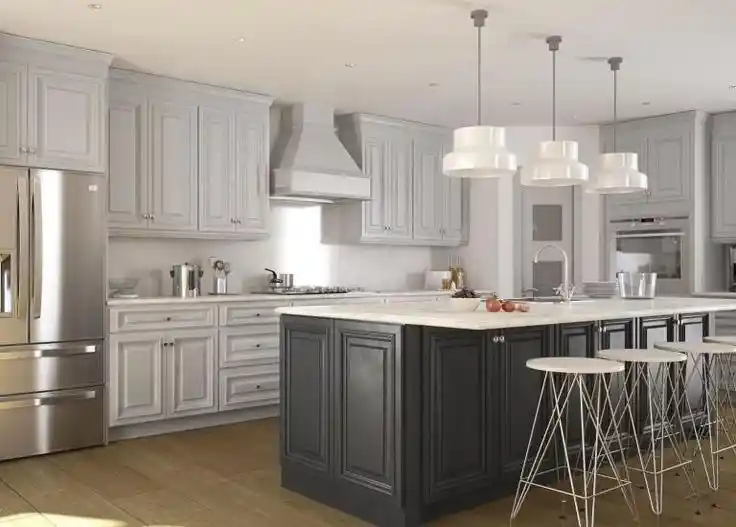
Before placing your order, narrow your options down to a few countertop materials and compare them in the context of your actual kitchen. This is where design preference and practical considerations should come together.
Ask the countertop supplier or fabricator about the material’s availability, slab size, thickness, finish, edge options, maintenance, fabrication process, seams, sink cutouts, and installation. These details can affect both the final appearance and the total project cost.
Questions to Ask Your Countertop Fabricator
Before approving the countertop, ask:
- Is the material available in a slab large enough for my island?
- Can I view the actual slab before fabrication?
- Which finish is available for this material?
- Does the material require sealing or special maintenance?
- Which edge profiles are available?
- Is the selected edge included in the quoted price?
- Where will seams be located?
- How will the slab pattern be positioned?
- Are sink and cooktop cutouts included?
- Does the quote include delivery and installation?
- What preparation is required before installation?
- What care should I follow after installation?
Getting these details in writing can make it easier to compare different countertop options and avoid unexpected costs.
Final Thoughts
Dark countertops with light cabinets can create a kitchen with strong contrast, depth, and a clear focal point. Black, charcoal, dark gray, and brown surfaces can each produce a different result, while granite and patterned quartz can introduce additional color and movement.
The most important decision is not simply choosing a dark color. Look at the cabinet undertone, countertop pattern, finish, lighting, backsplash, flooring, edge profile, and maintenance requirements as one complete system.
If you are buying a countertop, compare actual samples with your cabinets and view the full slab whenever possible. Ask your fabricator about slab size, seams, edge profiles, cutouts, maintenance, installation, and the complete project price before placing the order. This gives you a better understanding of both the design and practical side of the purchase.
Ready to Choose Your Countertop?
Once you have narrowed down your preferred color, compare the actual countertop material with your cabinet samples and inspect the available slabs. A countertop showroom or fabricator can help you compare granite, quartz, quartzite, and other materials based on appearance, maintenance, fabrication requirements, and budget.
When requesting a quote, ask for a complete breakdown covering the material, fabrication, edge profile, sink and appliance cutouts, seams, delivery, and installation. This makes it easier to compare options based on the complete project rather than the material price alone.
The right dark countertop should not simply look good in a showroom. It should work with your cabinets, lighting, kitchen layout, daily use, and long-term design goals. Taking the time to compare those factors before fabrication can help you make a more confident countertop decision.
Frequently Asked Questions
Both can work. Dark countertops create stronger contrast and make the countertop more noticeable, while medium-dark surfaces create a softer transition. For a smaller or darker kitchen, a charcoal or medium-dark material can provide contrast without carrying as much visual weight as solid black.
White, cream, ivory, light gray, dove gray, light wood, and some muted blue cabinets can work well with dark countertops. The best pairing depends on the undertones of both materials and the amount of contrast you want.
There is no requirement that countertops be darker or lighter than cabinets. Darker countertops create contrast and visual weight, while lighter countertops create a softer appearance. Consider the room’s lighting, size, flooring, backsplash, and overall design before deciding.
Dark countertops can make dust, crumbs, fingerprints, and water spots more noticeable, depending on the material and finish. They can also feel visually heavy in a small or poorly lit kitchen. The practical effect varies by material, so check the care requirements of the exact countertop you are considering.
Light wood cabinets can work with white, cream, gray, charcoal, black, and certain dark brown countertops. The wood’s undertone should guide the decision. Honey or golden wood generally works well with warmer surfaces, while neutral or gray-toned wood can pair with cooler gray or black countertops.
Yes. Dark granite countertops with light cabinets can create a classic contrast while allowing the natural movement of the granite to add character. View the full slab before ordering because the pattern and color can vary considerably.
Yes. Light cabinets, walls, backsplash, and good lighting can balance the visual weight of a dark countertop. A charcoal or dark gray surface with subtle movement may also feel less heavy than a completely uniform black countertop.
Not necessarily. Maintenance depends primarily on the countertop material and finish. However, dark surfaces can make certain marks more visible, so you may notice dust, water spots, or fingerprints more easily.