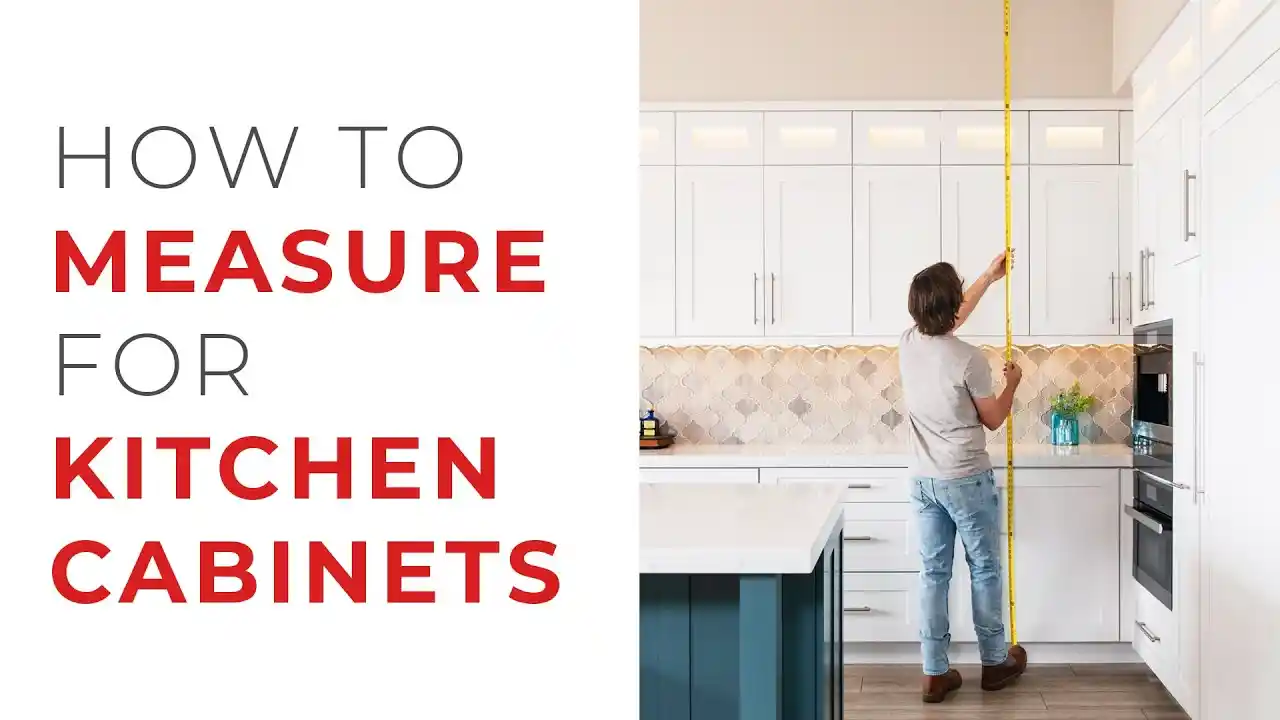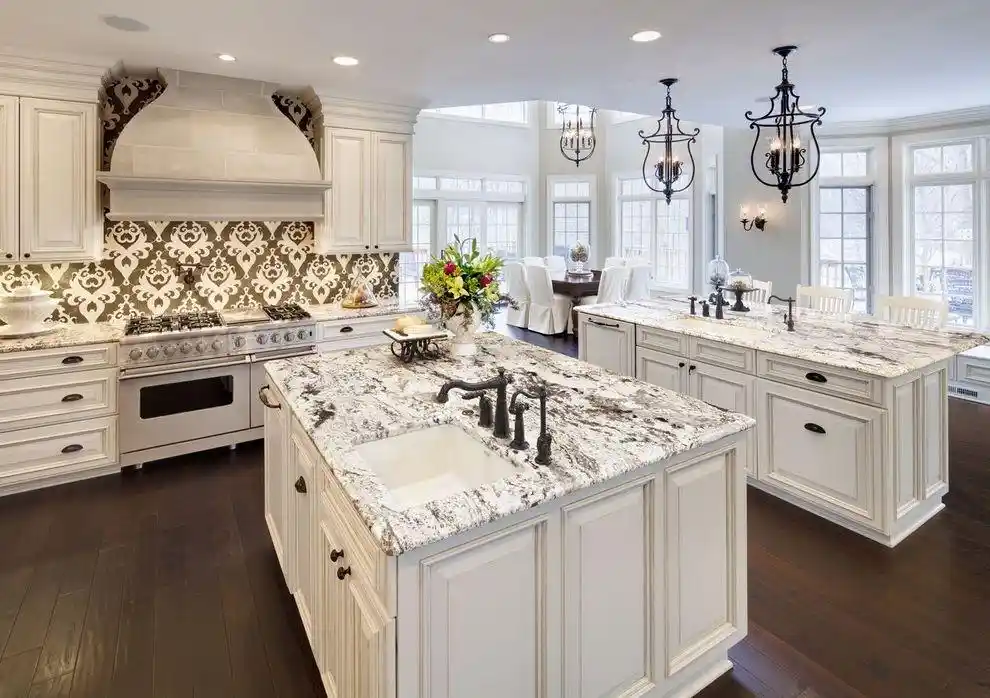
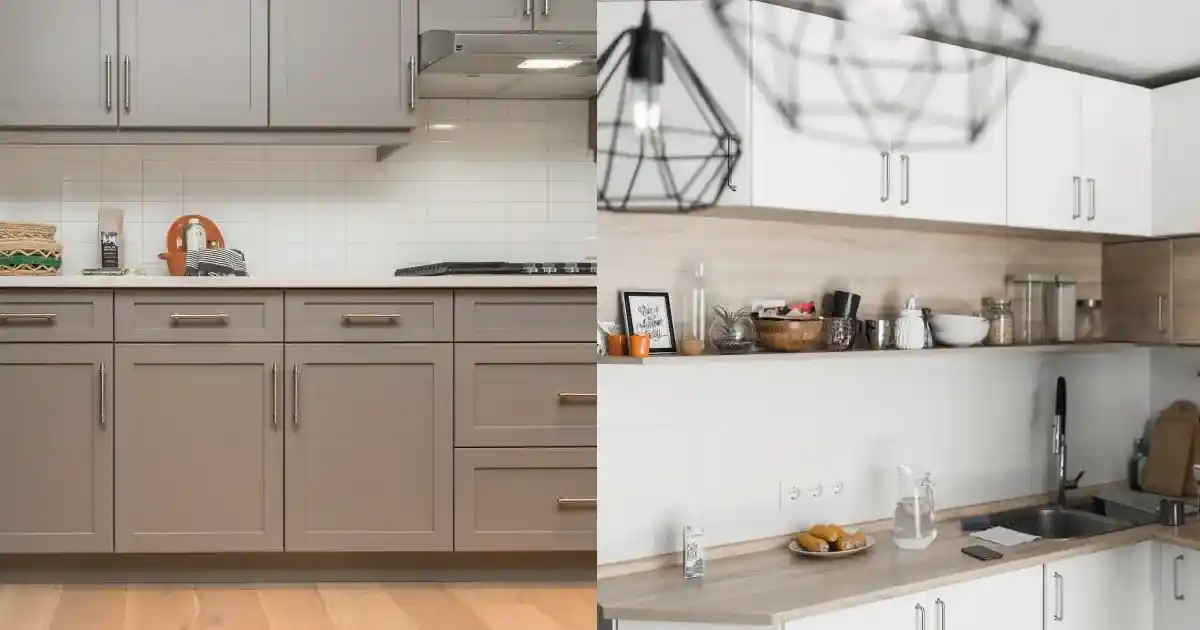
Choosing between framed vs frameless cabinets is one of the most important construction decisions you can make when planning a new kitchen. Both cabinet styles can look beautiful, perform well, and last for years when they are built and installed properly, but they differ in how the cabinet box is constructed, how the doors attach, how much interior access you get, and which design styles they support most naturally.
At Columbus Cabinets City, we usually explain the difference this way: framed cabinets use a face frame attached to the front of the cabinet box, while frameless cabinets eliminate that frame and attach the doors directly to the cabinet sides. That construction difference affects storage access, door styles, alignment, installation, and overall appearance.
This guide explains the difference between framed and frameless cabinets in detail, including construction, storage, full-overlay doors, durability, installation, cost, style, pros and cons, and which option may be better for your kitchen.
What Is the Difference Between Framed and Frameless Cabinets?
The main difference between framed and frameless cabinets is the structure at the front of the cabinet box. Framed cabinetry has a face frame made from horizontal rails and vertical stiles attached to the front of the cabinet. Frameless cabinetry does not use this frame. Instead, the cabinet sides form the front edge of the box, and the doors attach directly to the cabinet structure.
That difference changes more than appearance. Framed cabinets generally offer more flexibility with inset, partial-overlay, and full-overlay doors, while frameless cabinets are usually paired with full-overlay doors. Frameless cabinetry also provides wider cabinet openings because there is no front frame reducing access to the interior.
| Feature | Framed Cabinets | Frameless Cabinets |
|---|---|---|
| Front construction | Face frame attached to cabinet box | No face frame |
| Interior access | Slightly reduced by frame | Wider full-access opening |
| Door styles | Partial overlay, full overlay, inset | Usually full overlay |
| Typical appearance | Traditional to modern | Modern to transitional |
| Drawer opening | Slightly narrower | Wider |
| Installation | More forgiving in some situations | Requires precise alignment |
| Hinges | Face-frame or concealed styles | Usually concealed hinges |
| Best for | Style flexibility | Clean lines and full access |
What Are Framed Cabinets?
Framed cabinets are built with a structural face frame attached to the front of the cabinet box. The frame is typically made from vertical stiles and horizontal rails that surround the cabinet opening and give the front of the cabinet additional rigidity. Cabinet doors and hinges may attach to this frame depending on the cabinet design and hinge system.
Framed cabinetry has been widely used in American kitchens because it supports many different door configurations and design styles. It can work with traditional raised panel cabinet doors, Shaker style cabinets, inset designs, and full-overlay modern looks. The visible frame also gives installers a solid front surface for aligning adjacent cabinets.
How Face Frame Cabinets Are Built
A face frame cabinet begins with the cabinet box, which is then finished at the front with rails and stiles. These frame pieces create the visible structure around the cabinet opening and can be used to mount hinges, align cabinet doors, and connect neighboring cabinets during installation.
The face frame adds structural support to the front of the box, but it also slightly reduces the width of the usable opening. The actual effect depends on the cabinet design, frame width, and whether a center stile is used between paired doors.
Door Styles Available with Framed Cabinets
One of the biggest advantages of framed cabinetry is the range of door configurations it can support. Framed cabinets can be built with partial-overlay doors, full-overlay doors, or inset doors depending on the cabinet line and design. This makes framed construction especially flexible for homeowners who want a specific traditional, transitional, or furniture-style appearance.
Because the face frame remains part of the visible cabinet structure, framed cabinetry can also create more detail around each door opening. That can be useful when the goal is a classic or custom-built look rather than a completely flat, continuous cabinet front.
What Are Frameless Cabinets?
Frameless cabinets eliminate the face frame and use the cabinet sides as the primary structural front edge. The doors typically mount directly to the cabinet box using concealed hinges, and the lack of a front frame creates wider openings into the cabinet interior. Frameless cabinets are sometimes called European-style or full-access cabinets because of this construction method.
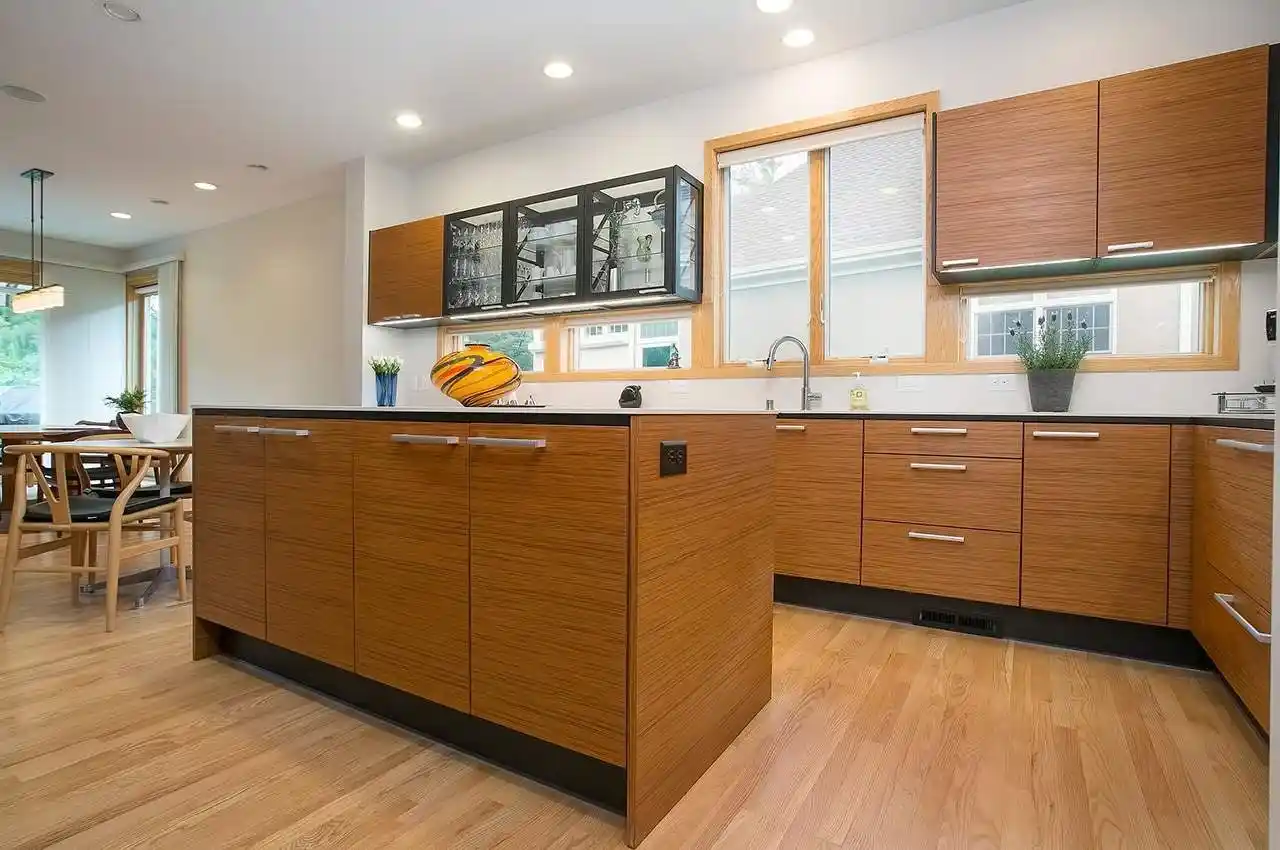
At Columbus Cabinets City, we often recommend frameless cabinetry to homeowners who want cleaner lines, wider drawer openings, and a more contemporary appearance. The construction also works well with flat panel cabinet doors, Shaker doors, and full-overlay designs where only narrow reveals are visible between cabinet fronts.
How Frameless Cabinets Are Built
Frameless cabinets rely more heavily on the cabinet side panels for structural strength because there is no face frame across the front. The cabinet sides are typically finished at the front edge, and concealed hinges mount directly to the inside of the box.
Because the front edge of the cabinet remains visible between doors, the box construction and edge finishing are important. Quality frameless cabinets depend on good materials, accurate assembly, proper joinery, and precise installation just as much as framed cabinets do.
What Are Frameless Full Overlay Cabinets?
Frameless full overlay cabinets use doors and drawer fronts that cover nearly all of the visible cabinet box. Only narrow gaps, often called reveals, remain between the doors and drawers. This creates the clean, continuous appearance that many homeowners associate with modern European-style kitchens.
Full overlay is the natural door configuration for frameless cabinetry because there is no face frame for an inset or partial-overlay door to reference. The result is a streamlined front where the doors become the main visual surface rather than the cabinet box itself.
Framed vs Frameless Cabinets: Side-by-Side Comparison
When homeowners compare frameless cabinets vs framed cabinets, the decision usually comes down to more than one feature. Construction, storage access, door style, appearance, installation, and budget all play a role. Neither type is automatically better, so the best choice depends on how you want the kitchen to function and look.
The most useful way to compare the two is to look at each practical difference individually rather than assuming one construction method is superior in every category.
Construction
Framed cabinets use a front face frame to reinforce the cabinet opening, while frameless cabinets use the cabinet side panels as the front structural edge. Both systems can be strong when they are built from quality materials and assembled properly.
The important difference is where the structure comes from. Framed cabinets distribute some front-end strength through the face frame, while frameless cabinets depend more heavily on the cabinet box itself. That makes panel thickness, joinery, hardware, and installation quality especially important in frameless cabinetry.
Storage Space
Frameless cabinets generally provide more direct access to the cabinet interior because there is no face frame narrowing the opening. This can make drawers slightly wider and can make pull-outs, trays, and large cookware easier to access.
The actual storage difference varies by cabinet design, so we do not recommend focusing on a specific percentage. Cabinet layout, drawer configuration, pantry design, and interior accessories usually have a larger impact on total kitchen storage than construction style alone.
Interior Access
Frameless cabinetry is often called full-access cabinetry because the cabinet opening is not partially blocked by a face frame. This can make it easier to reach items stored near the sides of the cabinet and can make larger accessories easier to use.
Framed cabinets still provide excellent storage, but the rails, stiles, or center supports can slightly reduce the clear opening. For many homeowners, the difference is subtle, but it becomes more noticeable in smaller cabinet widths.
Door and Drawer Width
Because frameless cabinets do not have a face frame, drawer boxes and door openings can usually extend closer to the full width of the cabinet box. This can provide slightly more usable opening width, particularly in narrow kitchen base cabinets or drawer stacks.
Framed cabinets can still use wide drawers, but the front frame influences the maximum opening. In larger cabinets, the difference may not matter much, while in smaller kitchens or compact storage areas, every inch of access can become more valuable.
Hinges
Frameless cabinets typically use concealed European-style hinges mounted directly to the cabinet box. These hinges provide a clean appearance and often allow several directions of adjustment for aligning doors after installation.
Framed cabinets can use concealed hinges as well, but the hinge mounting method may differ because the face frame sits between the cabinet box and door. Both systems can provide soft-close functionality and fine adjustment when quality hardware is used.
Appearance
Framed cabinets can support traditional, transitional, farmhouse, and modern styles depending on the door configuration. Partial-overlay or inset doors emphasize the cabinet frame, while full-overlay framed doors can create a cleaner, more contemporary appearance.
Frameless cabinets naturally support a more continuous, streamlined front because most of the cabinet box is hidden behind the doors. This makes them especially popular in modern and contemporary kitchens, although frameless Shaker cabinets can also work well in transitional designs.
Installation
Framed cabinetry can sometimes be more forgiving during installation because the face frames provide a substantial front surface for clamping, aligning, and joining neighboring cabinets. Minor wall irregularities may also be easier to manage with fillers and frame alignment.
Frameless cabinetry generally requires more precise installation because narrow door reveals make alignment errors easier to notice. The cabinet boxes need to be carefully leveled, joined, and positioned so the doors remain consistent across the full cabinet run.
Durability and Strength
Framed cabinets are often described as stronger because the face frame adds rigidity to the front of the box, but that does not mean frameless cabinets are weak. A well-built frameless cabinet using quality materials, strong joinery, good hardware, and proper installation can perform very well.
In our view, cabinet quality matters more than the framed or frameless label alone. Box material, panel thickness, back construction, drawer slides, hinges, joinery, and installation all have a major effect on long-term durability.
Framed vs Frameless Cabinet Storage
Storage is one of the most practical reasons homeowners compare framed vs frameless cabinets. Frameless construction generally gives you wider openings because there is no front frame occupying part of the cabinet opening. This can be especially useful for drawers, pull-outs, tray storage, and cabinets where large cookware needs to move in and out easily.
Framed cabinets still provide excellent storage when the layout is planned well. The difference becomes most noticeable in narrow cabinets or when a center stile sits between two doors. For many kitchens, thoughtful cabinet design has a bigger effect on storage than construction style itself.
Drawer Storage
Frameless drawer cabinets can usually use a wider drawer box because the opening is not reduced by a face frame. This can be helpful for utensils, cookware, dishes, pantry items, and deep storage drawers where full-width access matters.
Framed cabinets can also include wide, deep drawers, but the actual drawer opening depends on the frame configuration. If maximizing drawer width is a high priority, comparing the interior dimensions of the actual cabinet lines is more useful than comparing labels alone.
Pull-Out Storage
Pull-out trash systems, spice pull-outs, tray organizers, and roll-out shelves can be easier to access in frameless cabinets because there is less obstruction around the opening. The cabinet interior feels more open, particularly when accessories need to slide fully forward.
Framed cabinets can support the same types of accessories, but the face frame may reduce the clear opening slightly. Always check the accessory specifications with the cabinet construction before assuming a pull-out will fit exactly the same way in both systems.
Framed vs Frameless Cabinet Door Styles
One of the most important points to understand is that framed vs frameless describes the cabinet box construction, while cabinet terminology like full overlay, partial overlay, and inset describes how the doors sit on the cabinet. These concepts are related, but they are not the same thing.
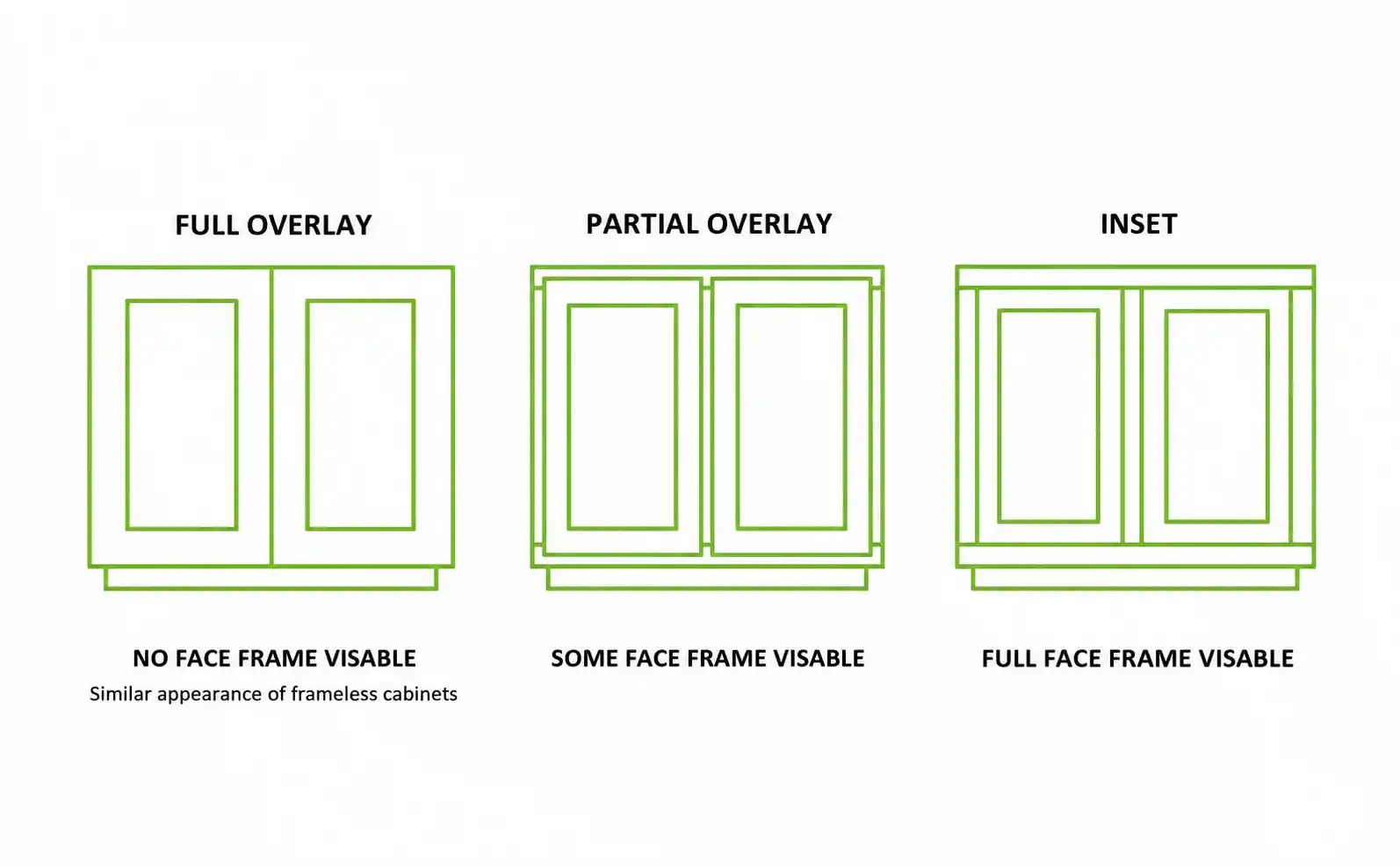
At Columbus Cabinets City, we find that many homeowners confuse cabinet construction with door style. Understanding the difference makes it much easier to compare cabinet lines and choose the look you actually want.
Partial Overlay Cabinets
Partial-overlay doors cover only part of the face frame, leaving more of the frame visible between doors and drawer fronts. This style is most closely associated with framed cabinetry and tends to create a more traditional appearance.
Because more of the face frame is visible, the cabinet construction becomes part of the overall design. Partial-overlay cabinetry can still look attractive, but it usually does not create the same seamless front as full-overlay frameless cabinetry.
Full Overlay Cabinets
Full-overlay doors cover most of the face frame or cabinet box, leaving only narrow reveals between doors. This style is available in both framed and frameless cabinetry and can create a clean, updated appearance.
In framed cabinets, the doors cover most of the face frame. In frameless cabinets, full overlay is usually the standard approach because there is no front frame to remain visible.
Inset Cabinets
Inset cabinet doors sit inside the face-frame opening rather than covering it. This construction creates a furniture-like appearance and requires very precise door sizing and alignment.
Inset doors are generally associated with framed cabinets because the face frame creates the opening where the door sits. They are often chosen for traditional, luxury, or custom-style kitchens where visible craftsmanship and detailed proportions are important.
Framed vs Frameless Cabinets for Modern Kitchens
Frameless cabinetry is a natural fit for modern kitchens because the construction creates narrow reveals, clean lines, and wide uninterrupted door surfaces. Slab doors, minimalist hardware, and full-overlay fronts work especially well with frameless cabinet boxes and can create a sleek European-inspired appearance, and many modern kitchen cabinet ideas build on that look.
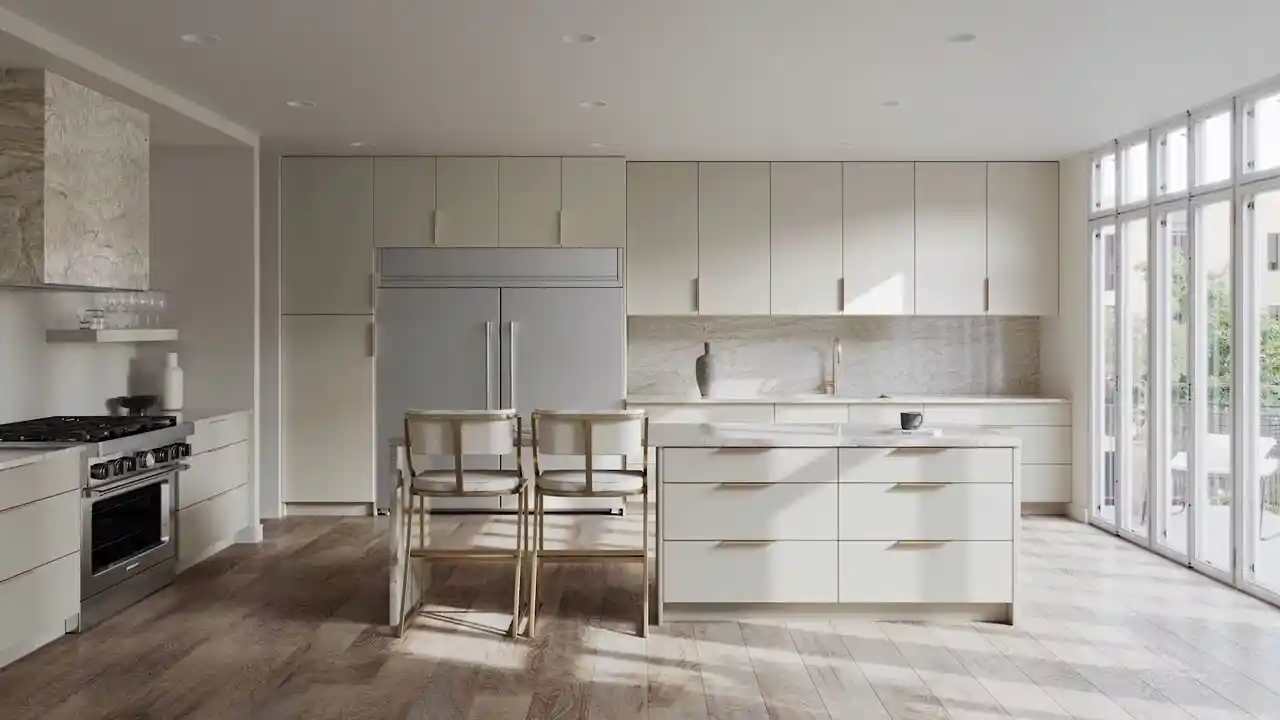
However, framed cabinets should not automatically be ruled out in a modern design. Framed cabinets with full-overlay doors can look very similar from the outside, particularly when the face frame is almost completely hidden behind the doors. The cabinet construction should support the design rather than determine it by itself.
Framed vs Frameless Cabinets for Traditional Kitchens
Framed cabinets naturally support traditional kitchen styles because the face frame works well with inset doors, partial overlay, decorative molding, raised-panel doors, and furniture-style details. The visible frame can add depth around the doors and create a more handcrafted appearance.
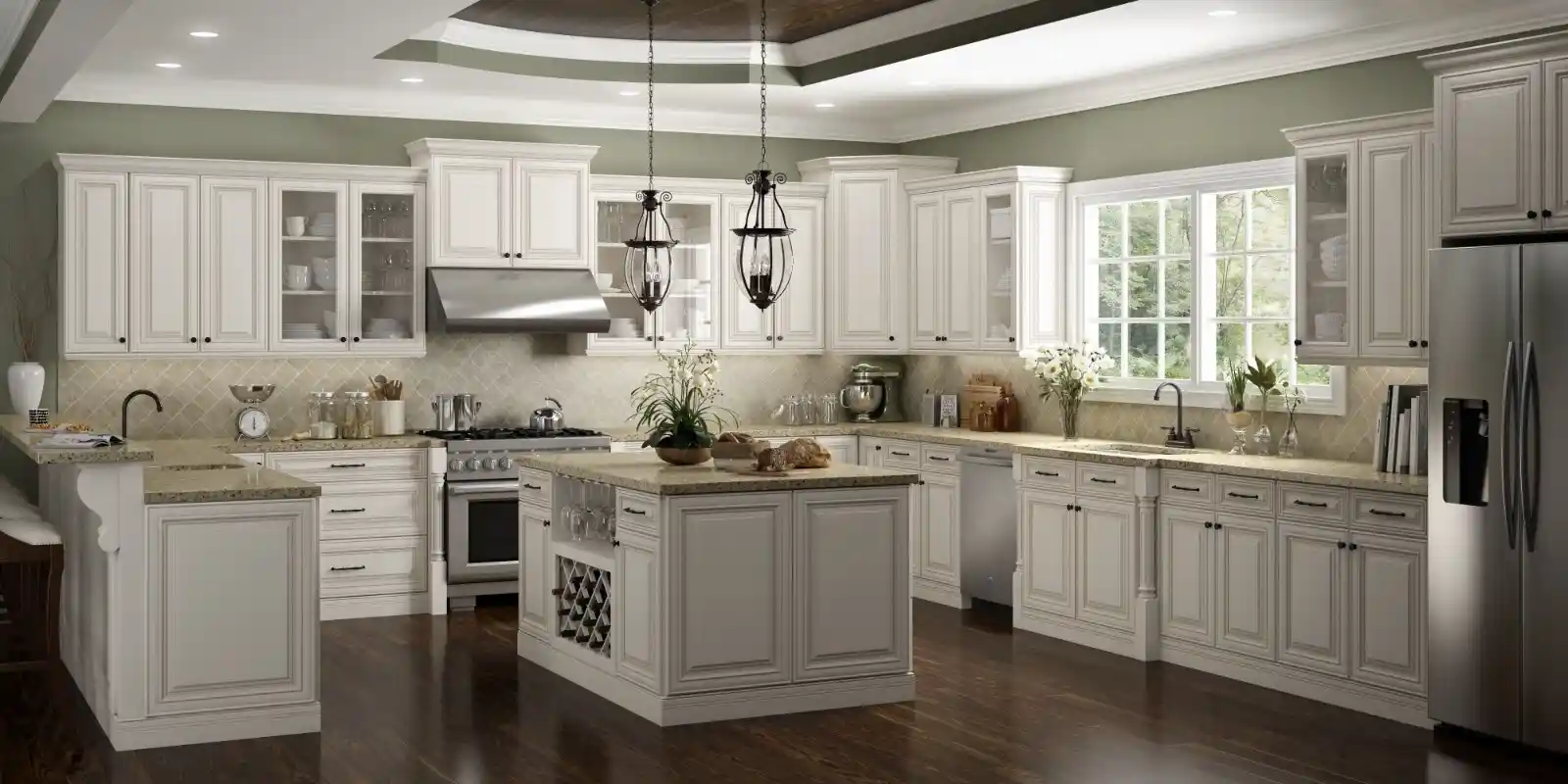
Frameless cabinetry can still be used in a traditional or transitional kitchen, especially with Shaker doors and warmer finishes, but it usually creates a cleaner and more contemporary front. If inset doors or strongly traditional detailing are important, framed construction is generally the more natural fit.
Framed vs Frameless Cabinets in Small Kitchens
Frameless cabinets can be especially useful in small kitchens because the wider cabinet openings and drawer boxes make interior space easier to access. When cabinet widths are limited, even a small increase in usable opening can make pull-outs, drawers, and cookware storage more convenient.
That does not mean frameless cabinetry automatically creates a dramatically larger kitchen. Layout, pantry placement, drawer design, wall cabinet height, and storage accessories usually have a bigger impact on total capacity. We recommend learning how to measure kitchen cabinets and evaluating the complete kitchen plan rather than choosing frameless cabinetry only for storage.
Framed vs Frameless Cabinet Installation
Both framed and frameless cabinets need to be installed level, plumb, square, and securely fastened. The difference is that framed cabinets provide a front frame that installers can use to align neighboring boxes, while frameless cabinets are typically joined through their side panels.
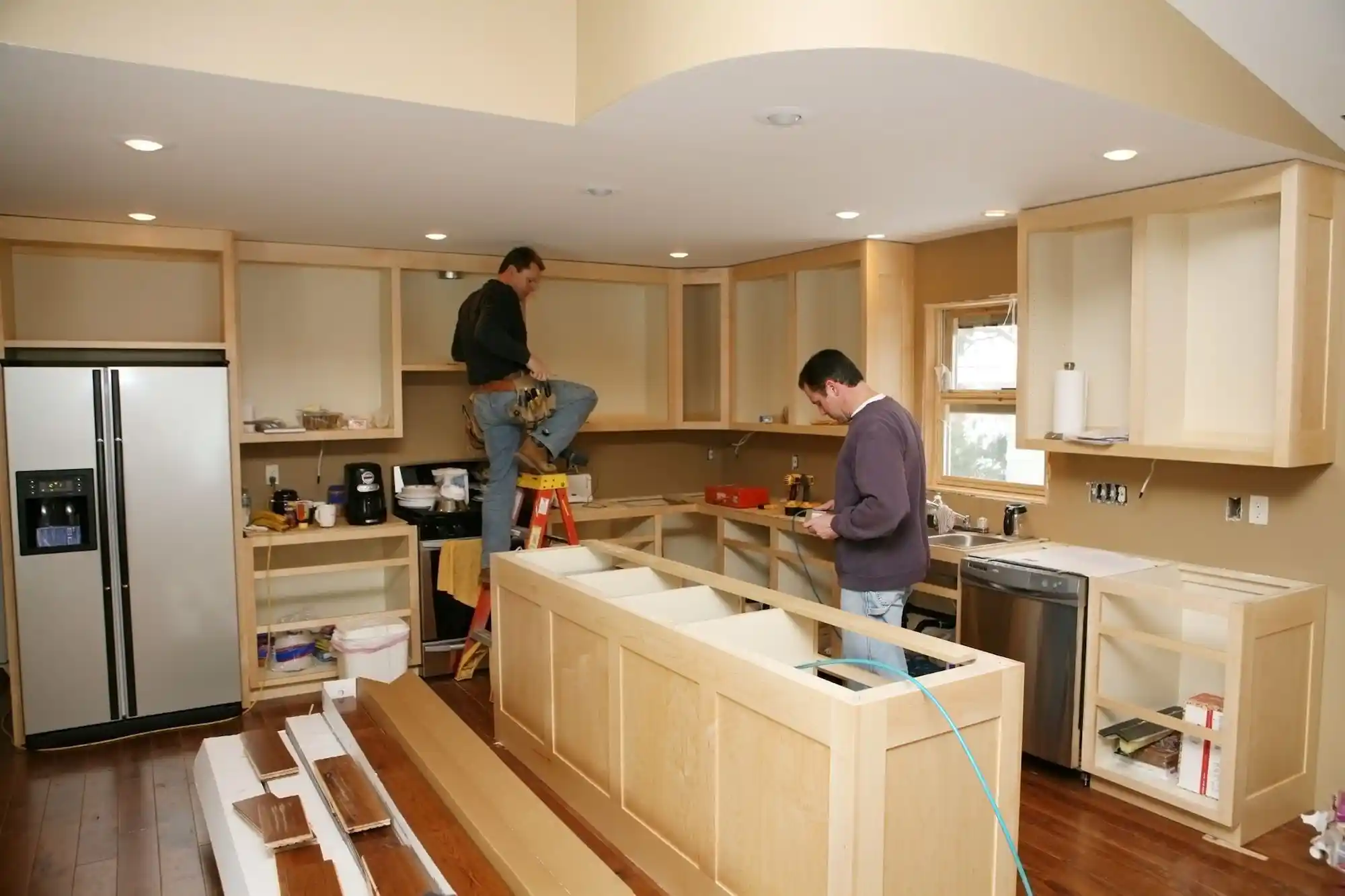
Frameless installation demands especially careful alignment because narrow gaps between doors make even small differences more visible. Proper shimming, cabinet-to-cabinet connection, hinge adjustment, filler planning, and accurate leveling all matter. A high-quality cabinet can still look poorly finished if the installation is not precise. Our step-by-step guide on how to install kitchen cabinets covers leveling, shimming, and joining boxes in more detail.
Installing Framed Cabinets
Framed cabinets are often clamped together at the face frames before they are connected and secured to the wall. The visible frames provide clear alignment points and can make it easier to keep neighboring cabinet fronts flush.
Because the frame extends slightly beyond the cabinet box in some designs, installers may also have more flexibility when adjusting fillers or compensating for small wall irregularities. The exact method depends on the cabinet line and manufacturer requirements.
Installing Frameless Cabinets
Frameless cabinets are usually aligned at the front box edges and connected directly through the cabinet sides. Because there is no face frame to visually hide small inconsistencies, the boxes need to be accurately positioned before the doors are adjusted.
Wall conditions, fillers, cabinet depth, and floor level all become important. Once the boxes are installed correctly, concealed hinges allow the doors to be fine-tuned so the reveals remain consistent throughout the kitchen.
Framed vs Frameless Cabinet Cost
Framed vs frameless cabinet cost cannot be reduced to one simple rule. A frameless cabinet is not automatically more expensive, and a framed cabinet is not automatically cheaper. Pricing depends on the cabinet brand, materials, door style, finish, hardware, construction quality, storage features, and whether the cabinets are stock, semi-custom, custom, assembled, or RTA.
At Columbus Cabinets City, we recommend comparing actual cabinet lines with similar specifications. A basic frameless cabinet may cost less than a premium framed cabinet, while a high-end frameless collection can cost considerably more than an entry-level framed line. The construction type is only one part of how much kitchen cabinets cost.
Framed vs Frameless Cabinets: Pros and Cons
Both construction styles have advantages, so the best choice depends on your priorities. Framed cabinets provide greater flexibility with door styles and can work naturally in traditional designs, while frameless cabinets provide wider openings and a cleaner front appearance.
The most important thing is to evaluate the cabinet as a complete system. Construction quality, storage design, door style, hardware, finish, installation, and kitchen layout all matter more than choosing one type simply because it is popular.
Advantages of Framed Cabinets
Framed cabinets offer flexibility because they can support partial overlay, full overlay, and inset doors. The face frame also provides additional rigidity at the front of the cabinet and gives installers a strong surface for aligning neighboring boxes.
They are especially well suited to traditional, transitional, and furniture-style kitchens, but full-overlay framed cabinets can also create a modern look. This flexibility makes framed cabinetry a strong option for homeowners who want more door-style choices.
Disadvantages of Framed Cabinets
The face frame slightly reduces the clear opening into the cabinet interior, which can make drawer boxes and pull-outs somewhat narrower than comparable frameless designs. Center stiles can also affect access in some double-door cabinets.
For many homeowners, these differences are minor, but they may matter in narrow cabinets or compact kitchens. If full interior access is a top priority, comparing actual cabinet opening dimensions can help clarify the difference.
Advantages of Frameless Cabinets
Frameless kitchen cabinets provide wider openings because there is no face frame around the front of the cabinet box. This creates easier access to drawers, shelves, pull-outs, and large stored items.
The construction also supports full-overlay doors and narrow reveals, which creates a clean and continuous appearance. Frameless cabinetry is particularly attractive for modern and contemporary kitchens, but it can also work well with Shaker doors in transitional designs.
Disadvantages of Frameless Cabinets
Frameless cabinets require careful box construction and precise installation because the cabinet sides provide the main structural front edge. Narrow door gaps also make alignment errors easier to see.
The construction is less suited to traditional inset or partial-overlay door styles. Homeowners who want highly decorative face-frame details may therefore find framed cabinetry a better fit for the overall kitchen design.
Face Frame vs Frameless Cabinets: Which Is More Durable?
Durability depends more on construction quality than on whether the cabinet is framed or frameless. A face frame can add rigidity to the front of a cabinet box, but a frameless cabinet built with strong panels, good joinery, quality hinges, and proper installation can also provide excellent long-term performance.
When we compare cabinet durability, we look at box material, panel thickness, drawer construction, back panels, shelf strength, hinge quality, drawer slides, joinery, and installation. Those details usually tell us more about cabinet quality than the construction category by itself.
Which Is Easier to Clean?
Frameless cabinets can feel slightly easier to clean inside because there is no face-frame lip around the cabinet opening. The wider opening can make it easier to reach corners, shelves, and drawer areas without working around rails or stiles.
However, door style and finish have a much bigger effect on everyday cleaning. A flat slab door is usually easier to wipe down than a heavily detailed raised-panel door regardless of whether the cabinet behind it is framed or frameless.
Which Is Better for RTA Cabinets?
Both framed and frameless cabinets can be sold as ready-to-assemble cabinets, so RTA does not refer to one specific construction method. The important questions are how the cabinet box connects, what materials are used, what hardware is included, and how accurately the parts fit together.
At Columbus Cabinets City, we recommend evaluating RTA cabinets by the same standards as assembled cabinetry. Look at box construction, joinery, drawer slides, hinges, shelf support, finish quality, and assembly instructions rather than assuming that framed or frameless construction automatically determines quality.
Framed vs Frameless Cabinets: Which Should You Choose?
Choose framed cabinets if you want the widest range of door configurations, especially inset or partial-overlay styles, or if your kitchen design leans traditional, transitional, or furniture-inspired. Framed cabinetry also provides a familiar construction style with a rigid front structure and plenty of design flexibility.
Choose frameless cabinets if you prioritize wider cabinet openings, full-access interiors, wider drawers, narrow reveals, and a cleaner continuous appearance. They are especially well suited to modern and contemporary kitchens, although full-overlay Shaker doors can also create an attractive transitional look.
The best cabinet is not determined by one construction feature. We recommend comparing actual cabinet lines based on materials, hardware, storage, finish, warranty, installation, and overall kitchen design before making the final decision.
Framed or Frameless Cabinets for Your Kitchen?
Framed vs frameless cabinets is ultimately a choice between two different construction approaches rather than a simple question of which one is better. Framed cabinets provide more door-style flexibility and work naturally with traditional and inset designs, while frameless cabinets offer wider openings, clean lines, full-overlay doors, and easier interior access.
At Columbus Cabinets City, we help homeowners compare framed and frameless cabinet options based on the actual kitchen layout, cabinet construction, storage needs, door styles, finishes, hardware, and budget. Seeing both types in context makes it much easier to choose cabinetry that looks right, functions well, and supports the overall kitchen design. Visit our showroom or request a free design and quote to compare both types in your own layout.
Frequently Asked Questions About Framed vs Frameless Cabinets
Framed and frameless cabinetry can look similar from the outside, especially when both use full-overlay doors, which is why homeowners often have questions about how the construction affects storage, strength, cost, installation, and design. The answers below cover the most common differences and can help clarify which cabinet type fits your priorities.
The main difference is that framed cabinets have a face frame attached to the front of the cabinet box, while frameless cabinets do not. Frameless cabinet doors attach directly to the cabinet sides, which creates wider openings and a cleaner front appearance.
Framed cabinets offer more flexibility with partial overlay, full overlay, and inset doors, while frameless cabinets are typically designed around full-overlay doors.
Frameless cabinets are not automatically better. They are a strong choice when you want full interior access, wider openings, narrow reveals, and a modern appearance. Framed cabinets may be better when you want inset doors, partial overlay, traditional styling, or greater door-style flexibility.
The better choice depends on the kitchen design, cabinet quality, storage needs, and personal preference rather than one construction method being universally superior.
A face frame adds rigidity to the front of a framed cabinet, but that does not mean frameless cabinets are weak. Quality frameless cabinets rely on strong box panels, joinery, backs, hardware, and accurate installation for structural performance.
We recommend comparing the actual materials and construction methods of the cabinet lines you are considering. A well-built frameless cabinet can outperform a poorly constructed framed cabinet and vice versa.
Frameless cabinets generally provide wider interior access because there is no face frame reducing the cabinet opening. Drawers and pull-outs can also use more of the available cabinet width in many designs.
The actual increase depends on the specific cabinet construction. Kitchen layout, cabinet sizes, drawer configuration, and interior accessories usually have a larger effect on total storage capacity than the framed-versus-frameless difference alone.
Not necessarily. Frameless cabinet pricing depends on manufacturer, materials, door style, finish, hardware, storage accessories, and cabinet category. Some frameless lines are affordable, while premium frameless cabinetry can be expensive.
The same is true for framed cabinets. Compare equivalent cabinet lines rather than assuming the construction type determines the price.
Yes. Framed cabinets can use full-overlay doors that cover most of the visible face frame. This allows framed cabinetry to create a clean, updated appearance that can look similar to frameless cabinetry from the outside.
The construction difference remains behind the doors, where the face frame still surrounds the cabinet opening.
Frameless cabinets are normally designed with full-overlay doors because there is no face frame for a partial-overlay or inset door to sit against. The doors cover most of the cabinet box front and leave narrow gaps between neighboring doors and drawers.
This is one of the reasons frameless cabinetry is associated with clean, modern kitchen designs.
Traditional inset doors generally require a face frame because the door sits inside the framed opening. Frameless cabinets therefore are not normally used for true inset construction.
If inset cabinetry is an important part of your kitchen design, framed cabinets are usually the more appropriate option.
Frameless cabinets can be useful in a small kitchen because wider openings and drawers make interior storage easier to access. That can help when cabinet widths are limited and every inch of opening matters.
However, overall kitchen layout, pantry placement, drawer design, wall cabinet height, and storage accessories usually make a larger difference than construction style alone.
Frameless cabinets are not necessarily harder to install, but they require precise alignment. Narrow reveals between doors make uneven cabinet boxes more noticeable, so accurate leveling, shimming, and cabinet-to-cabinet connection are important.
Framed cabinets can be slightly more forgiving because installers can align and clamp the face frames directly.
Frameless cabinets naturally create a more modern appearance because the doors cover nearly the entire front of the cabinet box and only narrow gaps remain visible. Slab doors and minimal hardware can emphasize this effect even further.
Framed cabinets with full-overlay doors can also look modern, so the final appearance depends heavily on door style, finish, hardware, and kitchen design.
Yes, well-built frameless cabinets can provide long-term durability comparable to framed cabinets. Cabinet lifespan depends on material quality, box construction, joinery, hinges, drawer slides, finish, moisture exposure, and installation.
Construction style alone does not determine how long cabinetry will last.