Kitchen cabinets can remain useful for decades, but there is no single lifespan that applies to every cabinet. A well-built cabinet box that is properly installed and protected from moisture can stay structurally sound for a very long time, while weaker construction, water damage, worn hardware, poor installation, or heavy daily use can shorten that service life considerably.
At Columbus Cabinets City, we do not judge cabinets by age alone. A 25-year-old cabinet may still have a strong box and only need new hinges, drawer slides, doors, or a finish update. Another cabinet may be much newer but already have swollen panels, loose joints, failing drawers, or water damage around the sink.
As a practical planning range, many kitchen cabinets can last roughly 20 to 50 years or longer when construction and conditions are good. What matters more than the calendar is the condition of the box, doors, drawers, hardware, finish, and layout. This guide explains what actually determines kitchen cabinet lifespan, which problems can be repaired, and when replacement becomes the better choice.
How Long Do Kitchen Cabinets Usually Last?
For planning purposes, we consider 20 to 50 years a reasonable broad range for many kitchen cabinet systems, with well-built cabinetry capable of lasting beyond that. The range is wide because cabinets are not one material or one component. A kitchen contains structural boxes, shelves, doors, drawer boxes, hinges, slides, finishes, and trim, and those parts do not necessarily wear out at the same time.
The cabinet box often determines whether the cabinetry still has useful life. Doors can be repainted, hinges can be replaced, and drawer slides can be upgraded. If the boxes remain square, dry, securely fastened, and structurally sound, the kitchen may still be a candidate for repair or refacing rather than full replacement.
Cabinet Age and Cabinet Condition Are Not the Same Thing
Age tells us how long cabinetry has been installed. It does not tell us whether the cabinets have reached the end of their useful life.
When we evaluate older cabinets at Columbus Cabinets City, we look for movement, swelling, delamination, damaged joints, sagging shelves, worn drawer boxes, loose hardware, moisture staining, and whether the cabinets are still securely attached. Those conditions tell us much more than the installation date.
This distinction is important because homeowners sometimes replace structurally good cabinetry only because the doors look dated. In other cases, a fresh coat of paint can hide a cabinet box that already has serious moisture or structural damage. Cosmetic condition and structural condition should be evaluated separately.
What Determines How Long Kitchen Cabinets Last?
Cabinet longevity is usually the result of several factors working together. Box construction establishes the structural baseline, but installation, moisture exposure, hardware, finish quality, daily use, cleaning, and maintenance all influence how well the kitchen ages.
We pay particular attention to repeated stress points. Sink bases, dishwasher areas, frequently used drawer banks, trash pull-outs, corner cabinets, and doors near cooking areas often show wear before lightly used cabinets elsewhere in the room.
The cabinet that lasts longest is not necessarily the one made from the most expensive material. It is the cabinet whose materials, construction, hardware, installation, and maintenance are appropriate for the way the kitchen is actually used.
Cabinet Box Construction Matters Most
The cabinet box supports the countertop, shelves, doors, drawers, hardware, and everything stored inside. If the box loses its shape or structural integrity, repairing the rest of the cabinet becomes much less worthwhile.
At Columbus Cabinets City, we look at side panels, bottoms, backs, shelves, joinery, and how the cabinet is fastened. A strong box should remain square, hold hardware securely, and resist normal movement under repeated use.
Material matters, but so does how that material is assembled. A well-engineered cabinet made from quality components can perform better than a poorly constructed cabinet that uses a more impressive-sounding material.
How Long Do Plywood Kitchen Cabinets Last?
Well-built plywood cabinet boxes can provide decades of service when they remain dry and are properly installed. Plywood is made from layered wood veneers, which gives the panel good structural stability and strong screw-holding performance for cabinet applications.
We still do not assign plywood a guaranteed lifespan simply because the word appears in the specification. Panel thickness, back construction, joinery, shelf support, edge protection, and installation all matter.
The biggest threat is repeated moisture. Plywood generally handles short-term exposure better than many lower-density engineered panels, but ongoing plumbing leaks or standing water can still damage veneers, finishes, adhesives, and cabinet components.
How Long Do Solid Wood Cabinets Last?
Solid wood cabinet doors, face frames, and other components can last for many decades when the wood is properly manufactured, finished, and maintained. Older kitchens sometimes retain structurally sound wood cabinetry long after the original finish or hardware has become dated.
However, very few modern cabinets are made entirely from solid wood. Cabinet boxes may use plywood or engineered panels while hardwood is reserved for face frames, doors, and drawer components.
Wood also responds naturally to changes in humidity. Small seasonal movement is different from structural failure. What matters is whether the joints remain stable, the doors stay functional, and the finish continues protecting the material.
How Long Do MDF Cabinets Last?
MDF can perform well in the right part of a cabinet, especially painted doors and panels where a smooth, uniform surface is desirable. Its lifespan depends heavily on manufacturing quality, finish protection, edge sealing, and moisture exposure.
At Columbus Cabinets City, we do not treat MDF as automatically low quality. A high-quality painted MDF door can be a deliberate design choice because it provides a smooth finish and does not display natural wood grain.
The vulnerability to watch is water. Once moisture reaches unprotected MDF edges or damaged surfaces, swelling can be difficult to reverse. That makes proper finishing and quick attention to leaks especially important.
How Long Do Particleboard Cabinets Last?
Particleboard cabinet boxes can provide useful service when they are well made, properly supported, kept dry, and used within their design limits. However, lower-density particleboard generally has less tolerance for repeated moisture exposure and damaged fastener points than stronger plywood construction.
We often see the most serious problems in areas where water has entered through an unprotected edge, plumbing leak, dishwasher issue, or repeated wet cleaning. Once a panel swells significantly or begins breaking around hardware, repairing it may not provide a dependable long-term result.
The condition of the individual cabinet is more useful than trying to assign every particleboard kitchen the same lifespan.
Hardware May Wear Out Before the Cabinet Boxes
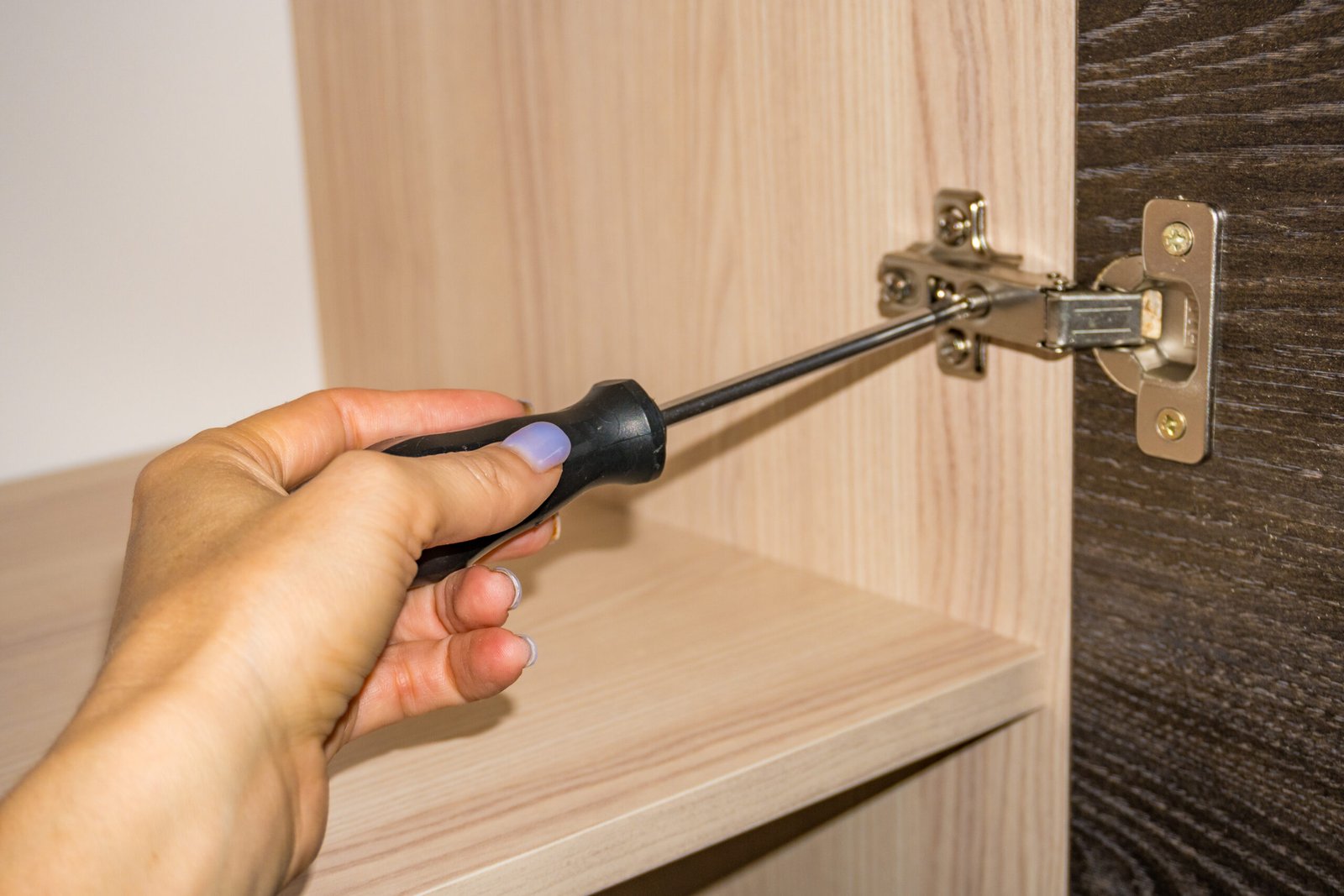
Hinges and drawer slides are moving parts, so they often show wear long before the cabinet structure is finished. A door that sags or a drawer that no longer closes smoothly does not automatically mean the entire kitchen needs replacement.
We first check whether the hardware can be adjusted or replaced. Modern hinges and drawer slides can sometimes give an otherwise sound cabinet system many more years of useful service.
This is one reason we separate cabinet lifespan from hardware lifespan. Replacing worn components can be a relatively small repair compared with removing cabinetry that still has solid boxes and usable interiors.
Cabinet Doors Can Age Differently from the Boxes
Doors are exposed to hands, grease, steam, sunlight, cleaning products, and constant opening and closing. They may therefore look worn while the cabinet boxes behind them remain structurally sound.
Paint can chip, stain can fade, edges can become damaged, and door joints can shift over time. Depending on the material and condition, refinishing, repainting, or replacing the doors may be possible.
When homeowners ask whether older cabinets need replacement, we check whether the problem is limited to the visible fronts. Replacing an entire kitchen because of cosmetic door wear can be unnecessary if the underlying cabinetry still performs well.
Moisture Is One of the Biggest Threats to Cabinet Lifespan
Water damage can shorten cabinet life much faster than ordinary age. Sink leaks, dishwasher leaks, refrigerator supply lines, wet floors, plumbing penetrations, steam, and repeated splashing can all expose cabinetry to moisture.
The sink base deserves particular attention because a slow leak may remain unnoticed behind cleaning products or plumbing. By the time the cabinet bottom feels soft or swollen, the damage may already have spread beyond the visible area.
We recommend correcting leaks immediately rather than waiting for the cabinet to show obvious damage. Protecting cabinets from moisture is one of the simplest ways to preserve their useful life.
How Installation Affects Cabinet Longevity
Even a good cabinet can age poorly when installation is weak. Cabinet boxes should be level, plumb, properly aligned, securely fastened, and adequately supported.
If cabinets are twisted during installation, doors may rub, drawer fronts may sit unevenly, and joints can remain under stress. Poor countertop support can also transfer unnecessary loads into the cabinets.
At Columbus Cabinets City, we consider installation part of cabinet quality because homeowners experience the completed system, not the cabinet box by itself. A strong product and accurate installation need to work together.
How Daily Use Changes Cabinet Lifespan
A lightly used kitchen and a busy household kitchen do not place the same demands on cabinetry. Large drawers filled with cookware, frequently used trash pull-outs, children’s access, repeated door slamming, and constant cooking all increase wear.
That does not mean a busy kitchen should avoid certain cabinet styles. It means hardware and storage should be selected for the expected use.
We prefer designing heavy-use areas around appropriate drawers, hinges, pull-outs, and storage systems rather than relying on delicate components and expecting careful use to compensate later.
Does Cabinet Finish Affect How Long Cabinets Last?
The finish protects the visible surface from stains, grease, moisture, cleaning, and everyday contact. A durable finish can help cabinet doors and frames remain attractive long after cheaper coatings begin showing wear.
Painted and stained cabinetry age differently. Stained wood may develop small marks that blend naturally with the grain, while damage to painted cabinetry can be more visible because the color is uniform.
Finish quality should therefore be part of any comparison between kitchen cabinet brands. A cabinet box can remain strong while a weak finish makes the kitchen look worn much earlier than expected.
Cleaning Products Can Shorten Cabinet Life
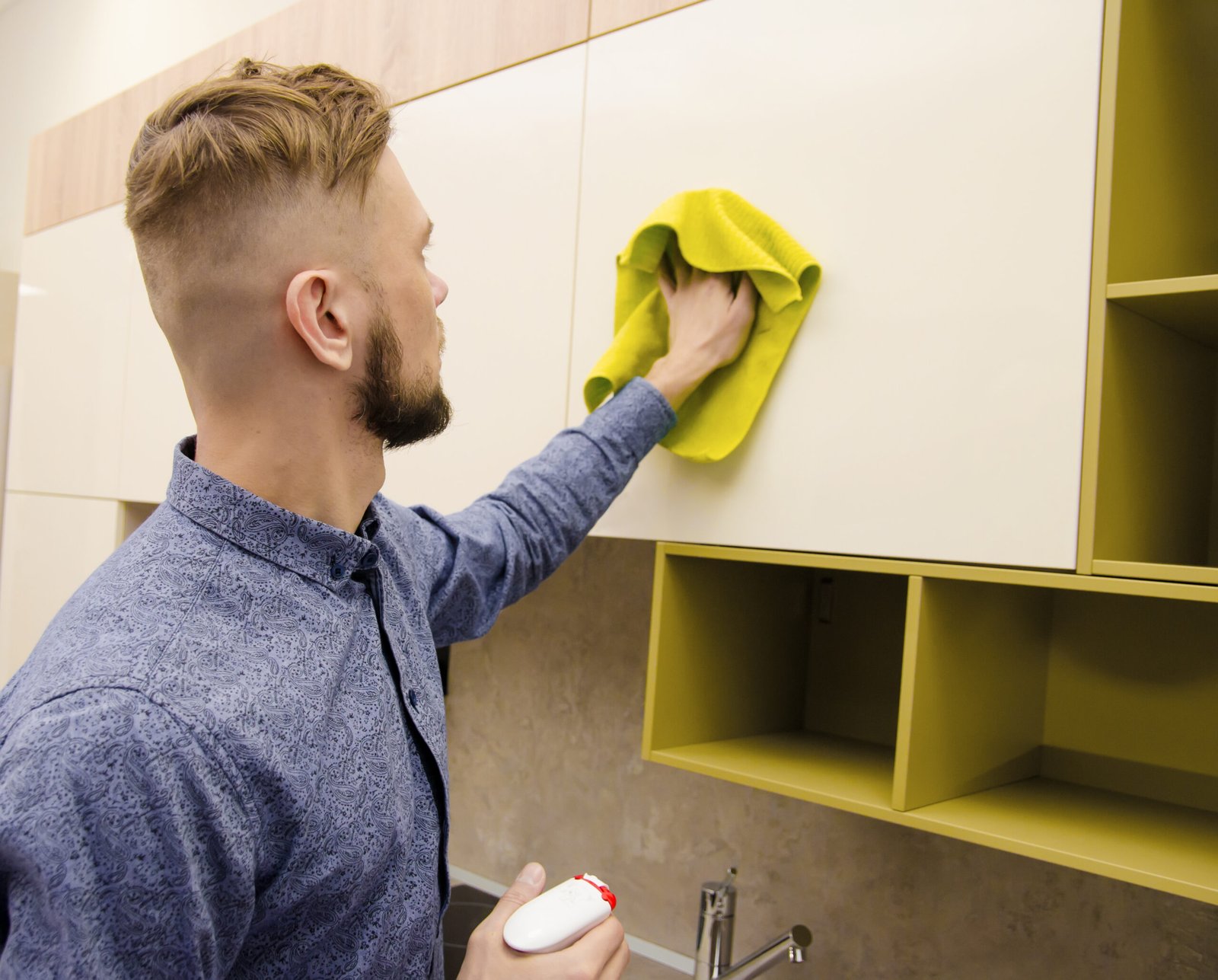
Cabinets do not require aggressive cleaning chemicals for ordinary maintenance. Harsh solvents, abrasive pads, excess water, and products that attack the coating can damage the finish even when the underlying cabinet remains structurally sound.
We recommend using the cleaning method specified by the cabinet manufacturer whenever possible. Our guide to cleaning kitchen cabinets covers routine care. For everyday spills, quick gentle cleaning is usually more valuable than allowing grease or moisture to sit and then using a stronger product later.
Pay particular attention to cabinet edges near sinks, dishwashers, ranges, trash areas, and frequently handled doors.
Signs Your Kitchen Cabinets Still Have Years Left
Older cabinetry may still be worth keeping when the boxes remain square, firmly attached, dry, and structurally stable. Doors and drawers should be capable of proper alignment, shelves should remain supported, and fasteners should still hold securely.
Cosmetic wear by itself is not necessarily a reason for replacement. Faded finish, outdated door styles, older knobs, or worn hinges may all be repairable or replaceable.
If the kitchen layout still works and the boxes are healthy, refinishing, repainting, hardware replacement, or refacing may make more sense than removing the entire cabinet system.
Signs Kitchen Cabinets May Need Replacement
Replacement becomes more appropriate when the cabinet structure itself is failing. We look for severe water swelling, widespread delamination, deteriorated panel edges, broken joints, cabinet boxes that no longer remain square, extensive mold damage, and areas where hardware can no longer be secured properly.
One damaged cabinet does not always require replacing the entire kitchen. A localized sink-base problem, for example, may sometimes be handled separately.
The decision becomes stronger when structural problems appear across multiple cabinets or when repairs would still leave the homeowner with a layout that no longer functions well. If replacement is on the table, review how much kitchen cabinets cost before comparing quotes.
Sagging Shelves and Drawer Problems
A sagging shelf can result from excessive weight, inadequate support, moisture, or a shelf that is too thin for its span. One damaged shelf may be replaceable, but widespread sagging can indicate that the cabinet system is struggling with its intended loads.
Drawers should also be inspected carefully. Loose joints, damaged bottoms, failed slides, and deteriorated cabinet sides around mounting points require different solutions.
We determine whether the problem belongs to the drawer itself, the hardware, or the surrounding cabinet box before recommending replacement.
Water Swelling Around the Sink
Swelling around a sink cabinet usually deserves more attention than ordinary surface scratches. Water can enter exposed edges and cause engineered panels to expand, finishes to separate, or cabinet bottoms to lose strength.
If the damaged area remains localized and the rest of the cabinet is sound, repair may still be possible. Severe swelling, soft material, mold, or extensive deterioration is different.
The leak source should always be corrected first. Installing new cabinet components without solving the water problem simply gives the same failure another opportunity to happen.
Loose Doors Do Not Automatically Mean Bad Cabinets
Cabinet doors can become misaligned after years of use because hinge screws loosen, hinges wear, or adjustments shift. Often, the problem can be corrected without replacing either the door or the cabinet box.
The more concerning situation is when screws no longer hold because the mounting material has broken down. In that case, the repair depends on the amount of surrounding damage.
We inspect the mounting point rather than judging the cabinet by the crooked door alone. A hardware problem and a structural cabinet failure are very different issues.
Should You Repair, Reface, or Replace Old Cabinets?
The best option depends on what is actually wrong with the kitchen.
Repair makes sense when the cabinetry is structurally sound but has limited problems such as worn hinges, damaged slides, loose doors, or a small number of damaged components.
Refacing can make sense when the cabinet boxes are strong and the layout still works, but the homeowner wants new doors and a different exterior appearance.
Replacement becomes more attractive when structural damage is widespread, storage is poor, appliance positions need to change, or the existing layout prevents the kitchen from functioning the way the homeowner wants.
When Refacing Can Extend Cabinet Life
Refacing changes the visible exterior while keeping much of the existing cabinet structure. New doors, drawer fronts, and exterior surfaces can give structurally good boxes a very different appearance.
We consider refacing only after determining that the boxes are worth preserving. Covering a damaged cabinet does not restore structural integrity.
If the boxes are solid and the homeowner is satisfied with the existing layout, refacing can be a practical alternative to complete replacement. If the layout itself needs major changes, keeping the old boxes may create more limitations than savings.
When Painting Old Cabinets Makes Sense
Painting can refresh cabinets that remain structurally sound and have surfaces suitable for proper preparation. The result depends heavily on the existing finish, door material, preparation process, and coating system.
We would not use paint to solve swollen panels, failing joints, or moisture damage. Paint changes appearance, not structure.
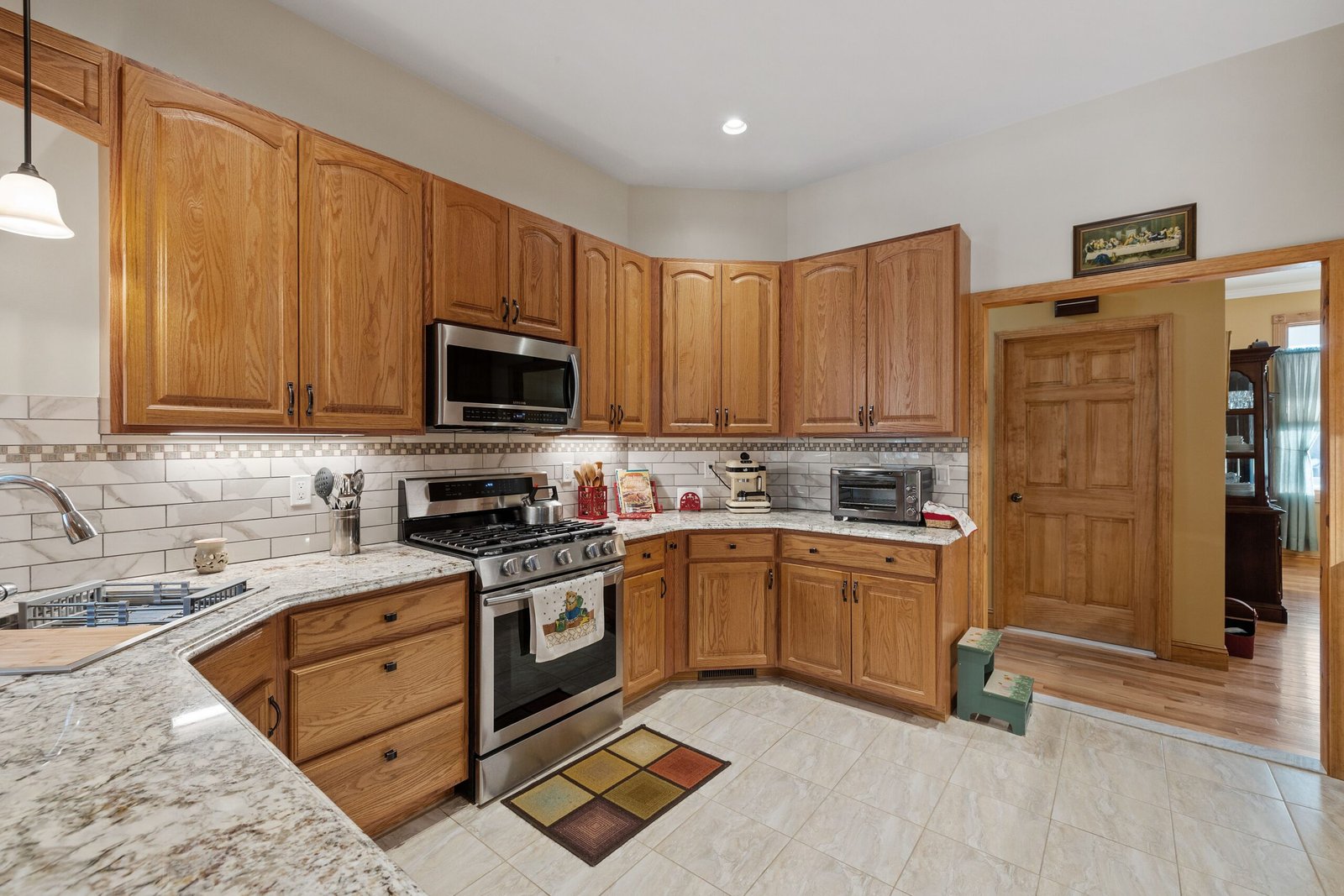
Older cabinets with good boxes and dated finishes can sometimes be excellent candidates for repainting. If you have oak cabinets, our guide to making oak kitchen cabinets look modern covers ways to refresh them with or without paint. Cabinets that are already deteriorating underneath the finish generally need a different solution.
When a New Layout Matters More Than Cabinet Age
Some cabinets are replaced even though they could physically last many more years. The reason is often layout.
Older kitchens may have narrow door cabinets where wide drawers would work better, poorly planned corners, limited pantry storage, inadequate appliance clearances, or an island that interrupts circulation.
In these situations, asking how many years the cabinets have left is only part of the decision. If keeping them also means keeping a layout that no longer serves the household, replacement may provide more value than extending their physical lifespan.
Does Stock, Semi-Custom, or Custom Affect Lifespan?
Stock, semi-custom, and custom describe how much flexibility a cabinet system provides, not guaranteed lifespan. A well-built stock cabinet can outlast a poorly made custom cabinet.
Our guide to stock vs. semi-custom vs. custom cabinets explains those categories in terms of sizing and customization. For longevity, we look beyond the category and compare box construction, hardware, drawer quality, finish, installation, and moisture protection.
Custom cabinets can provide excellent durability when well made, but the word custom by itself should never be treated as a durability specification.
Do More Expensive Cabinets Last Longer?
Sometimes, but not automatically.
A higher price may include stronger construction, better hardware, thicker panels, more durable finishes, additional customization, or higher-quality drawers. Those improvements can support a longer service life.
The price may also reflect finish options, unusual sizes, decorative details, or brand positioning that do not directly affect durability.
At Columbus Cabinets City, we prefer to identify what the homeowner is receiving for the higher price. Spending more makes sense when the additional cost improves construction or solves a real design need.
How Cabinet Brands Affect Durability
Different manufacturers use different box specifications, hinges, drawer slides, finishes, door materials, warranties, and quality-control systems. Even within one brand, individual collections may not have identical construction.
This is why our guide to the best kitchen cabinet brands focuses on cabinet lines rather than simply ranking logos. A homeowner should know which exact collection is being quoted and what its specifications are.
Brand reputation can be useful, but the product details ultimately tell us what is going into the kitchen.
How to Make Kitchen Cabinets Last Longer
Cabinet longevity is influenced as much by preventing avoidable damage as by the original construction. Most everyday care does not require complicated maintenance.
Keep plumbing and appliance leaks under control, wipe standing water quickly, avoid hanging excessive weight from doors or drawers, use appropriate cleaning products, and address loose hardware before repeated movement damages mounting points.
We also recommend avoiding excessive steam and heat directly against cabinet surfaces when possible. Range ventilation and proper appliance clearances help protect surrounding finishes and materials over time.
Check Under the Sink Regularly
One of the easiest preventive habits is periodically checking the sink cabinet for leaks. Look around supply lines, shutoff valves, drain fittings, garbage disposal connections, and the cabinet bottom.
Small plumbing leaks can remain hidden because the cabinet is full of household products. By the time water reaches the floor outside the cabinet, considerable damage may already have occurred inside.
Catching moisture early is far easier than repairing swollen panels or replacing a deteriorated sink base later.
Do Not Ignore Loose Hinges
A hinge that begins pulling away from the cabinet should be addressed before repeated door movement enlarges the mounting holes or damages the surrounding material.
Sometimes the repair is simply tightening or adjusting the hinge. Other cases require new hardware or a more involved repair to the mounting point.
The same principle applies to drawer slides. Early hardware problems are usually easier to correct than damage created after months of continued use.
Avoid Overloading Drawers and Shelves
Large cookware, countertop appliances, dishes, canned goods, and bulk pantry items can place considerable weight on cabinetry.
Use drawers and shelves according to their intended capacity, particularly wide drawers and long shelves. If the kitchen stores heavy items regularly, we recommend considering stronger drawer systems and appropriate shelf support during cabinet selection.
Good storage design distributes weight intelligently instead of concentrating everything into one overloaded drawer or an unsupported shelf.
How Often Should Kitchen Cabinets Be Replaced?
Kitchen cabinets do not need to be replaced on a fixed schedule. There is no useful rule that says cabinetry should automatically be removed after 15, 20, or 30 years.
We recommend replacement when condition or function justifies it. Structurally damaged cabinets may need replacement earlier, while well-built cabinetry can remain useful much longer.
The same applies to remodeling decisions. If an older kitchen still functions well and the cabinets are sound, age alone is not a reason to replace them.
Cabinet Lifespan Comes Down to Condition, Not Just Years
So, how long do kitchen cabinets last? A useful planning range is roughly 20 to 50 years or more, but we would never recommend replacing cabinetry based on that number alone. Some cabinets remain structurally excellent well beyond that range, while moisture, poor construction, hardware failure, or installation problems can shorten the life of newer cabinetry.
At Columbus Cabinets City, we look at the complete cabinet system before deciding whether replacement makes sense. Box condition, doors, drawers, hinges, finish, moisture exposure, storage, and layout all matter. If the structure is still good, repair or refacing may be worth considering. If the cabinetry is failing or the kitchen no longer functions well, replacement gives us the opportunity to solve both the durability problem and the layout at the same time.
Frequently Asked Questions About Kitchen Cabinet Lifespan
Many kitchen cabinets can remain serviceable for roughly 20 to 50 years or longer, depending on construction, materials, installation, moisture exposure, hardware, finish quality, and daily use. Cabinet condition is more important than age alone.
Yes. Well-built and well-maintained cabinets can remain structurally useful for 50 years or longer. Doors, finishes, hinges, and drawer slides may need repair or replacement during that time even when the cabinet boxes remain sound.
Quality plywood cabinet boxes can remain functional for decades when they are properly constructed, installed, and protected from repeated moisture. There is no reliable universal lifespan because panel quality, thickness, joinery, hardware, use, and water exposure vary between products.
MDF components can last many years when they are well manufactured, properly finished, and kept dry. Painted MDF doors can perform especially well in suitable applications. Significant moisture exposure is one of the main risks because damaged or unprotected material can swell.
Solid wood components can last for decades, but solid wood alone does not guarantee a longer-lasting cabinet. Cabinet-box construction, joinery, hardware, finish, installation, and moisture conditions also affect longevity.
Look for structural problems such as widespread swelling, severe water damage, deteriorated joints, failing cabinet boxes, extensive delamination, damaged mounting points, or cabinetry that can no longer be aligned properly.
Cosmetic wear alone does not necessarily require replacement.
Refacing can make sense when the cabinet boxes are structurally sound and the existing layout still works. Replacement is usually more appropriate when the boxes are damaged or when the homeowner wants major changes to storage, appliances, or layout.
Yes. Replacing worn hinges or drawer slides can restore function when the cabinet boxes, doors, and mounting points remain structurally sound. Hardware replacement is often much less expensive and disruptive than replacing otherwise usable cabinetry.
Painting can protect and refresh suitable cabinet surfaces, but it cannot repair structural damage. Paint is most useful when the cabinetry is sound and the main problem is an outdated or worn finish.
Sink cabinets are exposed to plumbing connections, cleaning products, splashes, and the possibility of slow leaks. Repeated moisture can damage cabinet bottoms, edges, finishes, and surrounding panels, making this one of the areas we recommend checking regularly.
They can be, particularly when the higher price includes stronger construction, better hardware, better drawers, and more durable finishes. However, price can also reflect customization or design choices that do not affect lifespan, so specifications should always be compared.
Not simply because they are 20 years old. If the boxes remain strong, dry, square, and securely installed, they may still have considerable useful life. Replacement makes more sense when the cabinetry is damaged or the existing layout no longer works for the household.