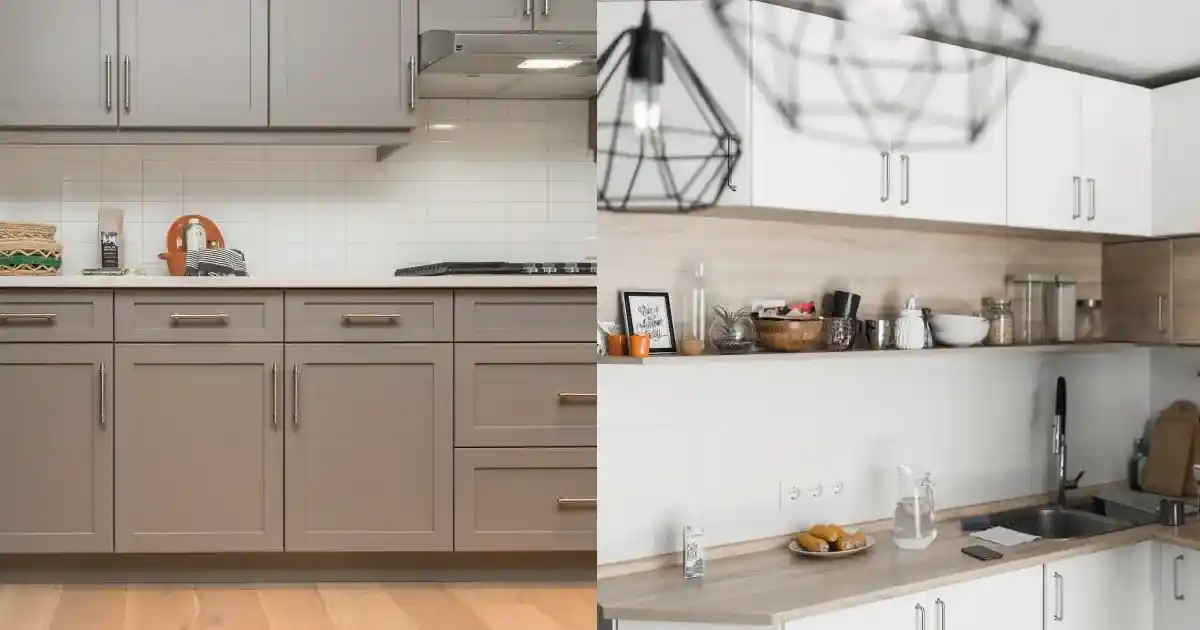
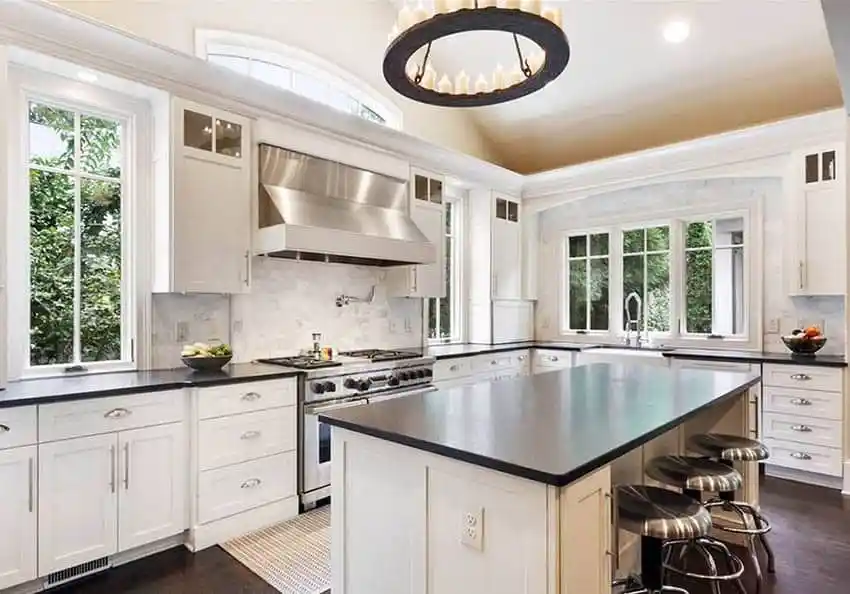
White cabinets with black countertops create one of the strongest and most versatile contrasts in kitchen design. The white cabinetry keeps the room bright, while the dark countertop gives the space definition, depth, and a clear visual anchor. Depending on the materials and finishes you choose, the same combination can feel modern, traditional, farmhouse-inspired, transitional, or luxurious.
The key is creating balance. A kitchen with white cabinets and black countertops can feel sophisticated and inviting when the backsplash, flooring, lighting, hardware, and countertop finish work together. Without those supporting elements, the contrast can sometimes feel too sharp or overly monochromatic.
This guide covers the best black countertop materials, backsplash ideas, cabinet styles, hardware, flooring, wall colors, island options, and practical design tips for creating a white and black kitchen that feels intentional rather than stark.
Why White Cabinets with Black Countertops Work So Well
White cabinets and black countertops work because they create immediate visual contrast while remaining neutral enough to support many design styles. The black surface defines the countertop area and grounds the room, while white cabinetry prevents the darker material from making the kitchen feel heavy. This balance is one reason the combination works in both small kitchens and larger open-plan spaces.
The pairing also gives you flexibility with the rest of the room. Natural wood can add warmth, brass can introduce a softer metallic accent, black hardware can strengthen the contrast, and colored backsplash tile can bring personality. Houzz continues to show thousands of kitchens using white cabinetry and black countertops across contemporary, coastal, Scandinavian, farmhouse, and transitional designs.
Best Black Countertop Materials for White Cabinets
Choosing a black countertop is about more than choosing the darkest surface available. Different materials create very different results. Black quartz can look smooth and controlled, granite adds natural mineral variation, quartzite introduces organic movement, and soapstone creates a softer, more lived-in appearance. The finish also matters because polished, honed, and textured surfaces reflect light differently.
Before choosing a countertop, compare the actual slab or a large sample with your cabinet finish. Some black surfaces lean warm, while others contain gray, blue, brown, gold, or white details. Those undertones can influence which backsplash, hardware, flooring, and wall colors look best beside the countertop.
Black Quartz with White Cabinets
Black quartz is a strong choice when you want a clean, consistent countertop with predictable color and pattern. Depending on the collection, you can choose nearly solid black, subtle speckling, concrete-inspired surfaces, or black quartz with fine white or gray veining. The controlled pattern works especially well in modern and transitional kitchens where you want strong contrast without a visually busy countertop.
Black Granite with White Cabinets
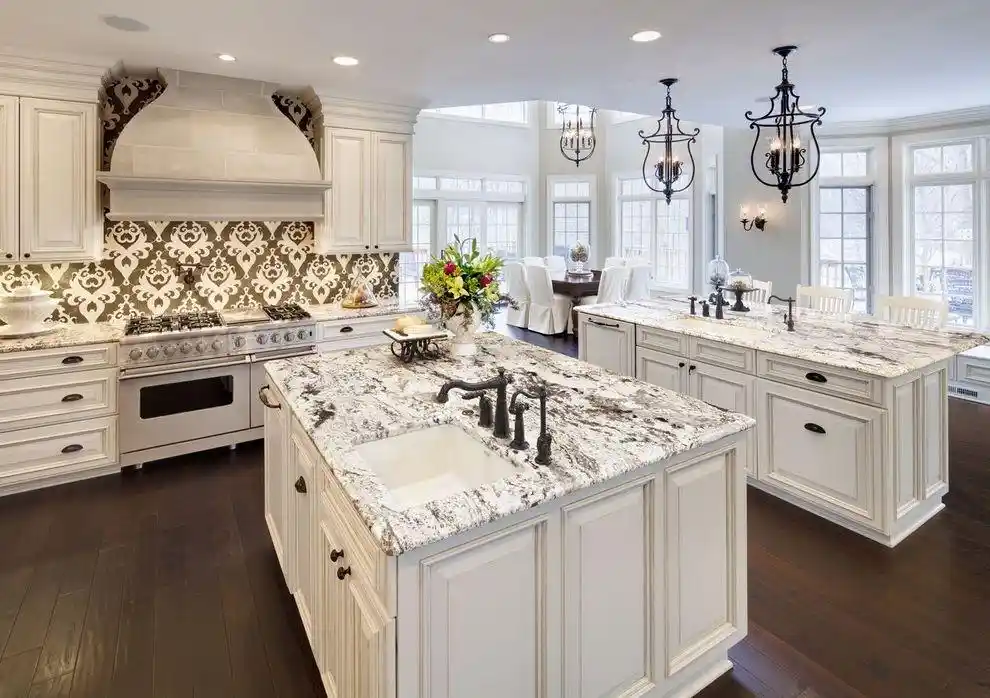
Black granite brings natural variation to white kitchen cabinets with black countertops. Some slabs appear almost solid from a distance, while others contain silver, gray, brown, gold, or reflective mineral details. This movement can soften the sharp black-and-white contrast and give the kitchen more natural texture. Absolute Black, Black Galaxy, and other dark granite families can create very different looks, so actual slab selection is important.
Black Quartzite with White Cabinets
Dark quartzite can work well when you want a natural stone with more movement than a uniform black surface. Depending on the variety, the slab may contain white, gray, gold, or lighter mineral veins that help connect the countertop with white cabinetry and other finishes. Because quartzite patterns vary naturally, viewing the full slab is more useful than selecting from a small sample.
Soapstone with White Cabinets
Soapstone creates a softer black or charcoal appearance than many polished stones. Natural veining and a matte or low-sheen finish can make the kitchen feel less formal while maintaining strong contrast with white cabinetry. It is especially suited to farmhouse, traditional, and understated transitional kitchens where a perfectly uniform black surface might feel too sharp.
Black Marble with White Cabinets
Black marble can create a dramatic focal point when its white or light veining connects visually with the kitchen cabinetry. The combination can feel elegant and luxurious, particularly on an island or in a kitchen with simple cabinet profiles. Because marble is sensitive to acidic substances and can etch, homeowners should understand the maintenance characteristics before choosing it for a heavily used work surface.
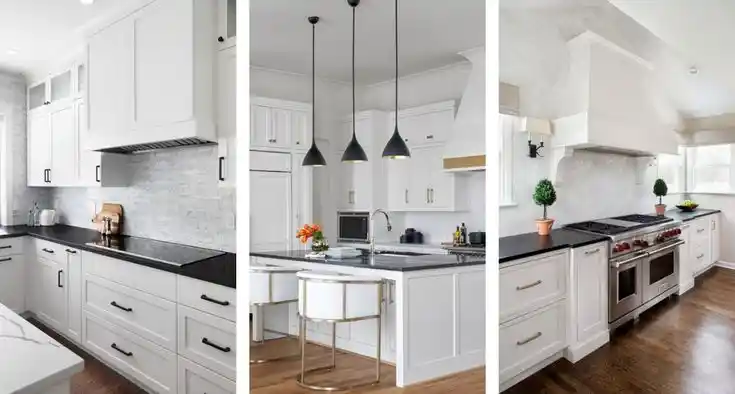
Solid Black or Veined Black Countertops?
Solid black countertops create the strongest and cleanest contrast with white cabinets. They can work especially well with simple slab doors, Shaker cabinetry, minimal backsplashes, and modern hardware. However, a large uninterrupted black surface can also feel visually heavy if the kitchen has limited natural light or uses several other dark finishes.
Black countertops with white, gray, or warm veining introduce more movement and can create an easier transition between dark work surfaces and light cabinetry. Veining is also useful when you want to repeat a color elsewhere in the kitchen. White veins can connect to the cabinets, while gold or beige movement can connect to brass hardware, warm flooring, or wood details.
Kitchen with White Cabinets and Black Countertops: How to Add Warmth
A kitchen with white cabinets and black countertops can feel overly sharp when every surrounding finish is also black, white, gray, or stainless steel. Adding warmth does not mean changing the core palette. Small amounts of natural wood, warm metal, textured tile, warmer lighting, or softer neutral colors can make the room feel more welcoming while preserving the strong contrast.
The goal is to break up the strict black-and-white relationship with materials that introduce texture or temperature. Current 2026 design coverage shows broader movement toward warmer whites, natural wood, tactile materials, expressive stone, and more layered kitchens rather than completely uniform all-white spaces.
Add Natural Wood
Natural wood is one of the easiest ways to soften white kitchen cabinets with black countertops. White oak flooring keeps the room relatively light, while walnut creates richer contrast. Wood can also appear through bar stools, floating shelves, cutting boards, ceiling beams, a range hood, or an island detail, allowing you to introduce warmth without changing major kitchen surfaces.
Use Brass or Warm Metal Hardware
Brass, aged brass, champagne bronze, and similar warm metals can break up a strict black-and-white palette. They work particularly well when the countertop contains warmer mineral movement or when the room includes wood flooring. The metal does not need to dominate the kitchen; small repeated details on cabinet pulls, faucets, lighting, or accessories can create enough warmth.
Bring in Soft Neutral Colors
Cream, taupe, beige, greige, and warm off-white can soften the transition between black counters and white cabinets. These colors can appear on the backsplash, walls, stools, rugs, window treatments, or decorative accessories. Keeping them muted allows the primary black-and-white contrast to remain the focus.
Use Warmer Lighting
Lighting has a major effect on how black and white surfaces appear. Very cool lighting can exaggerate the contrast and make the room feel clinical, while warmer lighting creates a softer effect. Combine general ceiling lighting with under-cabinet task lighting and decorative fixtures so both the countertops and cabinets are well illuminated.
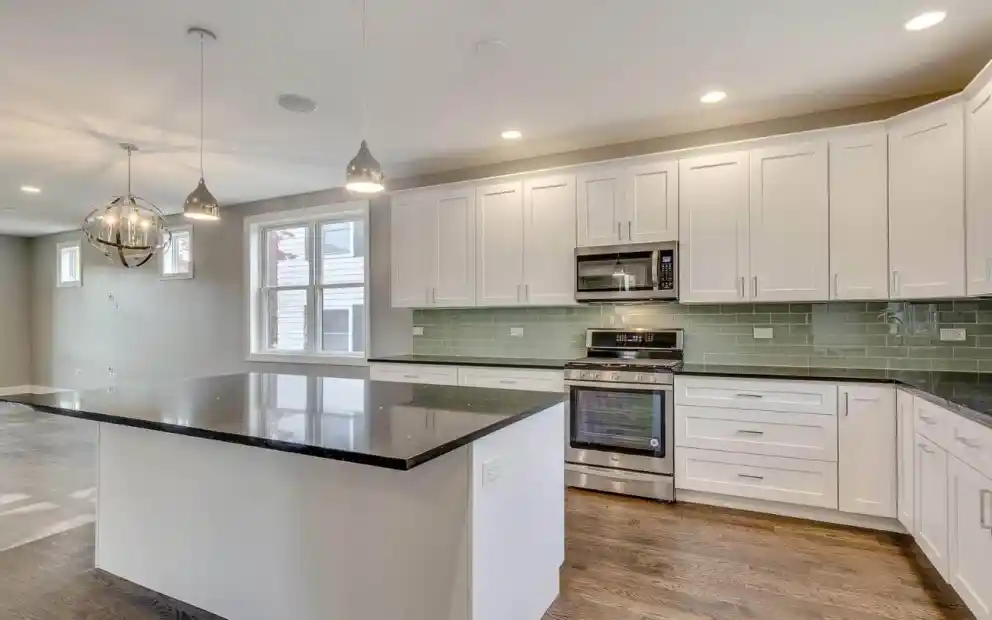
Black Countertops White Cabinets Backsplash Ideas
Choosing the right backsplash for black countertops and white cabinets is one of the most important supporting design decisions. The backsplash sits directly between the two contrasting surfaces, which means it can either soften the transition, reinforce the black-and-white palette, or introduce a new color and texture.
Current backsplash guidance favors lighter and simpler surfaces as the safest option for this combination, especially when the countertop already carries strong visual weight. White, warm white, greige, light gray, marble-look surfaces, handmade-look tile, muted green, and soft blue can all work depending on the kitchen style and countertop pattern.
White Subway Tile
White subway tile is a dependable choice because it keeps the wall area bright and allows the black countertop to remain the main source of contrast. The look can be changed through tile size, surface texture, grout color, or layout. A handmade or slightly irregular white tile can add more character than a perfectly uniform glossy tile while keeping the palette simple.
Marble or Marble-Look Backsplash
White marble or marble-look tile can bridge the cabinets and countertop when its veining contains black, charcoal, or gray movement. This works especially well when the countertop itself is relatively simple. If the black countertop already has bold veining, choose a quieter backsplash so the two surfaces do not compete for attention.
Greige or Warm Neutral Tile
Greige, taupe, cream, and warm beige backsplashes are useful when the black-and-white combination feels too sharp. These colors introduce warmth without taking the kitchen away from a neutral palette. They work particularly well with natural wood flooring, brass hardware, and warm white rather than stark white cabinetry.
Sage Green Backsplash
Sage green introduces restrained color while still feeling soft enough to work with black and white. It can be especially attractive in transitional and farmhouse-inspired kitchens where natural wood and warm metals are also present. Keep the shade muted so it complements rather than competes with the dark countertop.
Soft Blue Backsplash
Muted blue tile can create a cleaner and slightly cooler color direction. Dusty blue, blue-gray, and soft slate tones can work with black countertops, particularly when the kitchen contains stainless steel or nickel finishes. Avoid combining too many cool finishes if you want the room to feel warm and inviting.
Black Backsplash
A black backsplash can create a dramatic continuous surface above the countertop. This works best when the kitchen has enough light and the white cabinetry provides sufficient contrast. Using the countertop material as a full-height backsplash is another way to create a seamless, architectural appearance, especially when the slab has attractive veining.
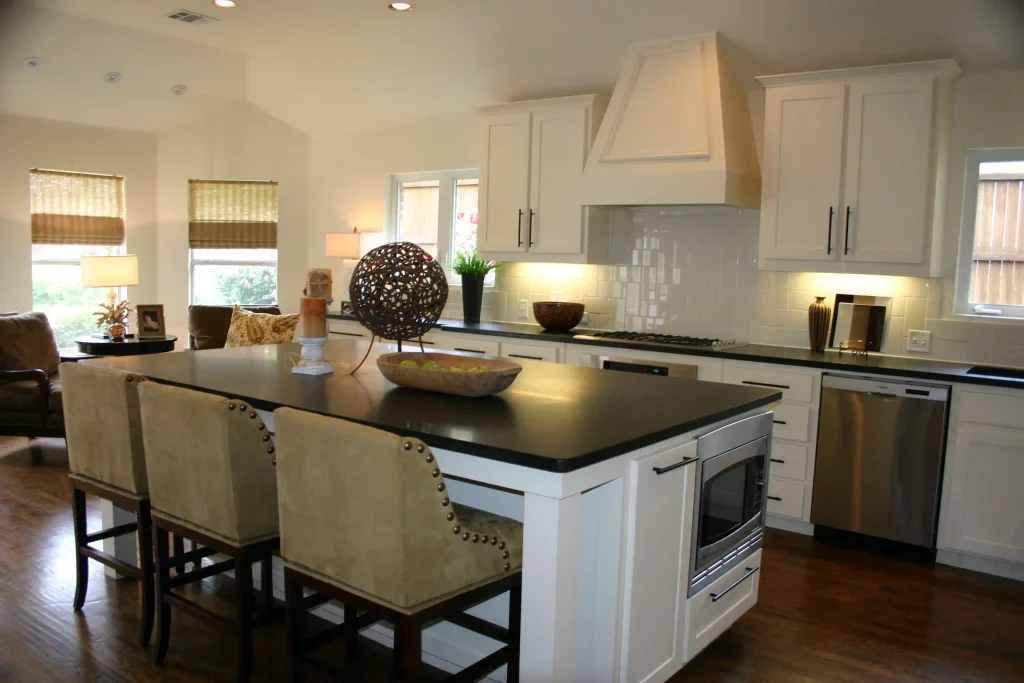
Best Cabinet Styles for Black Countertops
White cabinets with black countertops can work with almost any cabinet style, but the door profile changes the character of the finished kitchen. Simple doors make the contrast feel cleaner and more modern, while detailed doors can push the combination toward traditional design. Shaker cabinets sit between those extremes, which makes them one of the most flexible options.
The shade and finish of the white cabinetry matter as well. Bright white creates the sharpest contrast, while soft white, ivory, or warmer white finishes reduce the visual difference between cabinets and countertop. Consider the cabinet colors alongside the backsplash and flooring instead of choosing the white independently.
White Shaker Cabinets
White Shaker cabinets are especially versatile with black countertops because the simple frame adds enough detail without making the room feel busy. The combination can work in farmhouse, transitional, coastal, and contemporary kitchens depending on the hardware, backsplash, and flooring choices.
Flat-Panel White Cabinets
Flat-panel white cabinetry creates a cleaner and more contemporary appearance. Pairing these doors with a smooth black quartz or dark stone surface emphasizes straight lines and contrast. Minimal hardware or integrated pulls can push the kitchen toward an even more streamlined design.
Traditional White Cabinets
Raised-panel or more decorative white cabinetry can also work with black countertops. In this setting, natural stone, ornate hardware, warm flooring, and classic backsplashes can create a more traditional look. A softer or honed black countertop finish may feel more natural than a highly reflective solid-black surface.
Best Hardware for White Cabinets with Black Countertops
Hardware helps determine whether a white-and-black kitchen feels graphic, warm, traditional, or understated. Matte black hardware repeats the countertop color and reinforces the contrast, while brass introduces warmth. Nickel, chrome, and stainless finishes create a cooler transition and can connect the cabinetry to stainless steel appliances.
There is no requirement that every metal finish match exactly. Kitchens can successfully combine two metal finishes when each is repeated intentionally. What tends to make the design feel less cohesive is introducing several unrelated finishes with no clear connection between cabinet hardware, faucet, lighting, appliances, or accessories.
Matte Black Hardware
Matte black pulls and knobs create a clear visual relationship with black countertops. Against white cabinetry, the hardware becomes more noticeable and strengthens the graphic black-and-white palette. CCC already features black hardware as a complementary option for white cabinetry, including applications where black countertops are also part of the design.
Brass and Champagne Bronze
Warm brass or champagne bronze can make a white-and-black kitchen feel softer and more layered. These finishes pair particularly well with wood flooring, warm backsplash materials, or countertops containing gold or beige movement.
Brushed Nickel
Brushed nickel is a quieter option that works naturally with stainless steel appliances and neutral black surfaces. It does not create the same strong contrast as black hardware or warmth as brass, which makes it useful when you want the countertop rather than the hardware to remain the visual focus.
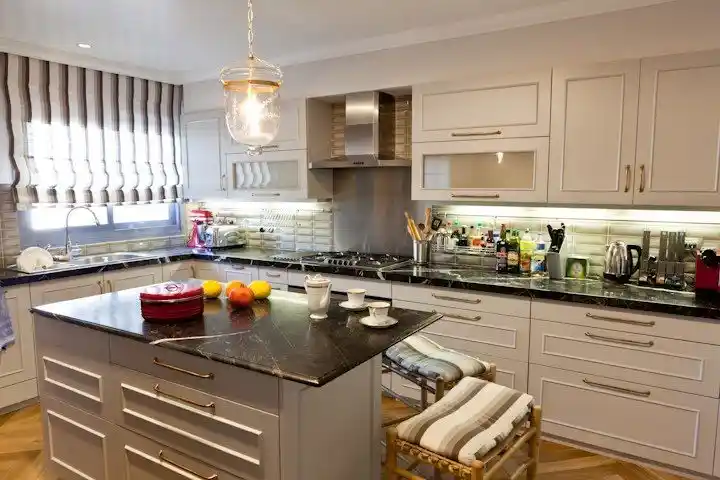
Best Flooring with White Cabinets and Black Countertops
Flooring can either soften the high contrast of black and white or reinforce it. Natural wood is one of the most useful choices because it introduces warmth and texture without competing with the fry or countertop. Light oak keeps the room airy, while medium and dark woods create a richer overall palette.
Stone-look tile, warm beige tile, greige flooring, and carefully selected gray floors can also work. If you choose gray flooring, compare its undertone with the black countertop and backsplash. Avoid using highly patterned flooring when both the countertop and backsplash already have strong movement, as the combined effect can make the kitchen feel visually crowded.
Best Wall Colors for White Cabinets and Black Countertops
Wall color can help determine whether white cabinets and black countertops feel crisp or comfortable. Soft whites, warm whites, light greige, taupe, muted green, and pale blue can all work depending on the other finishes in the kitchen. Keeping the walls relatively light is often useful because the countertop already provides substantial visual weight.
Avoid choosing paint from a small chip without comparing it to the cabinet finish. Two whites can reveal very different undertones when placed beside each other. A creamy wall white may make bright white cabinetry look cooler, while a strongly cool wall color can make warm white cabinets appear yellow. Test larger samples under the kitchen’s actual lighting.
White Cabinets with Black Countertops in a Small Kitchen
Black countertops can work in a small kitchen when the rest of the room maintains enough brightness. White cabinetry already helps because it reflects light and reduces the amount of dark surface surrounding the room. A light backsplash, good under-cabinet lighting, limited countertop clutter, and consistent flooring can further prevent dark countertops from making the kitchen feel enclosed.
Consider a black surface with subtle veining or a softer honed finish if a completely solid polished black feels too heavy. You can also limit black countertops to one section, such as the island, while using a lighter countertop around the perimeter. The right balance depends more on lighting and overall material distribution than on room size alone.
Black Countertop Kitchen Ideas for Larger Spaces
Larger kitchens provide more room to use black countertops dramatically. A wide black island can create a strong centerpiece against white perimeter cabinets, while black counters throughout the room can establish a sophisticated continuous base. Larger spaces can also support stronger backsplash patterns, darker flooring, or more substantial pendant lighting without feeling visually crowded.
The additional space does not mean every element should become bold. Black countertops already create significant contrast, so decide whether they will be the main feature or support another focal point. A highly veined black island, for example, may look best with a relatively simple backsplash and restrained cabinet hardware.
Should the Island Countertop Match the Perimeter?
The island countertop does not need to match the perimeter countertops. Using the same black surface throughout creates consistency and can make the kitchen feel organized, while changing the island material creates an obvious focal point. A white or strongly veined island countertop can brighten the center of a kitchen surrounded by black perimeter surfaces.
You can also reverse the relationship by using lighter perimeter countertops and black stone on the island only. When mixing materials, look for a common undertone, vein color, or connection to the cabinetry and hardware. Avoid combining two dramatic patterns that have no visual relationship, as both surfaces may compete for attention.
Polished vs. Honed Black Countertops
The finish of a black countertop can change its appearance almost as much as the material itself. Polished surfaces reflect more light and often make black appear deeper and richer. They can create a sleek or luxurious look, particularly in contemporary kitchens, but reflections and fingerprints may also be more visible depending on the material.
Honed surfaces have a softer, lower-sheen appearance that can make black countertops feel more relaxed and less formal. They pair especially well with Shaker cabinets, natural wood, handmade backsplash tile, and farmhouse or transitional interiors. Textured or leathered finishes can add even more tactile character, particularly with natural granite.
How to Keep a Black and White Kitchen from Looking Too Stark
A strict black-and-white palette can feel dramatic, but it may also feel cold if the room lacks natural texture and warmer supporting materials. The easiest solution is to introduce a third visual element rather than replacing the primary colors. Natural wood, brass, handmade tile, greenery, woven textures, warm lighting, or muted color can soften the contrast significantly.
Current design trends also favor more layered kitchens rather than uniform all-white environments. White cabinetry remains widely used, but homeowners and designers are increasingly combining it with wood tones, warmer whites, expressive stone, and more tactile finishes. This makes black countertops a useful anchor when the surrounding design includes enough warmth and material variation.
Common Mistakes with White Cabinets and Black Countertops
The biggest mistake is treating a black-and-white kitchen as if no additional coordination is necessary. Although both colors are neutral, undertones, surface finishes, lighting, backsplash patterns, flooring, and hardware still influence the final result. A kitchen can technically match in color while still feeling disconnected if too many unrelated materials are introduced.
Another common problem is making every surface a focal point. Bold black veining, patterned backsplash tile, dramatic flooring, statement hardware, and decorative cabinet doors can compete with one another. Choose where you want the strongest visual interest and allow the surrounding materials to play supporting roles.
Using Too Much Black
Black countertops, black backsplash tile, black flooring, black hardware, and black appliances can overwhelm the white cabinetry if used without enough lighter space between them. Repeat black strategically instead of covering every available surface. The countertop alone may provide enough visual weight.
Choosing the Wrong White
Bright white, soft white, cream, and ivory can all behave differently beside a black countertop. The countertop may contain warm brown or cool blue undertones that make the cabinet white look different after installation. Compare actual samples together before ordering.
Ignoring Lighting
A poorly lit black countertop can appear heavier and flatter than expected. Under-cabinet lighting is particularly useful because it illuminates the work surface directly and helps separate the black countertop visually from the backsplash and cabinetry.
Mixing Too Many Patterns
If your black countertop has bold white or gold veins, pair it with a quieter backsplash and flooring. If the countertop is nearly solid, you have more freedom to use patterned tile or stronger textures elsewhere.
Forgetting About Practical Maintenance
Dark surfaces can make certain types of dust, fingerprints, crumbs, water spots, or residue more visible depending on the finish. Review the care requirements for the specific countertop material rather than assuming every black surface behaves the same way.

Are Black Countertops in Style in 2026?
Black countertops remain relevant in 2026, but the broader trend is moving away from overly uniform or generic surfaces toward more character, texture, and natural-looking materials. Current countertop trend coverage emphasizes long-lasting materials, expressive stone, warmer influences, and surfaces with more visual personality rather than suggesting that dark countertops as a category have disappeared.
What is changing is how black is used. Instead of creating an entirely cold black-and-white kitchen, many current designs soften dark surfaces with natural wood, warm metals, handmade-looking tile, textured finishes, and warmer whites. Black remains especially useful for creating contrast, anchoring islands, and adding definition to lighter cabinetry.
Are White Cabinets Out of Style in 2026?
White cabinets are not out of style in 2026. Recent reporting on the 2026 Houzz Kitchen Trends Study indicates that wood cabinetry slightly surpassed white among renovating homeowners, but white remained very close behind and continues to represent a substantial share of kitchen remodels. The larger shift is away from cold, completely white kitchens rather than away from white cabinets themselves.
White cabinetry now tends to feel more current when it is combined with contrast, natural texture, warmer materials, and personalized finishes. Black countertops already provide the contrast that an all-white kitchen lacks, making this combination easier to update with wood, brass, textured backsplash tile, or warmer lighting.
Create the Right White and Black Kitchen
White cabinets with black countertops provide a strong foundation for a kitchen because the combination offers contrast without limiting your other design choices. Black quartz can create a streamlined appearance, granite introduces natural movement, veined stone adds drama, and honed dark surfaces can create a softer look. The backsplash, hardware, flooring, and lighting determine whether the finished kitchen feels modern, traditional, warm, or bold.
When planning a kitchen in Columbus, Ohio, compare cabinet, countertop, backsplash, flooring, and hardware samples together before making final decisions. Columbus Cabinets City can help you explore white kitchen cabinets, black countertop options, and complementary finishes so the materials work together throughout the complete kitchen rather than being selected one piece at a time.
Frequently Asked Questions About White Cabinets with Black Countertops
Homeowners considering white cabinets with black countertops often have questions about whether the combination is still current, which backsplash works best, and how black countertops compare with other colors. The answers below address common Google search questions while helping you make practical decisions about contrast, materials, and the overall kitchen design.
Yes. Black countertops create clear contrast against white cabinets and can work in modern, farmhouse, transitional, Scandinavian, and traditional kitchens. The combination is most successful when the backsplash, flooring, hardware, and lighting balance the strong contrast. Natural wood, warm metals, or textured tile can soften the look when you do not want a strictly black-and-white kitchen.
Yes. Black countertops continue to work in 2026, particularly as a contrasting surface with lighter cabinetry or as a focal point on an island. Current kitchen trends are placing more emphasis on natural materials, expressive stone, texture, and warmth, so black countertops often look most current when paired with wood, warmer whites, natural stone movement, or layered finishes rather than an entirely monochromatic room.
White cabinets can work with white, black, gray, beige, greige, brown, and many natural stone colors. Black is one of the strongest choices when you want high contrast and clear definition between the cabinets and work surface. The best countertop color ultimately depends on the cabinet undertone, kitchen lighting, flooring, backsplash, and amount of contrast you prefer.
No. White cabinets remain widely used in 2026, although homeowners are increasingly combining them with natural wood, warmer finishes, stronger stone patterns, and other materials that add character. The cold all-white kitchen is becoming less dominant, but white cabinetry itself remains a flexible foundation for both traditional and contemporary kitchen designs.
White tile, warm white tile, marble or marble-look surfaces, greige, light gray, soft sage, and muted blue can all work well. A simple backsplash is often best when the countertop has strong veining, while a nearly solid black countertop gives you more freedom to introduce patterned or textured tile.
Not necessarily. Black countertops add visual weight, but white cabinetry can balance that effect by keeping the surrounding surfaces bright. Good lighting, a light backsplash, uncluttered counters, and appropriate flooring can help dark countertops work successfully even in smaller kitchens.
Matte black hardware strengthens the contrast, brass and champagne bronze introduce warmth, and brushed nickel creates a quieter neutral look. Choose the finish according to the style of the kitchen and repeat it intentionally in other elements such as lighting or plumbing fixtures.
Natural wood is one of the easiest flooring choices because it adds warmth to the black-and-white palette. Beige, greige, stone-look tile, and selected gray floors can also work. When using gray flooring, make sure the undertone coordinates with the countertop and backsplash.
Either finish can work. Polished black countertops create more reflection and often appear deeper in color, while honed surfaces have a softer, matte appearance. The right option depends on the countertop material, kitchen style, lighting, and the amount of visual contrast you want.
Yes. A black island countertop can create a focal point while keeping lighter countertops around the perimeter. This is a useful option if you like dark stone but do not want it throughout the entire kitchen. Connect the island to the rest of the design through black hardware, lighting, appliances, or other repeated details.