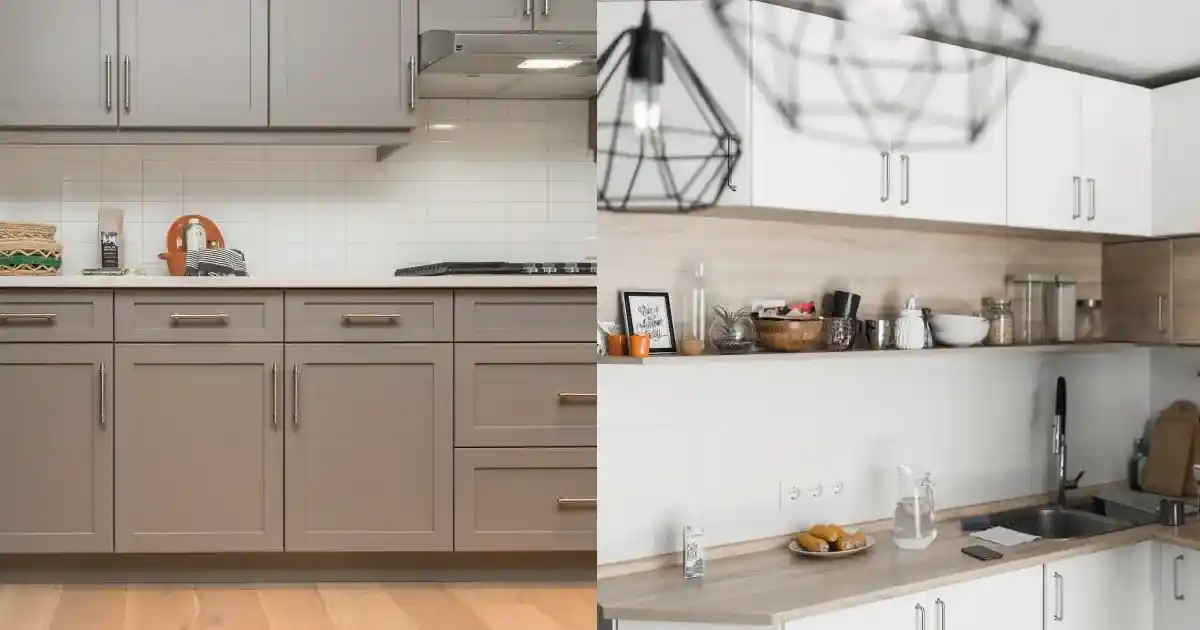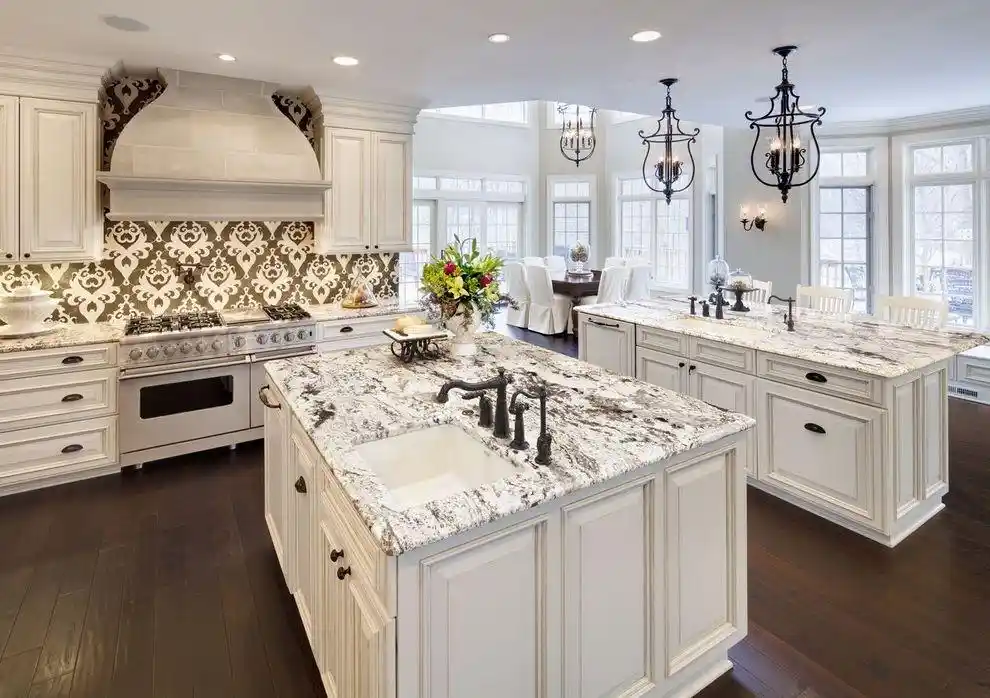
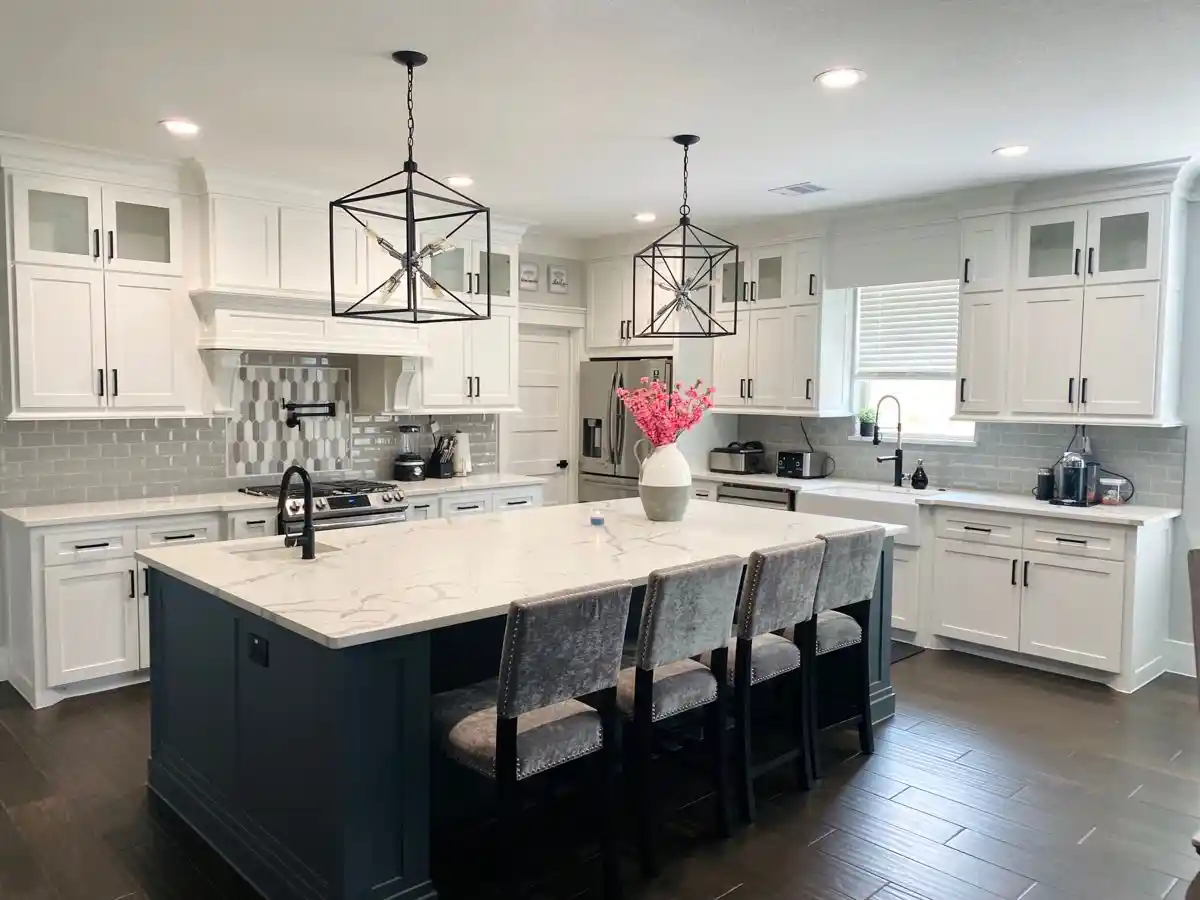
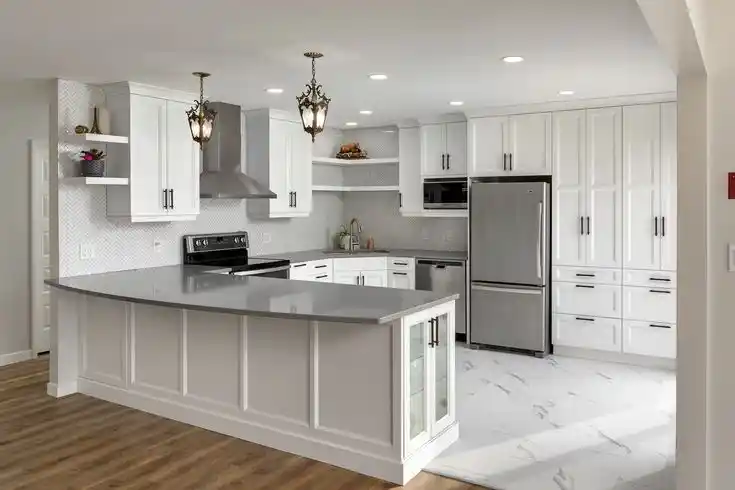
Grey countertops and white cabinets create one of the most flexible color combinations for a kitchen. White cabinetry keeps the room bright and open, while grey countertops add enough contrast to give the design depth and definition. Depending on the shade of grey you choose, the combination can feel soft and traditional, sleek and modern, warm and inviting, or bold and dramatic.
The key is choosing the right grey rather than simply selecting any grey surface. Light grey, charcoal, warm greige, blue-grey, and strongly veined stone can all look very different beside white cabinetry. The backsplash, flooring, cabinet hardware, lighting, and wall color also influence whether the finished kitchen feels balanced or overly cold.
This guide explains how to design a kitchen with white cabinets and grey countertops, including the best countertop materials, grey shades, backsplash ideas, hardware finishes, flooring options, and ways to add warmth. It also answers common questions about whether white cabinets are still in style and what design mistakes can make a kitchen look inexpensive.
Why Do Grey Countertops and White Cabinets Work So Well Together?
Grey countertops and white cabinets work well because they create contrast without introducing competing colors. White cabinets reflect light and give the kitchen a clean foundation, while grey countertops visually separate the work surface from the cabinetry. The result feels more layered than an all-white kitchen but remains neutral enough to work with many different backsplash, flooring, hardware, and appliance finishes.
The combination is also easy to adapt to different kitchen styles. A pale grey quartz countertop can create a light contemporary kitchen, while dark charcoal stone produces stronger contrast. Warm grey countertops can support transitional or farmhouse-inspired designs, and naturally veined grey stone can bring more texture to traditional or luxury kitchens.
Choosing the Right Shade of Grey Countertop
Choosing the right kitchen countertop color starts with understanding that grey is not a single color. Some grey surfaces contain cool blue or silver undertones, while others lean warm with beige, taupe, brown, or cream. These differences become much more noticeable when the countertop is placed directly beside white cabinetry, so compare the actual materials together rather than selecting them independently.
The amount of contrast also matters. Light grey creates a subtle transition from white cabinets, medium grey adds more definition, and charcoal or near-black countertops produce a dramatic effect. Consider the size of the kitchen, natural light, flooring, backsplash, and the exact shade of white used on the cabinets before choosing the final countertop tone.
Light Grey Countertops with White Cabinets
Light grey countertops create gentle contrast while maintaining the bright appearance associated with white cabinetry. This pairing works especially well in smaller kitchens or rooms where you want a soft, open feeling without using white on every surface. Pale grey quartz, granite, or stone with fine veining can add enough movement to prevent the space from looking flat.
A light grey countertop is also easy to coordinate with white subway tile, soft greige backsplash materials, brushed nickel fixtures, natural wood accents, and stainless steel appliances. If both the cabinets and countertops are very light, use texture or darker details elsewhere to create visual definition.
Medium Grey Countertops with White Cabinets
Medium grey countertops provide more noticeable contrast without becoming as dramatic as charcoal or black. They can help define the work surfaces and make bright white cabinets stand out more clearly. Medium grey also tends to work well in transitional kitchens because it sits comfortably between the softness of light neutrals and the stronger look of dark stone.
Look closely at the countertop undertone before choosing supporting finishes. A warm medium grey can pair naturally with beige tile, brass hardware, and wood flooring, while a cooler grey may look better beside polished nickel, white backsplash tile, and stainless steel appliances.
Dark Grey and Charcoal Countertops with White Cabinets
Dark grey countertops create stronger visual contrast and can give white cabinetry a more architectural appearance. Charcoal quartz, granite, soapstone-inspired surfaces, and dark quartzite can anchor the kitchen while allowing the cabinets to remain bright. This combination works particularly well in larger rooms, contemporary designs, and kitchens with plenty of natural or layered artificial light.
Dark countertops do not automatically make a kitchen feel small, but they add more visual weight. Balance them with lighter backsplashes, bright walls, under-cabinet lighting, and warm accents when necessary. Using charcoal only on an island is another way to introduce depth without placing a dark surface throughout the entire kitchen.
Warm Grey and Greige Countertops
Warm grey and greige countertops are useful when you like the white-and-grey combination but do not want the kitchen to feel cool. These surfaces mix grey with beige, taupe, cream, or brown undertones, creating a softer transition between white cabinetry and warm flooring or furnishings. They work particularly well with warm whites, off-white cabinets, and natural wood.
Greige countertops can also make it easier to combine cool and warm elements within the same kitchen. Stainless steel appliances can connect to the grey, while hardwood floors, brass hardware, or beige backsplash tile connect to the warmer undertones. This makes greige one of the most forgiving countertop directions for a mixed-material kitchen.
Best Materials for Grey Countertops with White Cabinets
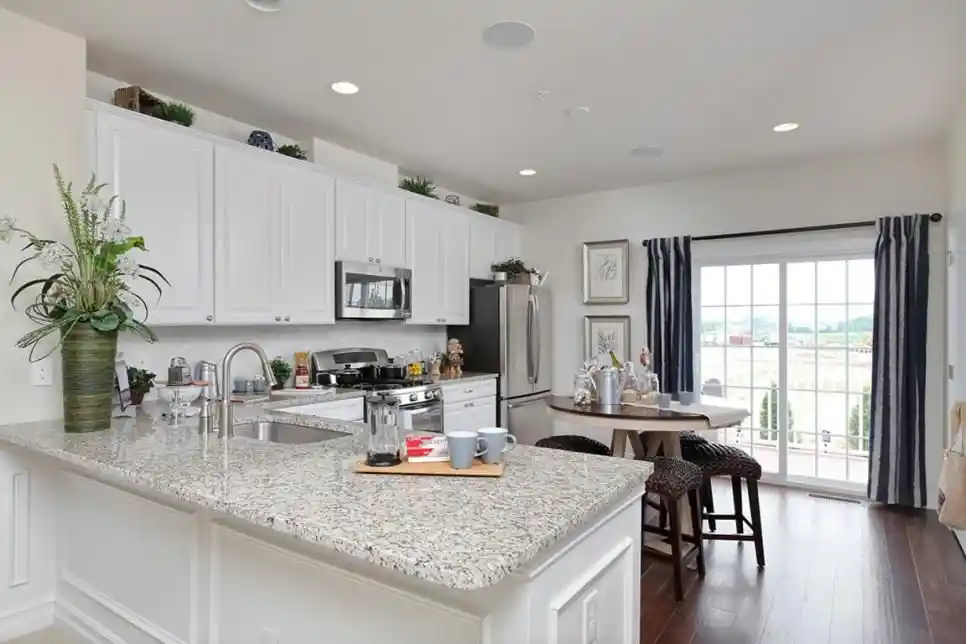
Grey countertops are available in several materials, and the material affects more than appearance. Quartz offers controlled color and pattern, granite provides natural mineral variation, quartzite delivers natural movement, and marble can create a softer, more classic look. The best option depends on the style you want, how much natural variation you prefer, maintenance expectations, and your overall project budget.
Instead of choosing solely by material name, look at actual samples or slabs beside your cabinet finish. Grey surfaces can contain undertones and veining that are difficult to judge from online photos. Seeing the cabinet door, countertop, backsplash, and flooring together makes it easier to create a coordinated kitchen rather than selecting each material separately.
Grey Quartz Countertops with White Cabinets
Grey quartz is one of the easiest materials to coordinate with white cabinetry because it is available in a wide range of consistent colors and patterns. You can choose nearly solid light grey, concrete-inspired finishes, subtle speckling, marble-look movement, or charcoal surfaces with contrasting veins.
A simple grey quartz works well in modern kitchens, while quartz with soft white veining can create more movement in transitional spaces. Because quartz patterns vary between manufacturers, compare larger samples whenever possible before ordering.
Grey Granite Countertops with White Cabinets
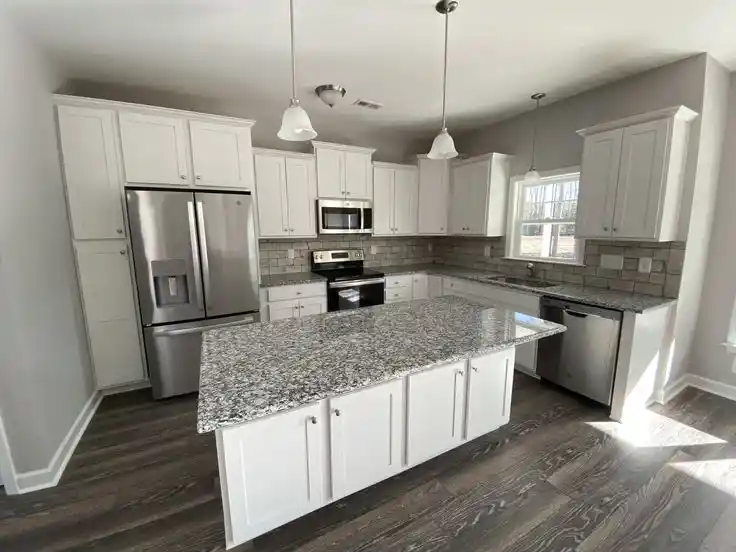
Grey granite adds natural mineral variation that can make a neutral kitchen feel less uniform. Depending on the slab, grey granite may contain white, black, silver, beige, brown, or subtle blue movement. White cabinets provide a simple background that allows this natural variation to become more visible.
If the granite countertop contains a strong pattern, keep the backsplash relatively simple so the two surfaces do not compete. A quieter grey granite gives you more flexibility to use textured or patterned tile elsewhere in the room.
Grey Quartzite with White Cabinets
Quartzite can create a more organic look because natural slabs often contain sweeping veins and subtle variations rather than a perfectly consistent pattern. Grey quartzite may include white, cream, taupe, or darker mineral movement that can help connect white cabinets to flooring, hardware, or other finishes.
Always view the actual slab when possible because natural quartzite can vary significantly. A small sample may not show the scale or direction of the movement that will appear across a large island or long countertop run.
Grey Marble with White Cabinets
Grey marble or white marble with strong grey movement can create an elegant combination with white cabinets. Natural veining adds character while keeping the overall palette light and neutral. This approach works particularly well in traditional, transitional, and luxury-inspired kitchens.
Marble countertops does require realistic maintenance expectations because acidic substances can etch the surface. If you like the appearance but prefer another maintenance profile, compare natural marble with grey-veined quartz or quartzite alternatives before making a final decision.
Kitchen with White Cabinets and Grey Countertops: How to Add Warmth
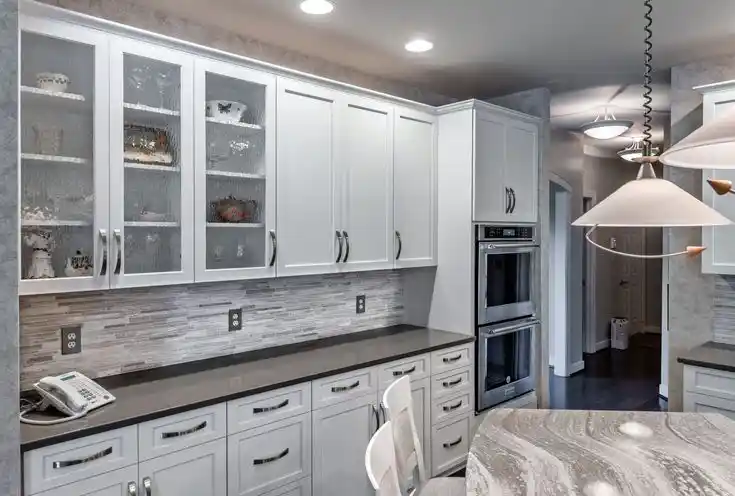
A kitchen with white cabinets and grey countertops can sometimes feel cool if every other finish is also white, silver, or blue-grey. The solution is not necessarily to change the main color scheme. Adding a few warm materials can soften the design while preserving the clean white-and-grey foundation.
Natural wood is one of the easiest ways to introduce warmth. Hardwood or wood-look flooring, bar stools, shelving, cutting boards, or a wood island detail can balance cooler stone. Brass or bronze hardware, warm lighting, cream backsplash tile, woven textures, and subtle beige accents can achieve a similar effect without changing the cabinets or countertop.
Add Natural Wood
Wood introduces color and texture without competing with the neutral cabinetry and countertop. White oak can keep the room light, while walnut or darker wood creates stronger contrast. Flooring is an obvious place to use wood, but smaller touches such as floating shelves, stools, decorative bowls, or cutting boards can also make a noticeable difference.
Use Warm Metal Hardware
Brass, champagne bronze, and other warm metal finishes can soften a grey-and-white kitchen. The hardware does not need to match every fixture exactly, but repeated warm metal details can establish a clear design direction. Matte black is another strong option when you want more definition rather than warmth.
Choose Warmer Lighting
Lighting changes how both white and grey finishes appear. Very cool lighting can make a neutral kitchen feel clinical, while warmer light can soften the same materials. Use layered lighting that combines general illumination with task lighting under the cabinets and decorative fixtures above islands or dining areas.
Best Backsplash for White Cabinets and Grey Countertops
The best backsplash for white cabinets and grey countertops depends largely on the amount of movement in the countertop. If the countertop has bold veining or a busy natural pattern, a quieter backsplash usually creates better balance. If the grey countertop is relatively plain, the backsplash can introduce more shape, texture, color, or pattern without overwhelming the kitchen.
White, off-white, soft grey, greige, marble-look, and subtle colored tiles are all strong options. Current design guidance also emphasizes considering countertop undertones rather than treating grey as a completely neutral color. A backsplash should connect the countertop and cabinetry rather than look like a third unrelated finish.
White Subway Tile
White subway tile is one of the simplest choices for this combination because it keeps the backsplash bright and allows the grey countertop to provide the main contrast. Changing the tile shape, size, finish, grout color, or layout can make a classic white backsplash feel more personalized without introducing another strong color.
Marble or Marble-Look Backsplash
A marble or marble-inspired backsplash can connect white cabinetry with a grey countertop when the veining contains similar grey tones. This works particularly well when the countertop itself is relatively simple. Avoid combining two unrelated strong vein patterns because the surfaces may compete rather than complement each other.
Light Grey or Greige Tile
Light grey tile creates a tonal transition between white cabinets and grey countertops. Greige is a particularly useful choice when the kitchen contains warm floors, wood details, or brass hardware because it connects those warmer elements with the cooler grey surface.
Soft Blue or Sage Backsplash
Muted blue and sage green can introduce subtle color without overpowering the neutral palette. These shades work best when their undertones coordinate with the countertop. A cool blue-green may suit a cooler grey stone, while muted sage can work well with warm grey or greige.
Full-Height Countertop Backsplash
Using the same countertop material vertically on the backsplash creates a more continuous appearance and can highlight attractive veining. This approach is especially effective when the grey countertop has natural movement that you want to make a feature of the kitchen rather than covering it with another pattern.
Best Hardware with White Cabinets and Grey Countertops
Cabinet hardware is a relatively small detail, but it can strongly influence the character of a grey-and-white kitchen. Matte black creates clear definition, brass introduces warmth, and nickel or chrome reinforces a cooler contemporary palette. The right finish should connect to other visible elements such as the faucet, lighting, appliances, or veining in the countertop.
You do not need to match every metal exactly. A kitchen can successfully combine two finishes when the choices feel deliberate and are repeated throughout the room. What tends to look less polished is using several unrelated finishes without a clear pattern or visual connection.
Matte Black Hardware
Black handles and pulls create strong contrast against white cabinet doors and can connect visually with darker grey countertops. This combination suits modern, industrial, transitional, and contemporary kitchens particularly well.
Brass and Champagne Bronze Hardware
Warm metal hardware can prevent a white-and-grey kitchen from feeling too cool. Brass works especially well when the countertop contains taupe, beige, brown, or warm veining and can also coordinate naturally with wood flooring.
Brushed Nickel and Chrome
Nickel and chrome reinforce the crisp appearance of grey and white. They pair easily with stainless steel appliances and cool grey countertops, making them suitable for modern and transitional kitchens where you want the palette to remain clean and understated.
Best Flooring for White Cabinets and Grey Countertops
Flooring has a major influence on whether white cabinets and grey countertops feel warm or cool. Natural wood and wood-look flooring can introduce warmth, while grey tile creates a more monochromatic contemporary appearance. Beige, taupe, or warm neutral floors can bridge cool countertops with warmer furnishings and prevent the kitchen from feeling overly grey.
Avoid selecting flooring without viewing it beside the cabinet and countertop samples. A grey floor with a different undertone from the grey countertop can create an unintended mismatch. If both surfaces are strongly patterned, the kitchen may also become visually busy, so choose one material to carry most of the movement.
What Wall Colors Work with White Cabinets and Grey Countertops?
Wall color can subtly change the way grey countertops and white cabinets appear. Soft whites keep the room bright, greige introduces warmth, light taupe creates a softer neutral background, and muted blue or green can add restrained color. The right wall shade should support the cabinetry and countertop rather than create a new competing undertone.
If the cabinets are bright white, avoid choosing a wall white that looks accidentally yellow or dingy beside them. With warm white cabinetry, an extremely cool wall color may make the cabinets appear creamier than intended. Test paint samples beside the actual cabinet and countertop materials in both daylight and artificial light before committing.
White Cabinets and Light Grey Countertops for Small Kitchens
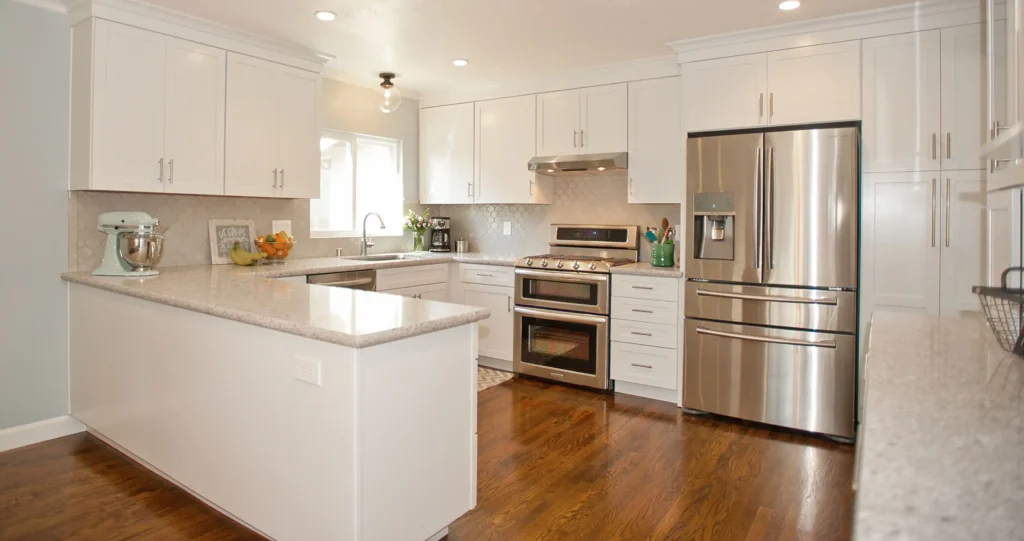
White cabinets and light grey countertops can work especially well in smaller kitchens because the palette remains bright while still providing enough contrast to define the work surfaces. A pale grey countertop prevents the cabinetry and countertop from visually blending into one large white area but does not add the same weight as charcoal or black stone.
Keep the rest of the design relatively simple if you want the room to feel open. Light backsplash materials, good under-cabinet lighting, restrained countertop clutter, and consistent flooring can maintain visual continuity. Reflective or lightly polished surfaces can also help move light around the kitchen, although the finish should still suit the overall design.
Dark Grey Countertops and White Cabinets for More Contrast
Dark grey countertops with white cabinets create a more dramatic kitchen and can make the cabinet color appear even brighter. Charcoal, graphite, and deep grey stone work especially well on large islands or in kitchens with strong natural light. The contrast gives the space a clear focal structure without introducing a strong non-neutral color.
Balance is important when using darker countertops. If the flooring, backsplash, walls, and cabinetry are all dark or highly patterned, the kitchen can feel heavy. White cabinetry already provides a strong counterbalance, but additional lighting, pale backsplash materials, or warm wood details can help keep the room comfortable and inviting.
Should the Kitchen Island Match the Grey Countertops?
The island countertop does not have to match the perimeter countertops. Using the same grey material throughout creates consistency and can make the kitchen feel visually organized, while choosing a different island surface creates a focal point. For example, white perimeter countertops with a charcoal island can establish stronger contrast, while a wood island countertop can add warmth.
If you use two different countertop materials, give them a visual connection. They might share a similar vein color, undertone, or relationship with the hardware and cabinetry. Avoid combining two highly patterned surfaces that have unrelated colors because both may compete for attention.
Best Kitchen Styles for Grey Countertops and White Cabinets
Grey countertops and white cabinets are flexible enough to work with modern, transitional, farmhouse, traditional, Scandinavian-inspired, and contemporary kitchens. The main color combination remains the same, but the countertop pattern, cabinet door style, hardware, backsplash, and flooring determine the final character of the room.
A simple grey quartz and slab-style cabinetry can feel modern, while white Shaker cabinets with warm grey stone create a transitional look. Natural stone, traditional hardware, and detailed molding can push the same palette toward a classic design, while wood accents and softer finishes can create a more relaxed farmhouse-inspired kitchen.
How to Keep a Grey and White Kitchen from Looking Cold
A grey and white kitchen can feel cold when too many surfaces share cool undertones and there is little texture or visual variation. You do not need to abandon the color scheme to solve the problem. Warm materials, layered lighting, natural textures, and carefully chosen metal finishes can make a noticeable difference while preserving the clean appearance of white cabinets and grey countertops.
Add natural wood, warm metals, cream or greige tile, textured fabric, or warmer wall paint to soften the palette. Even small details such as wooden stools, pendant lights, plants, pottery, or decorative accessories can make the room feel more lived-in without changing major materials.
Common Mistakes with Grey Countertops and White Cabinets
The biggest design mistake is treating white and grey as automatically compatible simply because both are neutral. A cool blue-grey countertop can look disconnected from creamy cabinetry, while a warm greige countertop may feel muddy beside a very blue cabinet. Checking undertones before ordering materials prevents many of these problems.
Another common mistake is using too many patterns or finishes at once. Strong countertop veining, patterned backsplash tile, busy flooring, multiple metals, and decorative cabinetry can compete visually. Current design advice also warns that clutter, poor lighting, weak material choices, and an excessive mix of colors or finishes can make kitchens feel less polished regardless of budget.
Ignoring Undertones
Compare the grey countertop directly with the cabinet finish instead of assuming all neutral colors work together. Pay attention to blue, green, beige, taupe, or brown undertones in the countertop and consider how they relate to the white used on the cabinetry.
Making Everything Grey and White
A completely grey-and-white kitchen can feel flat when there is no variation in texture, material, or temperature. Natural wood, warm metals, colored tile, plants, and layered lighting can give the room more personality without changing the primary palette.
Choosing a Busy Countertop and Busy Backsplash
Allow one surface to take the lead. If the countertop has dramatic movement, select a quieter backsplash. If the grey countertop is subtle, you have more freedom to use textured, patterned, or colored tile.
Forgetting About Lighting
Countertop samples can look different under showroom lighting, daylight, and warm artificial light. View the material beside the cabinet finish in the room where it will actually be installed whenever possible.
Using Too Many Different Finishes
A kitchen often feels more cohesive when a limited number of finishes are repeated intentionally. You do not need every metal or material to match, but introducing numerous unrelated colors, patterns, and hardware finishes can make the room feel less coordinated.
Are White Cabinets Out of Style in 2026?
White cabinets are not suddenly out of style in 2026, but kitchen design is becoming more personalized and warmer than the highly uniform all-white kitchens that dominated previous years. Current 2026 trend coverage shows increased interest in natural materials, expressive stone, warmer finishes, freestanding furniture, texture, and kitchens that feel more individual rather than following one standard formula.
This actually works in favor of white cabinets when they are used as a flexible foundation rather than paired with white everywhere else. Grey countertops, natural wood, handmade-look backsplashes, warm metals, and distinctive lighting can give white cabinetry more depth and personality while retaining its versatility.
Find the Right Grey Countertop for Your White Cabinets
Grey countertops and white cabinets create a flexible foundation that can be adapted to almost any kitchen style. Light grey keeps the room bright, medium grey adds balanced contrast, charcoal creates drama, and greige introduces warmth. The most important step is choosing a countertop undertone that works with the specific white used on your cabinets and the other permanent finishes in the room.
When planning a kitchen in Columbus, Ohio, compare your cabinets, countertop, backsplash, flooring, and hardware together before making final decisions. Columbus Cabinets City offers white kitchen cabinets and countertop options that can be coordinated as part of the overall kitchen design, helping you create a combination that feels intentional rather than simply matching individual materials.
Frequently Asked Questions About Grey Countertops and White Cabinets
Considering grey countertops and white cabinets often have questions about cabinet colors, backsplash choices, changing kitchen trends, and how to keep a neutral kitchen from looking inexpensive or overly plain. The answers below address common Google search questions while focusing on practical design decisions that can help create a more coordinated kitchen.
White is one of the easiest cabinet colors to pair with grey countertops because it creates clear contrast while keeping the kitchen neutral and flexible. Warm white, cream, natural wood, navy, black, and some green cabinet colors can also work depending on the countertop undertone. The best cabinet color is one that relates to the grey’s warm or cool undertones rather than simply matching its brightness.
No. White cabinets remain a flexible kitchen choice, although current design trends favor more warmth, texture, natural materials, and individuality than the completely white kitchens that were especially common in earlier years. Pairing white cabinetry with grey stone, wood, warm metals, or textured backsplash materials can keep the kitchen feeling current without relying on a short-lived trend.
White subway tile, marble or marble-look surfaces, light grey tile, greige ceramic, soft sage, and muted blue are all strong backsplash options. The best choice depends on the countertop pattern and undertone. If the grey countertop has dramatic veining, keep the backsplash simple. If the countertop is relatively plain, the backsplash can introduce more texture, shape, or color.
A kitchen can look less polished when materials feel disconnected, countertop clutter dominates the room, lighting is poor, hardware feels inconsistent, or too many colors and patterns compete with each other. The issue is not always how much money was spent. Thoughtful proportions, cohesive finishes, good lighting, organized surfaces, and careful installation often have a greater effect on the overall impression.
Grey countertops remain versatile because the color can range from nearly white to deep charcoal and can lean either warm or cool. The key is choosing a grey that relates to the cabinetry, backsplash, flooring, and lighting rather than selecting the surface simply because grey is neutral.
Matte black creates stronger contrast, brass or champagne bronze adds warmth, and brushed nickel or chrome creates a cleaner cool-toned appearance. Choose the hardware finish according to the countertop undertone and repeat it in other parts of the kitchen where appropriate.
Light grey countertops generally keep the room bright, while charcoal surfaces add more visual weight. Even dark grey can work successfully when balanced with white cabinetry, light backsplash materials, sufficient lighting, and other lighter finishes.
Natural wood, warm beige, greige, light neutral tile, and selected grey flooring can all work. Wood is especially useful when you want to warm up the white-and-grey palette. If you choose grey flooring, make sure its undertone works with the countertop rather than introducing a competing shade of grey.
Because white cabinets are already very light, almost any grey countertop will provide some contrast. Light grey creates a softer transition, medium grey provides balanced definition, and charcoal produces a stronger dramatic effect. The right depth depends on your kitchen size, lighting, flooring, and preferred style.
Soft white, warm white, greige, taupe, pale blue, muted green, and other restrained neutrals can work well. Test the paint next to both the cabinetry and countertop because wall colors can shift noticeably depending on natural light and the undertones of surrounding materials.